HEAL avoidant ATTACHMENT
Ready to Start healing your Avoidant attachment?
Heal avoidant attachment patterns, move towards embodied secure attachment and experience safe and supportive relationships.

Do you find it challenging to open up and connect emotionally in relationships?
You are likely an independent and self-reliant individual, with a strong sense of autonomy and self-sufficiency. Your strong boundaries and ability to maintain emotional distance can make you appear confident and emotionally balanced.
Your independent nature allows you to take care of yourself and focus on your personal goals and interests. However, your fear of vulnerability and emotional intimacy can create challenges in forming deep, meaningful relationships.
You may have difficulty trusting others and struggle with the expectation of relying on someone else for emotional support. This fear of losing control or becoming too dependent on others can result in a reluctance to fully commit or open up in relationships.
As a result, you may unintentionally create emotional distance, sending mixed signals, or engaging in self-protective behaviors that hinder the development of deep, intimate connections.
While these behaviors may help maintain your sense of autonomy and control, they can also prevent you from experiencing the emotional intimacy and closeness you may secretly desire. This internal conflict can lead to feelings of loneliness and isolation, reinforcing the belief that true emotional connection is out of reach.
In Becoming Secure, we have a tailored roadmap for avoidant attachment to help you heal unhealthy relationship patterns and become your most confident, worthy self.
By joining our community, you’ll gain access to resources and support that can transform your relationships, lead to lasting love, and empower you to build meaningful connections with emotionally available individuals.
Click the button below to gain exclusive access to our program and take advantage of a limited-time offer of 30% off. Don’t miss this opportunity to embark on a journey of self-discovery, healing, and personal growth with Becoming Secure.
You're in the right place
Does any of this sound familiar?

Fear of Losing Independence
You may find yourself pulling away when things start to feel too intense. Instead of leaning in, your instinct is to create space to feel safe again.
Emotional distance in relationships
You often worry about losing your sense of freedom or autonomy if you get too close to someone. Emotional closeness can feel overwhelming, even if you care deeply about the person.
Avoiding vulnerability
You may find yourself pulling away when things start to feel too intense. Instead of leaning in, your instinct is to create space to feel safe again.
Overvaluing Self-Reliance
You pride yourself on being independent and handling things alone. Relying on others can feel unfamiliar or unnecessary, even when support would help.
Difficulty with emotional expression
You may struggle to identify or express your emotions, especially in real time. This can make it hard for others to understand what you’re feeling or needing.
Withdrawing During Conflict
When tension arises, you may shut down, avoid conversations, or distance yourself rather than engage. Conflict can feel overwhelming or draining.
Minimising Needs
You might downplay your own emotional needs or feel uncomfortable when others express theirs. This can create a sense of disconnection in relationships.
If this resonates with you, know that you’re not alone
Those with avoidant attachment can feel stuck or disconnected, often believing this is just “how they are.” It can seem like emotional distance and self-reliance are fixed traits, but these are learned patterns, not your identity.
With awareness and conscious effort, these patterns can be softened and healed.
My program Heal Dismissive Avoidant Attachment will support you in understanding your patterns, opening up safely, and creating deeper, more fulfilling relationships.
[Take the next step]
Where does your avoidant attachment style come from?
As you lean towards avoidant attachment, it’s likely that you grew up in an environment where emotional needs were not fully acknowledged, validated, or met. You may have had caregivers who were emotionally unavailable, distant, or uncomfortable with closeness.
You may have experienced emotional neglect or pressure to be independent too early. Your caregivers may have met your physical needs, but struggled to respond to your emotional world.
This creates a child who learns that expressing emotions doesn’t lead to comfort or connection. Instead, the child adapts by becoming self-reliant, suppressing emotions, and disconnecting from their needs.
You may have learned that closeness feels overwhelming or unsafe, and that depending on others leads to disappointment. As a result, you carry a belief that it’s better to rely on yourself than risk being let down.
When your emotional needs were not met as a child, you may cope in adulthood by avoiding vulnerability, keeping people at a distance, and prioritising independence over connection.
The problem is that these protective behaviours can create disconnection in relationships. Withdrawing, shutting down, or avoiding emotional intimacy can reinforce the belief that closeness isn’t safe or sustainable.
These avoidant patterns often become your blind spots. Without awareness, they can quietly shape your relationships and prevent the depth of connection you actually desire.
Without taking the time to understand your attachment style or recognising these patterns, you may find yourself repeating cycles of distance, disconnection, or unfulfilling relationships.
The good news is that change is possible.
By developing awareness of your avoidant patterns and learning how to safely open up, you can begin to experience deeper connection, emotional safety, and more fulfilling relationships.

Hi, I'm Victoria
After experiencing numerous unhealthy relationships, I discovered that my anxious attachment style and relational patterns were holding me back in relationships, so I went on a quest to heal my anxious attachment style.
In 2014, I finished my Master’s degree in psychology and did my thesis on emotional regulation. Ever since I’ve been fascinated by psychology and have spent many of my adult years learning about psychology and human transformation.
I knew that if I needed to create significant change to rewire my subconscious mind, so I took responsibility and committed to my personal growth. I trained in shadow work, coaching, hypnotherapy and started working with individuals with depression, anxiety, low self-esteem and attachment issues.
Since then, I’ve built a thriving private practice working as a therapist. I’ve witnessed first-hand people cultivate a more secure, worthy, confident sense of self.
My courses and workshops are powerful containers that will give you body-focused strategies to embody secure attachment and create safe and supportive relationships.
If you’re ready to grow in self-worth, self-confidence and create more fulfilling relationships, this is your time and you’re ready for the next step.
can you change your attachment style?
The good news is that just as much as we learn anxious functioning, we can learn secure functioning.
We can heal the nervous system to release patterns that no longer support us in our adult relationships and learn secure patterns.
In this course Heal Dismissive Avoidanr Attachment, we approach attachment repatterning from two sides – nervous system healing and behavioural reprogramming.
The manifestations of attachment trauma are primarily subconscious, so talk therapy or psycho-education are insufficient in creating transformation.
Sustainable healing and repatterning comes from healing emotional wounds, (rejection, abandonment, unworthiness & loneliness) rewiring these emotions with corrective experiences.
In order to resolve underlying pain, we need to be regulated and embodied. Being regulated means we feel safe, open and present. In this container, we help you to connect to an embodied core sense of self, so you can metabolise unprocessed emotions that are trickling into your relationships.
This will help you to release stored emotional energy and tensions in the body that contribute to anxiety and people pleasing, so you can let go of reenacting attachment patterns in relationships.
After releasing fear & insecurity in the body, we can choose secure qualities to embody in yourself and in your relationships. They’ll be transmissions designed to integrate these qualities psychologically, emotionally, physically and spiritually, so they can be fully integrated into your mind, body and spirit.
When you can let go of avoidant patterns you can
- Feel safe in emotional closeness without needing to withdraw
- Reconnect with your emotions and understand your inner world
- Open up and express your needs with confidence
- Allow yourself to receive support instead of doing everything alone
- Set boundaries while staying connected, not shutting down
- Embrace vulnerability without feeling overwhelmed
- Stop pushing away emotionally available partners
- Experience deeper, more connected and fulfilling relationships


Transform 8 avoidant attachment patterns
You’ll learn how to transform 8 Avoidant Attachment Patterns that contribute to emotional distance and disconnection in relationships.
You’ll begin to recognise the subtle ways you’ve learned to protect yourself, such as withdrawing, shutting down, or over-relying on independence, and understand why these patterns were formed in the first place.
From there, you’ll gently shift out of these привычные защитные стратегии into a more balanced and connected way of relating, without losing your sense of self.
These patterns will become awareness points that help you move from emotional disconnection into safe, grounded connection, where closeness no longer feels overwhelming.
As you integrate the healing and absorb the teachings, you’ll build the capacity to stay present in relationships, access your emotions with more ease, and develop trust without feeling like you have to give up your independence.
This is not about forcing vulnerability or becoming someone you’re not. It’s about expanding your capacity for connection in a way that feels safe and sustainable for your nervous system.
Our intention is that this course supports you through a period of steady growth, so you can reconnect with your emotional world, develop secure internal attachment, and experience relationships that feel both connected and spacious.
If you’ve been wanting deeper relationships but find yourself pulling away when things get too close, this work will help you understand why and show you a different way.
Break free from patterns of distance and self-protection, and learn how to experience connection, trust, and intimacy without feeling overwhelmed or losing yourself.
The Method I Now Teach
After helping people heal their attachment patterns for over 5 years, I developed a method called Secure Attachment Imprinting.
This approach helps you:
• Support avoidance instead of fighting it
• Release stored emotional wounds
• Build secure attachment from within
• Integrate new patterns into your mind, body, and nervous system
Introducing
HEAL AVOIDANT ATTACHMENT
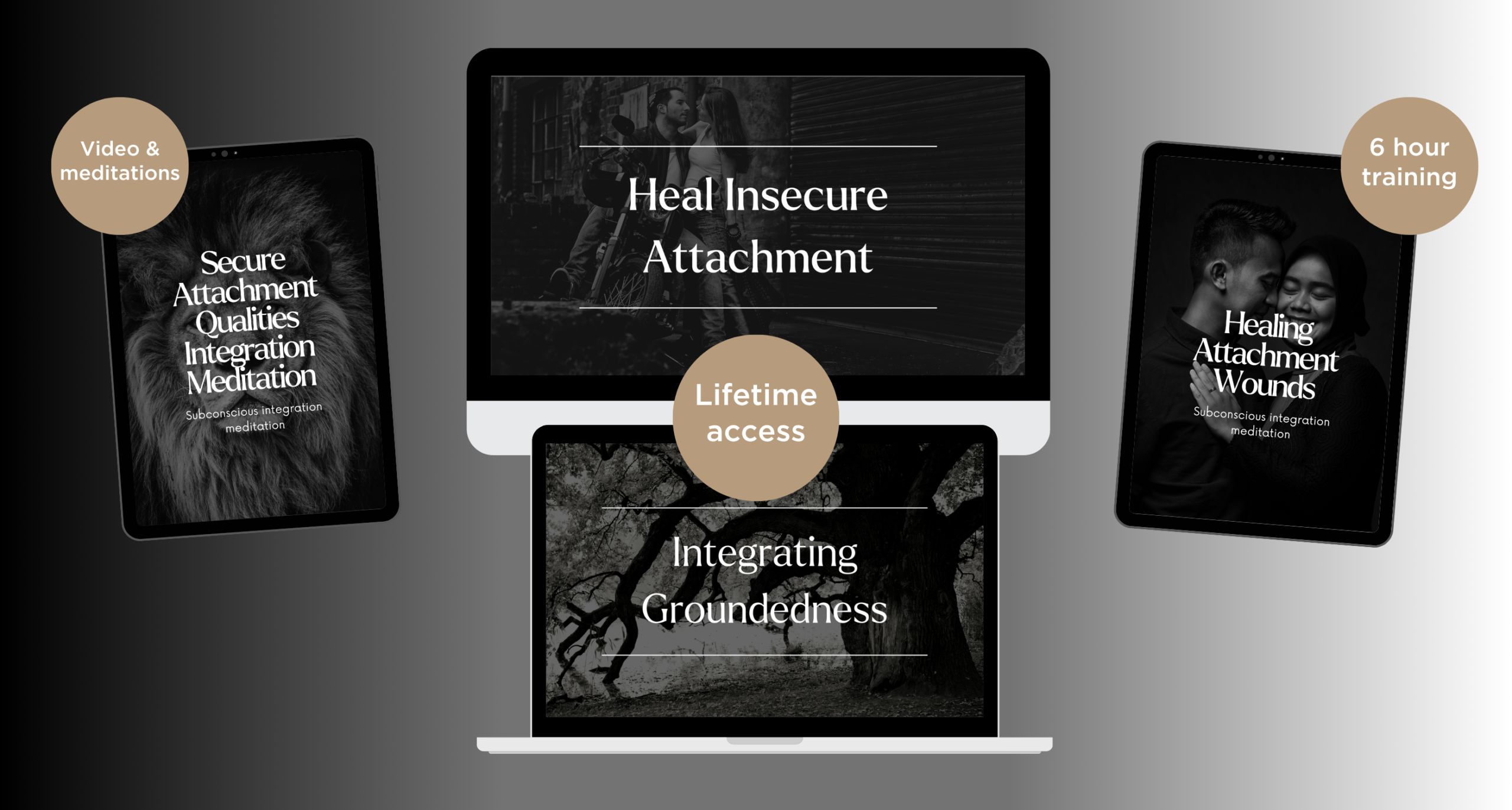
Self-paced online course to move from avoidant attachment towards secure embodied attachment and create safe and supportive relationships

Module 1
UNDERSTANDING AVOIDANT ATTACHMENT
This module introduces the foundations of dismissive-avoidant attachment—what it is, how it develops, and how it shows up in your thoughts, emotions, and relationships. You’ll begin to recognise your patterns with clarity and without judgment, so you can finally understand why you are the way you are.
- Identify the core signs of dismissive-avoidant attachment in your behaviours and relationship patterns
- Understand your unique strengths (independence, self-reliance, resilience) and how they’ve protected you
- Recognise your emotional triggers and what causes you to shut down, withdraw, or detach
Module 2
Module 2: Overcoming Avoidant Behaviours
This module focuses on breaking the patterns that keep you stuck—without forcing you to become someone you’re not. You’ll learn how to stay present instead of pulling away, and how to navigate relationships with more ease and confidence.
- Overcome communication avoidance and learn to express yourself clearly without feeling overwhelmed
- Navigate conflict without shutting down, withdrawing, or avoiding difficult conversations
- Gently expand your capacity for intimacy without losing your sense of independence


Module 3
inner child healing
Avoidant patterns don’t come from nowhere. They’re rooted in deeper emotional wounds. In this module, you’ll begin healing the underlying pain that drives your need for distance, so you can respond from a place of security instead of protection.
- Heal rejection wounds and reduce sensitivity to perceived criticism or disapproval
- Process abandonment experiences that led you to rely only on yourself
- Rebuild your sense of worthiness so closeness no longer feels threatening
Module 4
Module 4: Cultivating Secure Attachment Traits
This module is about who you’re becoming—not just what you’re leaving behind. You’ll actively build the traits of secure attachment so you can create relationships that feel safe, balanced, and fulfilling.
- Develop emotional expression so you can share your inner world without fear or shutdown
- Build assertiveness and communicate your needs, boundaries, and desires with confidence
- Strengthen trust, independence, and interdependence, so you can connect without losing yourself

What our customer say
"Now i have a more compassionate inner voice"
“I used to be so critical to myself and tell myself I could never have a secure relationship and now I have a more compassionate inner voice. I overthink less and I trust myself more”.
— KATIE
Free Downloads
Bonuses (Value £297)
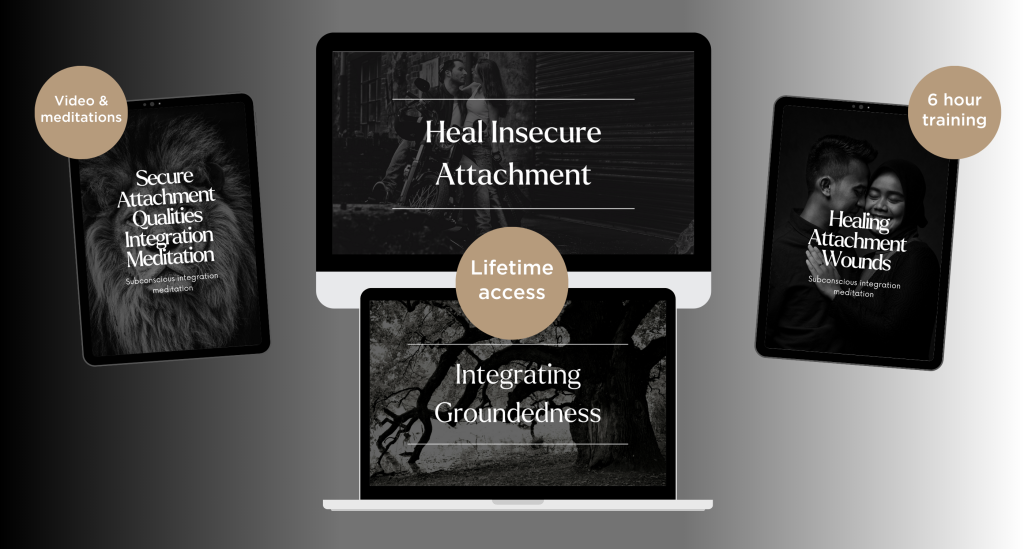
Enroll now and you’ll also get 3 bonus trainings totally FREE! Secure Self meditation, Self-Soothing Toolkit & Attachment Styles Tracker
Benefits
- Uncover the qualities of an inner parent and create an internal secure attachment
- Enhance the capacities for feeling secure, grounded, calm and confident in relationships
- Break the cycle of avoidant attachment patterns, such as pulling away, shutting down, not communicating etc
- Experience emotionally safe and supportive relationships
- Set healthy boundaries and enhance your self-worth
- Cultivate a supportive and compassionate inner voice
Unlimited access to the resources
ENTRY INTO GIVEAWAY FOR complimentary one:one session
accountability to boost your progress
Study at the pace that works for you
01. Progress Checklists & Integration Tools
Simple, structured checklists to track your growth, stay consistent, and see how far you’ve come as you move through your healing journey.
02. Private Facebook Group
Access to a dedicated Facebook group where you can share your lessons, breakthroughs, and wins and connect with others on the same healing journey. Feel supported, seen, and understood every step of the way.
03. Your Avoidant Attachment Workbook
A guided workbook filled with powerful journal prompts, reflections, and exercises to help you go deeper into each module and apply the work to your own life.

Choose the payment options
Total Value of over £1,500
SPRING SALE (SAVE £34)
One-time payment of
£135
- Heal Avoidant Attachment
- Lifetime Access + Future Updates
- BONUS: Self-Soothing Toolkit
- BONUS: Heal Avoidant Attachment Workbook
- BONUS: Exclusive Access to Private Facebook Group for Students
ORIGINAL PRICE
one-time payment of
£169
- Heal Avoidant Attachment
- Lifetime Access + Future Updates
- BONUS: Self-Soothing Toolkit
- BONUS: Heal Avoidant Attachment Workbook
- BONUS: Exclusive Access to Private Facebook Group for Students
Satisfaction Guarantee
30 Day Money-Back Guarantee
I’m confident in the value of this course, which is why it’s backed by a money-back guarantee. If it’s not the right fit, you can request a full refund
Rated 5 out of 5
“I just wanted to thank you firstly, for all the incredible sessions. You’ve made a massive difference to my inner children. I’m understanding myself better and I’m checking in with them and some of them are pretty much healed now. So thank you, thank you. Like I’ve said before, I’ve had years of different therapy and nothing has ever got to the root of my issues like what you’ve introduced me to so thank you. I’m very, very grateful to have found you and for all the incredible help you gave me. And I’ve had almost 40 years of just not feeling good enough and my inner critic ruling and I’ve really learned to love my inner children and understand where they’re coming from and I’ve just got a very different relationship with myself now and I don’t feel petrified of people anymore”.
Emma, UK
Rated 5 out of 5
Over the past year, I committed to one of the most transformative journeys of my life: healing my inner child. I was fortunate to walk this path with my therapist, Vicky -a presence so calm, grounded, and steady that she created the safety I needed to grow, untangle, and release. Through this journey, layers of fear began to dissolve. I confronted limiting beliefs I didn’t even know I carried. I let go of inner blockages that had shaped my reactions, my expectations, and the way I received the world. With each session, something softened… and something strengthened.
This work liberated me. I found myself living, working, and connecting from a clearer, freer place. My meaningful relationships became richer and more authentic. The questions that once weighed heavily on my heart finally had space to breathe – and the clarity that emerged was invaluable. Inner child work is not instant. It peels gently, a layer at a time, and each layer reveals a deeper truth. But the unfolding is worth it. I am deeply grateful for this experience. It was exceptional – a gift I didn’t know I needed and I would recommend it to anyone seeking deeper alignment, peace, and a fuller sense of self.
Hessa, UAE
Who is this for
Is the Heal AVOIDANT attachment Course for me?
This course is designed for people who are ready to understand and change their attachment patterns. Take a moment to see if this feels like the right fit for you.
This is NOT for you if:
- You’re looking for a quick fix or instant transformation
- You’re not open to reflecting on your own behaviours and patterns
- You want to focus only on changing other people rather than yourself
- You're not ready to do the work and reflect on your relationship patterns
- You’re unwilling to practice the tools consistently and expect a short cut
This is right for you if:
- You notice patterns like avoidance or unworthiness in your relationships
- You want to feel more secure, calm, and confident when connecting with others
- You feel empty in relationships
- You’re tired of repeating the same relationship dynamics and want real change
- You recogniswe the relational patterns holding you back and want a change
How it works
01. Enroll in the Course Now
Click buy now to access the course.
02. Check Your Email Inbox
Check your inbox to receive login details.,
03. Get Instant Access
Get instant access and start working through the course at your own pace.
Choose the payment options
Ready to Get Results Like These?
FAQs
You Asked, We Answered
READ the Frequently Asked Questions
Attachment styles are stored in the nervous system, shaped by past experiences, (especially early relationships), but they can evolve over time. With awareness, consistent effort, and healthier relational experiences, people can move toward a more secure attachment style. Change doesn’t happen overnight, but it is absolutely possible.
There’s no fixed timeline. It depends on your self-awareness, the tools you practice, and the relationships you’re in. Some people notice small shifts quickly, while deeper changes take longer. What matters most is consistency (small, repeated changes tend to create lasting results).
Yes. An attachment style is a cluster of coping mechanisms or “parts” to protect you and keep you safe. You can have both anxious and avoidant parts that work hard to uphold balance in your system. In this program we will help you to get to know your unique system of parts, healing both of your anxious and avoidant parts, so you can move towards secure attachment.
Therapy can be very helpful, especially for deeper patterns or past wounds, but it’s not the only path. Education, self-reflection, and practicing new behaviors in safe relationships can also lead to meaningful change. Many people use a combination of self-guided work and professional support.
It’s natural to have that concern. When you have lived with attachment patterns for so long it becomes difficult to imagine living without them. But when you heal the nervous system patterns, you can create space to integrate secure patterns. This course goes above and beyond intellectualising and learning information but working with the nervous system to embody secure functioning.
Get in touch
Don’t see your question in the FAQ’s?
I love connecting with you and answering your burning questions about Heal Avoidant Attachment. You can email us directly and we’ll get back to you within 24 business hours. vicky@innerchildwork.co.uk
© INNER CHILD WORK | TERMS & PRIVACY POLICY