

How to Stop Going Back to an Abusive Relationship and Stabilise Your Life
Many clients enter therapy because they are tired of repeating the same relationship patterns.
They often arrive at their first session feeling confused, frustrated, and emotionally drained. They may have tried to leave more than once, yet somehow find themselves pulled back into the same dynamic.
They ask questions like:
“Why do I keep attracting emotionally unavailable people?”
“Why do I keep ending up in relationships with controlling partners?”
And underneath these questions is often a quieter, more painful one.
How do I stop going back to an abusive relationship when I know it is hurting me?
Learning how to stop going back to an abusive relationship requires more than surface level advice. It involves understanding the deeper emotional patterns that keep the cycle going.
The Inner Child and Emotional Patterns
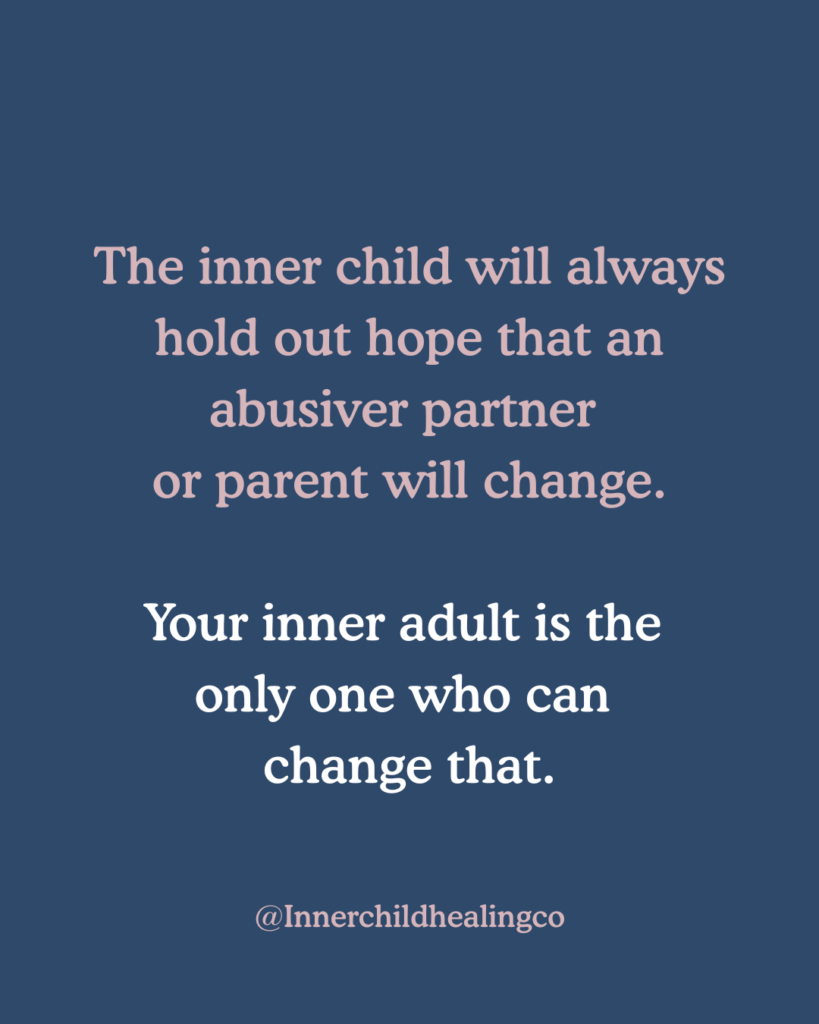
For many people, the answer lies in the inner child.
The inner child often holds onto hope in situations where love was inconsistent. When someone grows up in an environment where affection, attention, or emotional safety were unpredictable, a younger part of the psyche learns to survive through hope.
Young children, especially during toddlerhood and early school years, rely heavily on hope to emotionally survive difficult family environments.
A child might think:
“I hope Mum will be in a good mood today.”
“I hope they won’t argue tonight.”
“I hope they’ll come to my final game.”
Hope becomes a coping strategy. It allows children to remain emotionally connected to caregivers even when those caregivers are unpredictable or unavailable.
If a six year old fully recognised that their caregiver could not consistently provide emotional safety, the reality would feel overwhelming. A child depends on their caregiver for survival, so the mind adapts.
This is often where codependent patterns begin, and it is also where the roots of how to stop going back to an abusive relationship can be understood.
How Codependency Develops
Codependency, rooted in hope and magical thinking, can be an effective survival strategy during childhood. It helps children tolerate emotional instability while still holding onto the possibility that things might get better.
However, these patterns often continue into adulthood.
Many adults still find themselves holding onto hope that emotionally unavailable partners will change, that difficult family members will finally become supportive, or that relationships will eventually feel safe and nurturing.
Part of the adult mind understands what is happening. They may read, reflect, and recognise unhealthy dynamics.
But another part of the psyche, the inner child, still carries the emotional blueprint formed earlier in life.
Understanding this is essential when exploring how to stop going back to an abusive relationship, because the pull is not just about the present, it is connected to the past.
The Internal Conflict
Before healing begins, that younger part can quietly influence many decisions. It may see relationships through hopeful, rose coloured lenses, longing for love and validation from people who are unable to provide it.
So even when the adult mind says, “This is not right,” another part says, “Maybe this time it will be different.”
This internal conflict sits at the heart of how to stop going back to an abusive relationship.
Why You Keep Going Back
If you are struggling with how to stop going back to an abusive relationship, it can help to understand what is pulling you back.
Familiarity can make unhealthy dynamics feel strangely normal. Hope can keep you emotionally invested in potential rather than reality. Fear of loneliness or starting again can feel overwhelming. Conditioning may lead you to prioritise others over yourself.
All of these factors play a role in why someone finds it difficult to break the cycle.
This is why how to stop going back to an abusive relationship is not about simply telling yourself to leave. It is about understanding the deeper emotional attachment.
The Role of Hope

Hope, while often seen as something positive, can become a trap in these situations.
The same hope that once helped a child survive can keep an adult stuck in painful relationships.
Instead of seeing the relationship clearly, the focus remains on what it could become.
Learning how to stop going back to an abusive relationship involves gently letting go of that version of hope and becoming more grounded in reality.
Why Logic Alone Is Not Enough
Many people feel frustrated with themselves because they know the relationship is unhealthy.
They may ask themselves why they keep returning when they understand the damage it causes.
Often it takes up to 7 attempts to leave an abusive relationship.
It can be dismissive when people say “why don’t you just leave?” because it’s likely to be a trauma bond and there are complex neurobiological reasons why you’re trapped in the relationship.
Often empathy and loyalty is used against you and if you were starved of empathy and love as a child, this becomes part of your shadow self. You’re overcompensating for the lack of love and empathy you didn’t get as a child, which makes you extremely easy to manipulate and control.
If you grew up where you were manipulated and carry guilt and toxic shame or abandonment, then it’s likely you have CPTSD which makes you an easy target for a person with narcissistic tendencies.
This can also happen in toxic relationships where they threaten abandonment as a form of control.
The emotional brain responds to attachment, familiarity, and fear. Without addressing these deeper layers, awareness on its own is often not enough.
Healing your inner child and childhood trauma helps you to stop being easily manipulated by people.
Inner Child Healing As The Path Forward

Inner child healing offers a different path.
When exploring how to stop going back to an abusive relationship, this work focuses on the part of you that still believes love must be uncertain in order to exist.
Through inner child healing, people can begin to recognise when that younger part is influencing their choices.
Instead of abandoning themselves by staying in harmful dynamics, they begin to respond with understanding and care.
They might say to themselves:
“I understand why this feels familiar.”
“I know you are hoping things will change.”
“But we do not have to stay here anymore.”
This is a powerful shift in learning how to stop going back to an abusive relationship.
Becoming Your Own Inner Parent
A key part of this process is becoming your own inner parent.
This means stepping into the role of the supportive and protective adult that was needed earlier in life.
Rather than continuing to seek unconditional love from people who cannot provide it, people begin offering that love to themselves.
They begin setting boundaries, protecting their energy, and choosing relationships that feel safe.
This is where how to stop going back to an abusive relationship starts to become less about effort and more about alignment.
Rewriting the Pattern
As healing continues, the pattern begins to change.
The emotional pull towards unhealthy relationships becomes weaker. The desire to return is replaced with a deeper sense of clarity.
This transformation is at the core of how to stop going back to an abusive relationship.
It is not about forcing yourself to stay away. It is about no longer feeling drawn to what once felt familiar.
The Reality of Letting Go
It is also important to understand that leaving can feel uncomfortable.
For many people, learning how to stop going back to an abusive relationship includes navigating feelings that resemble withdrawal.
There may be urges to reconnect, feelings of anxiety, or moments of doubt.
This does not mean the relationship was right. It means your system is adjusting to something new.
Choosing Yourself
Over time, something begins to shift internally. Instead of asking how to stop going back to an abusive relationship, a different question starts to emerge.
Why would I return to something that harms me?
This shift happens naturally as self trust and emotional safety grow.
Moving Forward
Learning how to stop going back to an abusive relationship is not about becoming someone else.
It is about reconnecting with yourself.
It is about understanding the patterns that were formed in the past and gently rewriting them in the present.
It is about letting go of hope where it no longer serves you, and choosing stability, safety, and self respect instead.
It is about protecting your energy and focusing on yourself again.
The Benefits of Therapy For Breaking the Cycle

When thinking about how to stop going back to an abusive relationship, one of the most important shifts is choosing to break the pattern rather than repeat it.
Without support, many people find themselves moving from one unhealthy relationship to another, each time having to rebuild their life from the ground up. This can be emotionally exhausting and deeply destabilising.
Therapy offers a space to pause that cycle.
Instead of reacting from old patterns, you begin to understand them. Instead of repeating the same dynamics, you begin to make different choices.
Over time, this creates real, lasting change.
Rebuilding Your Life From a Place of Strength
Breaking free from repeating abusive relationships allows you to rebuild your life in a very different way.
Rather than constantly recovering from emotional damage and building your life all over again, you begin creating stability.
Your emotional and mental health can start to improve as you are no longer navigating the stress, anxiety, and unpredictability that often come with unhealthy relationships.
There is more space to think clearly, feel grounded, and make decisions that support your wellbeing.
Creating Space for Healthier Connections
When you are no longer consumed by a draining relationship, you create space for other areas of life to grow.
Friendships often become stronger and more meaningful. You may find yourself reconnecting with people you had less time or energy for before.
Social connectedness becomes something that supports you, rather than something that is sacrificed for a relationship. Studies show that single women who aren’t married are happier and more socially connected. There’s many advantages for your mental health being single.
This is an important part of how to stop going back to an abusive relationship, because it reduces emotional dependence on one person for all of your needs.
Financial and Personal Independence
Repeatedly rebuilding after unhealthy relationships can impact not only your emotional wellbeing, but also your financial stability.
Breaking the cycle allows you to focus on your own growth.
You may find more energy to build your career, improve your financial independence and strengthen your sense of security in practical ways. Over time, this can also positively impact your financial confidence and even areas like your credit stability.
Independence becomes something you build for yourself, rather than something you risk losing within unstable relationships.
Emotional Independence and Stronger Boundaries
Therapy also supports the development of emotional independence. Instead of relying on a partner for validation or a sense of worth, you begin to build that internally.
This naturally leads to stronger boundaries.
You become less likely to tolerate behaviour that once felt familiar. You stop overgiving, overcompromising, or losing yourself in order to maintain a connection.
Learning how to stop going back to an abusive relationship often includes this shift from people pleasing to self respect.
Giving Yourself Permission to Be Single
One of the most powerful parts of healing is allowing yourself time to be single.
Rather than rushing into another relationship for a sense of security, you begin to build that security within yourself.
Being single becomes an opportunity rather than something to avoid.
It allows you to:
- Strengthen your identity
- Build supportive friendships
- Develop emotional resilience
- Feel comfortable in your own company
This stage is often where the deepest growth happens. Having supportive relationships in your life will strengthen you and reduce the likelihood of depression and mental healthy difficulties.
It is also where many people truly learn how to stop going back to an abusive relationship, because they no longer feel the same urgency to fill a space with someone else.
A Different Way Forward
Therapy is not just about understanding the past. It is about creating a different future.
When you stop repeating harmful patterns, you no longer have to keep starting over.
Instead, you begin building a life that feels stable, supportive, and aligned with who you are.
And from that place, relationships are no longer about survival or hope.
They become a choice.
About Me
Hey, I’m Victoria, an inner child therapist for those who want to break unhealthy relationship patterns.
I support people to heal their inner child, break people pleasing patterns, set boundaries, and protect their mental health from codependent and emotionally unsafe or draining relationships. This helps you to reduce feelings of depression, anxiety, feeling emotionally drained, reconnect to yourself and create fulfilling relationships that are safe and supportive.
You’re welcome to get in touch and we can explore if I’m the right therapist for you.
Available for in person and remote clients
vicky@innerchildwork.co.uk
http://www.innerchildwork.co.uk
Read More
IFS for CPTSD: Understanding Trauma, Parts, and Healing
7 Signs of Emotional Safety in a Relationship
6 Signs You have the Guilt Wound
IFS and Guilt: From Emotionally Overly-Responsible to Unapologetic
Codependency Guilt and Shame: Healing Through IFS Therapy and Inner-Focus