
4 Effective Strategies For How to Manage Anxious Attachment
Do you ever find yourself feeling overly anxious in your relationships? Perhaps you feel insecure when your partner doesn’t respond quickly or you struggle with separation and fear of abandonment.
It’s likely you have an anxious attachment style, which is not your fault. Many people develop this attachment style due to inconsistent parenting in childhood, leading to difficulties in relationships as adults. Those with anxious attachment often experience heightened anxiety during moments of uncertainty and struggle to communicate their needs, fearing rejection or disapproval from their partners. However, your attachment style isn’t a life sentence and you don’t have to deal with the emotional pain alone.
There are things you can do to learn how to manage anxious attachment and feel more secure and stable in your relationships.
As someone who leans towards anxious attachment, I know first-hand what it’s like to feel anxious. Sometimes it feels like you’re carrying the moon on your heart. Sometimes you feel helpless and there is a desperation and urgency to talk to someone to soothe you.
I understand the emotional rollercoaster and sense of loneliness you can feel. Sometimes it feels like the pain is never going to end as it’s likely this is how you felt as a child.
But first, what is attachment?
Attachment is the deep emotional bond that connects us to others, shaping how we relate, trust, and form relationships throughout our lives. First proposed by psychologist John Bowlby in the 1950s, attachment theory explains that our earliest bonds—typically with caregivers—play a pivotal role in shaping how we see ourselves, others, and relationships in general.
When caregivers consistently respond to a child’s needs with warmth and reliability, the child is more likely to develop a secure attachment, forming a positive view of relationships and a sense of security within them. Conversely, inconsistent or unresponsive caregiving can lead to insecure attachment, often resulting in difficulties with trust, self-worth, and relationship stability. In this way, our early attachment experiences influence not only childhood but also our approach to connection, intimacy, and trust as adults.
There are four attachment styles
Attachment styles play a crucial role in how we approach and experience relationships. As you begin your journey towards secure attachment, it’s essential to first identify your current attachment style. There are four main attachment styles:
Anxious Attachment: Individuals with an anxious attachment style are often emotionally expressive, highly sensitive to rejection, and may require frequent reassurance from their partner. They may struggle with insecurities and fear of abandonment.
Avoidant Attachment: Those with an avoidant attachment style tend to have difficulty with emotional intimacy and may distance themselves from their partners when feeling vulnerable. They value independence and may have trouble expressing their emotions openly.
Fearful Avoidant Attachment: Characterized by a combination of anxious and avoidant behaviors, individuals with a fearful avoidant attachment style often experience a confusing push-and-pull dynamic in relationships. They may crave intimacy but fear rejection, leading to inconsistent behavior.
Secure Attachment: Securely attached individuals feel comfortable with intimacy and rely on their partners while maintaining a healthy sense of independence. They can effectively communicate their needs, are empathetic towards their partner’s emotions, and navigate relationship challenges with trust and understanding.
Understanding your attachment style provides valuable insights into your relationship patterns and helps identify areas for personal growth and development as you strive towards secure attachment. Consider taking an attachment style quiz or reflecting on your past relationships to gain a deeper understanding of your current attachment style.

Looking at the root of anxious attachment
A child learns to trust and depend on their caregiver’s responsiveness and availability. Typically, when the child is distressed, the caregiver typically steps in to provide comfort and reassurance, helping the child regain a sense of calm and security. This reliable caregiving establishes a solid foundation for a healthy attachment style, enabling the child to explore their surroundings confidently and form relationships throughout their life.
Conversely, inconsistent caregiving disrupts a child’s sense of security. When a parent only responds to a child’s distress sporadically, the child may become anxious and uncertain about whether their needs will be met. This inconsistency can foster feelings of anxiety related to separation and lead to the development of an insecure attachment style. As these children mature, they may carry this anxiety into their adult relationships, finding it challenging to trust others, form intimate connections, and manage fears of abandonment.
The caregiver’s consistent response to a child’s distress is crucial in shaping their attachment style. Reliable soothing and reassurance from parents nurture secure attachment and emotional well-being. In contrast, inconsistent caregiving can contribute to anxious attachment, potentially resulting in enduring feelings of anxiety and insecurity in future relationships.
Understanding how to manage anxious attachment in adulthood can be key for those affected, helping them form healthier and more balanced relationships.
Anxious attachment in adult relationships
How to manage anxious attachment often begins with understanding its origins. Given that the root of anxious attachment often lies in inconsistent parenting, adults with this attachment style may experience heightened sensitivity to potential signs of rejection or abandonment. In adult relationships, anxiously attached individuals often fear that their partner’s affection might be unpredictable or fleeting. As a result, they may feel compelled to seek constant reassurance, crave closeness, and become hypervigilant to any perceived emotional distance or change in their partner’s behavior.
In relationships, this attachment style can lead to a cycle of worry and dependency. For instance, if a partner becomes momentarily less attentive or communicative, an anxiously attached individual may interpret it as a sign of rejection. This can cause them to reach out frequently, asking for affirmation, or may even lead to heightened emotional reactions, driven by the need to restore a sense of security. Unfortunately, these behaviors may create tension in the relationship, potentially leading to the very disconnection the person fears.
Anxious attachment can also make it difficult for individuals to express their needs directly. The fear of appearing “too needy” or risking rejection might cause them to suppress their feelings or overcompensate by people-pleasing. In doing so, they might avoid communicating openly about their fears or needs, leading to unfulfilled expectations and resentment over time.
Learning how to manage anxious attachment effectively in adulthood often involves developing self-worth and healthy communication patterns.
Mindfulness, inner healing and self-soothing techniques can be invaluable in helping people learn how to manage anxious attachment and drastically reduce anxiety. By developing self-worth they have the foundation they need to advocate their needs in a healthy way and form more stable, trusting, and fulfilling relationships.
Effective strategies for how to manage anxious attachment
Let’s explore some of the techniques that can help you learn how to manage anxious attachment.
1. Harness your anxiety
Many people with anxious attachment struggle with low self-esteem and are hard on themselves for overthinking and feeling insecure in relationships. They might even tell themselves the story that they’re hardwired and that they will never be able to have a healthy, happy relationship.
They might also second guess their own feelings and struggle to trust their own gut about someone.
One of the things I teach my clients in my practice is listening to their feelings. Anxiety often signals an unmet need, alerting you that something in your environment may be off balance. Rather than pushing it aside, view your anxiety as an opportunity for self-inquiry. Ask yourself: What is my anxiety trying to tell me? What might I need right now?
When you feel anxiety heavy on your heart, that’s your body’s way of signaling to you that a current need isn’t being met and your body is out of balance.
For example, let’s say you’re talking to someone new and your anxious attachment is triggered due to feeling as though you’re more emotionally invested than they are. You might feel unclear about their intentions, causing you to feel anxious, confused and uncertain.
Often those with anxious attachment will numb their feelings and avoid speaking up due to the fear of coming across needy or demanding.
They might also push away their thoughts and feelings and put on a “cool girl persona” where they keep things light & fun to maintain the connection.
However, this approach often backfires, because it leads to a build up of anxiety and feelings of low mood as deep down they feel neglected in the relationship.
Instead of ignoring your anxiety and labelling yourself as “too much” or “too demanding” it’s important to listen to your feelings and honor your emotional needs.
We all have emotional needs. It’s normal to want consistency, affection, transparency of intentions and responsiveness when you need emotional support.
Sometimes, we get anxious because our needs aren’t being met and instead of listening to our feelings and communicating our needs, we feel anxious because we’re abandoning ourselves and our body is communicating to us a disconnect.
So when it comes to learning how to manage anxious attachment, it’s about learning to listen to your anxiety and the wisdom it has to offer.
Next time you feel anxious, ask yourself: What do I feel anxious about? What do I need to feel secure?
2. Build self-worth
When considering how to manage anxious attachment it’s important to acknowledge that those with anxious attachment often have low self-worth.
Many with anxious attachment seek validation and security from others, feeling defined by how others respond to them. This external focus can create a deep vulnerability, as one’s sense of self becomes dependent on how a partner behaves or responds.
Often those with anxious attachment can be preoccupied about their relationships and they can seek their self-worth from how others treat them.
But this puts us in a fragile place, because what happens when that person is busy? What happens when that person needs space? What happens when that person decides they want to end the relationship?
When we place so much of our self worth on our relationship, our foundation crumbles quickly, because our foundation is reliant on others.
Building self-worth and a secure sense of self can be transformative in managing anxious attachment. This begins with identifying and affirming your values, interests, and identity outside of any relationship.
One of the ways to build self-worth is focusing on building a strong sense of self and becoming confident and self assured about who you are, what you value and what your goals are. This helps you to build inherent value, so that you don’t settle for less in your relationships.
and you remain grounded and anchored by knowing who you are, what your non-negotiables are and what your goals are.
This self-assured foundation help you to feel anchor and grounded and makes it easier in your journey in how to manage anxious attachment. Instead of feeling insecure about your anxious attachment, you learn to advocate for your needs, boundaries and goals.
3. Self-soothing
Self-soothing is a powerful tool for when it comes to learning how to manage anxious attachment, as it empowers you to regulate emotions independently, reducing the urge to seek constant reassurance from others.
When anxiety arises—whether due to perceived rejection, separation, or uncertainty in a relationship—learning to soothe yourself can help you regain a sense of inner calm and clarity. Self-soothing techniques encourage a gentle, compassionate approach toward your emotions, allowing you to confront and manage them without external validation.
One of the most effective ways to self-soothe is through mindfulness practices, such as deep breathing, grounding exercises, or meditation. When you feel anxious, practicing slow, deep breaths helps activate the parasympathetic nervous system, signaling to your body that it’s safe to relax. Grounding exercises, like focusing on your five senses or visualizing a calm place, can shift your attention away from anxious thoughts, bringing you back to the present moment. Regular mindfulness practices cultivate emotional resilience, making it easier to navigate intense feelings without feeling overwhelmed.
Journaling is another valuable self-soothing tool for those with anxious attachment. Writing down your thoughts and feelings allows you to process and clarify them, helping you identify specific triggers and patterns. By reflecting on what may be causing your anxiety and what you need, journaling encourages self-compassion and empowers you to validate your emotions independently. Self-soothing through journaling also gives you a safe outlet to explore fears and concerns, reinforcing a sense of self-understanding and reducing reliance on others for reassurance.
Developing a self-soothing routine can be transformative in managing anxious attachment, as it builds a stable, internal foundation for emotional regulation. Instead of turning to your partner or loved ones in every moment of anxiety, self-soothing enables you to meet your emotional needs first. With practice, these techniques can help you feel more secure within yourself, bringing more balance, clarity, and peace to your relationships.
4. Choose partners with secure characteristics
One of the most impactful ways to learn how to manage anxious attachment is by choosing a partner with secure attachment characteristics. Securely attached individuals are generally comfortable with intimacy, reliable in their communication, and consistent in meeting emotional needs, creating a foundation of trust and stability in the relationship. When partnered with someone who embodies these traits, anxiously attached individuals may feel less need to seek constant reassurance, as a secure partner naturally provides the emotional safety they crave.
Secure partners tend to be open in their communication, expressing affection and discussing issues calmly rather than avoiding them or reacting impulsively. They often handle conflict constructively, which reassures their partner that the relationship is a safe space for vulnerability and growth. Their ability to calmly discuss feelings or address concerns can encourage an anxiously attached partner to do the same, leading to a balanced exchange of needs and a healthier relationship dynamic.
A secure partner’s consistency is another key factor in fostering emotional security. Securely attached individuals generally demonstrate consistency in their words and actions, which builds trust over time. This dependability helps an anxiously attached person feel grounded, as they don’t have to worry about unpredictable behavior or fluctuating levels of affection. When they know they can count on their partner, they’re more likely to feel safe in expressing their true selves and communicating their needs.
Choosing a partner with secure attachment traits doesn’t just ease anxiety; it can also promote personal growth. With a secure partner’s steady support, anxiously attached individuals often experience a gradual reduction in their attachment anxiety. This supportive relationship model encourages them to develop a stronger sense of self-worth and practice healthy relationship behaviors, ultimately helping them transform anxious attachment into a more secure, balanced approach to love and connection.
Heal anxious attachment for good
One of the best ways to better learn how to manage anxious attachment is going on a journey of deep healing and healing the deeper emotions from the past.
Whilst there is a lot of content on how to manage anxious attachment, such as mindfulness, journaling, a lot of this content is insufficient in HEALING anxious attachment.
The manifestations of attachment are primarily subconscious, which is why often these methods don’t create lasting changes.
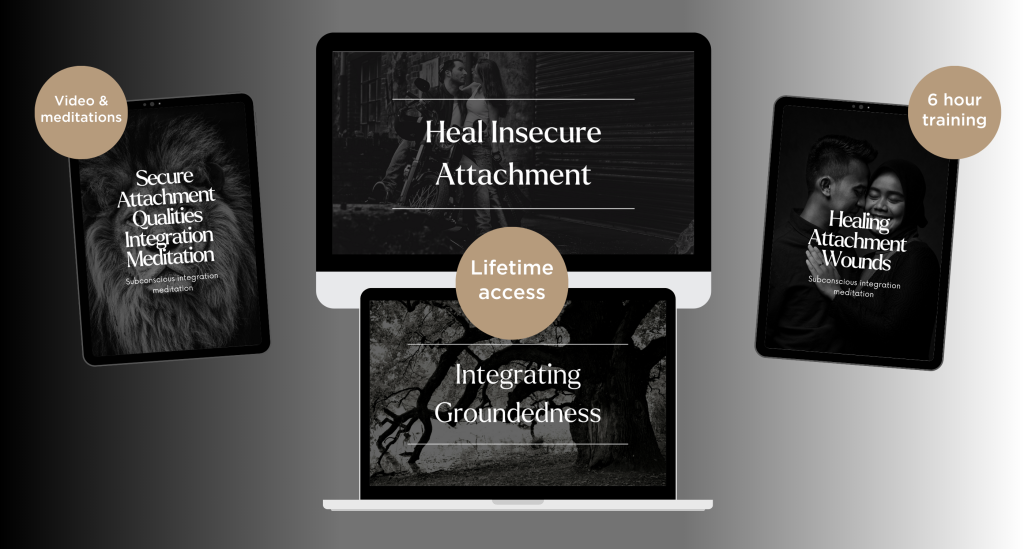
Our Heal Insecure Attachment course offers a transformative, emotion-focused process that integrates subconscious patterns and facilitates personal growth. Through over 6 hours of video content and therapeutic meditations, our community has learned the deeper tools to learn not only how to manage anxious attachment but create sustainable healing.
In this course, you’ll learn how to develop secure internal attachment by healing emotions such as the fear of rejection and abandonment
Enrolling in the Heal Insecure Attachment course provides a holistic approach to healing, paving the way for secure relationships and a more balanced, fulfilling life. By emphasizing self-awareness, emotional regulation, and inner security, individuals can break free from the cycle of fear and disconnection, ultimately building a foundation of trust and confidence in all aspects of their lives.