

Inner Child Healing CPTSD: Healing from Complex Trauma and Relationship Patterns
Healing from trauma is a journey that requires patience, self-compassion, and understanding. For those who have experienced prolonged, repeated, or relational trauma, the effects can be deep and complex. This is often referred to as complex trauma, and it can leave lasting imprints on the mind, body, and spirit.
Inner child healing CPTSD is one approach that can help individuals navigate the long-term impact of these experiences.
By reconnecting with and caring for the wounded parts of ourselves, we can begin to build emotional resilience, regulate our responses, and foster deeper connections with others.
In this blog, I’ll talk about inner child healing CPTSD for releasing trauma and building secure internal attachment.
Understanding Complex Trauma and CPTSD
Complex trauma typically arises from prolonged exposure to distressing experiences, often in childhood, such as neglect, abuse, or unstable family dynamics. Unlike a single traumatic event, complex trauma is repetitive and occurs in a context where the victim feels trapped or unable to escape.
Over time, complex trauma can manifest as CPTSD—Complex Post-Traumatic Stress Disorder. CPTSD includes many of the symptoms of traditional PTSD, such as intrusive thoughts, hypervigilance, and emotional dysregulation, but also involves difficulties with self-concept, emotional regulation, and interpersonal relationships.
Some common signs of CPTSD include:
- Feeling persistently unsafe or on edge
- Difficulty regulating emotions, such as sudden anger, sadness, or shame
- Low self-esteem or feelings of worthlessness
- Difficulty trusting others or forming close relationships
- Persistent anxiety or panic in social situations
- Feeling disconnected from your body or emotions
- Self-sabotaging behaviors or patterns
Recognizing these signs of CPTSD is a critical first step. Awareness allows us to understand that our reactions and coping strategies are not flaws, but adaptive responses developed during childhood to survive complex trauma.
Shifting Mindsets: From Fixing to Curiosity
One of the most important steps in inner child healing CPTSD is evaluating the mindset we bring to the healing process.
Often, people approach healing with a “fixing mindset.” They analyze their emotions, behaviors, and past experiences with the goal of changing or “fixing” themselves. They may hear advice like, “You should do this” or “You need to do this,” which can unintentionally add pressure and reinforce self-criticism.
Healing from CPTSD works differently. It requires a curiosity mindset, an approach that is gentle, exploratory, and compassionate.
Ask yourself:
- “What am I noticing about my emotions right now? Is it sadness, frustration, or anger?”
- “What sensations am I feeling in my body? A tight chest? Fast breathing?”
Through this lens, healing becomes less about judgment and more about noticing and acknowledging what arises. Inner child healing CPTSD involves unlearning the habits of numbing or suppressing feelings, strategies we often developed in childhood to prevent overwhelming our vulnerable inner child. Learning to feel our emotions fully is essential not only for emotional well-being but also for forming authentic connections with others.
The Inner Child and Emotional Patterns
Even when we understand these concepts intellectually, our inner child may still feel insecure, anxious, or unsafe. This is because complex trauma in childhood often left us without a parent or caregiver to guide us through challenges, regulate our emotions, or provide reassurance.
Many adults with CPTSD find themselves stuck in habitual fight, flight, or freeze responses. Their nervous system learned to anticipate danger, and even safe situations can feel threatening.
Learning more theories or techniques about inner child healing CPTSD can sometimes feel overwhelming, especially if the inner child’s wounds are deep. The key is not the accumulation of knowledge, but consistent practice of soothing and reparenting.
Inner child healing CPTSD emphasizes habits and practices that provide comfort, reassurance, and care to the wounded parts of ourselves. These practices are about creating the nurturing environment that may have been missing in childhood.
Some practical prompts include:
- Write a letter to your inner child: “As a caring and loving parent, write a letter to your inner child who struggled alone.”
- Soothe your inner child: “Write a letter to comfort your inner child who felt sad or left out.”
- Acknowledge their feelings: Spend a few minutes noticing and naming emotions as they arise, validating them as real and understandable.
Through consistent practice, these small acts of compassion strengthen the bond between your adult self and your inner child. Over time, they can reduce feelings of anxiety, shame, and self-criticism.
Codependency and Emotionally Unsafe Relationships
Many clients enter therapy because they are tired of repeating the same relationship patterns.
They often arrive at their first session feeling confused, frustrated, and emotionally drained. They may have tried to leave more than once, yet somehow find themselves pulled back into the same dynamic.
They ask questions like:
- “Why do I keep attracting emotionally unavailable people?”
- “Why do I keep ending up in relationships with controlling partners?”
Beneath these questions lies a quieter, more painful one: How do I stop going back to an abusive relationship when I know it is hurting me?
Understanding this requires exploring deeper emotional patterns—often rooted in codependency and complex trauma.
How Codependency Develops
The inner child often holds onto hope in situations where love was inconsistent. When affection, attention, or emotional safety was unpredictable, children developed strategies to survive emotionally.
A child might think:
- “I hope Mum will be in a good mood today.”
- “I hope they won’t argue tonight.”
Hope becomes a coping strategy, allowing children to remain emotionally connected even when caregivers are unpredictable.
This is where codependent patterns begin and where the roots of returning to unhealthy relationships are often found. Codependency, rooted in hope and magical thinking, can help children tolerate instability while still holding onto the possibility that things might improve.
However, these patterns often continue into adulthood. Many adults still hold onto hope that emotionally unavailable partners will change, or that difficult family members will finally provide care or validation.
Emotionally Unsafe Partners
Emotionally unavailable partners often avoid communication, defend over repair, or act out of their own feelings of inadequacy. They may sabotage intimacy through threats of abandonment, using control as a coping mechanism to feel safe themselves.
Staying in a relationship with such a partner, or with a codependent partner who refuses help, can trap you in the role of the “fixer.” Over time, this reinforces old inner child patterns—hoping that love and emotional safety will arrive if you try hard enough.
Learning how to stop going back to an abusive relationship involves gently letting go of these old patterns of hope and becoming grounded in reality. The inner child still carries the emotional blueprint formed earlier in life, and it can quietly influence decisions unless actively nurtured and guided.
How Inner Child Therapy Builds Emotional Safety and Secure Attachment

One of the most powerful outcomes of inner child healing CPTSD is the development of a secure internal attachment. Childhood experiences of complex trauma often leave us with an insecure attachment style, where we struggle to trust ourselves, others, or even our emotional responses.
Inner child therapy works by helping you reconnect with the part of you that learned early on that the world, or those closest to you, might not be safe. By practicing compassion, validation, and consistent care toward your inner child, you begin to create a sense of safety within yourself.
This internal sense of security has wide-ranging benefits:
- Improved emotion regulation: By soothing and acknowledging your inner child, you reduce reactive fight, flight, or freeze responses, allowing you to respond to situations rather than overreact.
- Greater emotional stability: Regular inner child work helps you feel more grounded and steady, even when confronted with triggers from past trauma.
- Stronger boundaries: A secure internal attachment makes it easier to identify and enforce personal boundaries in relationships, reducing the likelihood of falling back into codependent or unhealthy dynamics.
- Enhanced trust in intuition: When your inner self feels safe, you can rely on your gut feelings about people and situations, making healthier choices.
- Healthier relationship choices: With increased emotional security and clarity, you are better equipped to choose partners and friendships that honor your needs, rather than repeating patterns from childhood.
Through inner child healing CPTSD, therapy not only addresses the symptoms of trauma but also rewires your internal sense of trust, safety, and self-worth. It transforms your relationship with yourself, which in turn transforms your relationships with others.
Rebuilding Trust in Yourself and Others
Inner child healing CPTSD is not only about addressing trauma, but also about building self-trust. Childhood experiences of complex trauma often leave us doubting our worth or feeling unsafe in relationships.
Through reparenting practices, we learn to:
- Validate our own emotions
- Recognize triggers and respond with compassion instead of fear
- Set healthy boundaries
- Notice when we are repeating old patterns of people-pleasing or self-neglect
This becomes essential for breaking the cycle of emotionally unsafe or codependent relationships.
Integrating Mind, Body, and Emotion
The impact of CPTSD extends beyond thoughts and emotions, it also lives in the body. Many individuals experience tension, hypervigilance, dissociation, self-doubt and guilt.
Inner child healing CPTSD involves noticing bodily sensations without judgment:
- “What sensations am I noticing right now?”
- “Where am I holding tension or discomfort?”
Connecting with your body while attending to emotions creates a holistic approach to healing, reinforcing safety and presence, and supporting the ability to navigate relationships without falling back into old patterns.
Is Inner Child Healing for CPTSD Effective?
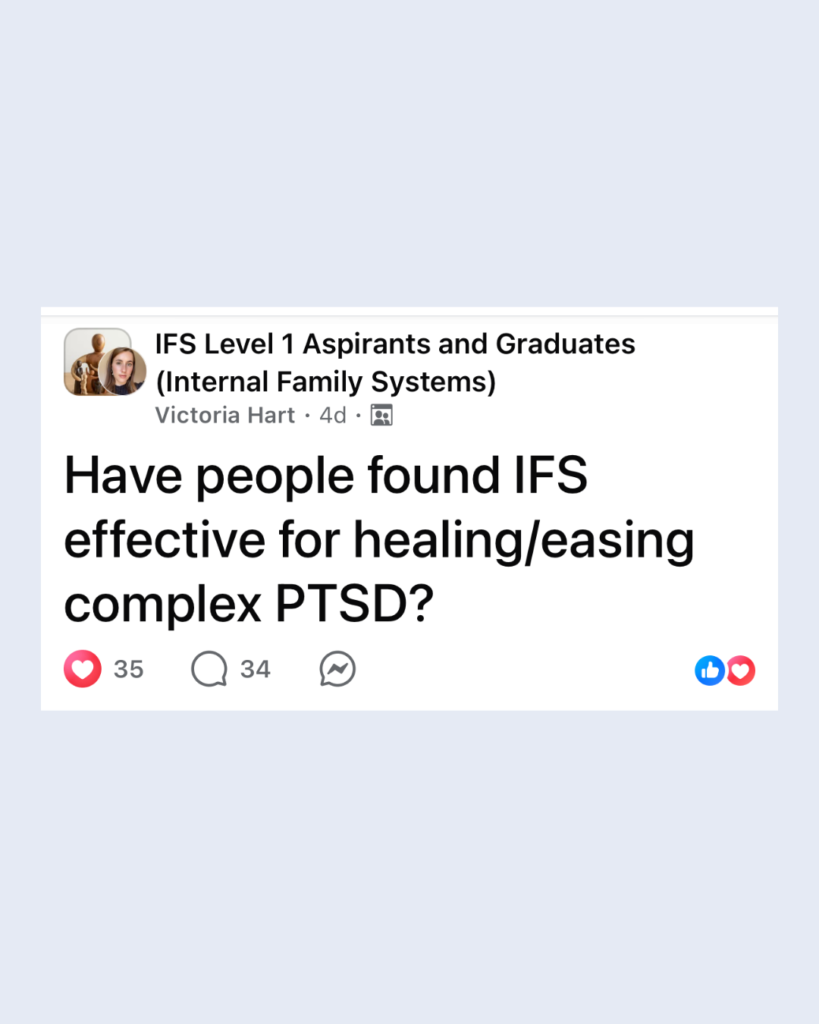
A question people might ask is “Is inner child healing for CPTSD really effective?” To get a sense of real experiences, I asked this in a Facebook group dedicated to trauma recovery. The responses were overwhelmingly positive. Many people shared that inner child work helped them build a secure internal attachment.
This feedback aligns with research and clinical observations. Inner child healing CPTSD is not a quick fix, but it is a structured and compassionate approach that helps repair the internal attachment system disrupted by complex trauma.
Over time, it fosters emotional safety and a stronger sense of self, which are crucial for breaking cycles of codependency, unhealthy relationships, and self-sabotaging behaviors.
For many, the practice of inner child healing creates a profound shift: it’s no longer about trying to “fix” oneself, but about nurturing, validating, and supporting the parts of you that need care. This foundation of internal security becomes a cornerstone for long-term recovery, healthier relationships, and emotional resilience.
The Role of Patience in Healing
Healing from complex trauma and codependent patterns is a gradual process. It requires patience and consistent self-compassion.
Your inner child may resist or fear certain experiences, and old relationship patterns may reemerge. The goal is not perfection, but curiosity, awareness, and repeated practice of self-soothing and boundary-setting.
The Transformative Power of Inner Child Healing CPTSD
The beauty of inner child healing CPTSD lies in its compassionate approach. By reparenting the parts of yourself that felt abandoned, unsafe, or unheard, you gradually:
- Learn to regulate intense emotions
- Develop a more stable sense of self-worth
- Reduce feelings of shame or guilt
- Build healthier relationships
- Reclaim joy, playfulness, and creativity
This work helps you move from surviving trauma and toxic relational patterns to thriving in adulthood with authenticity, resilience, and self-respect.
Final Thoughts
Inner child healing CPTSD and breaking free from codependent or emotionally unsafe relationships is a deeply personal journey. There is no single right way to heal.
Inner child healing CPTSD encourages a curiosity mindset rather than a fixing mindset. By exploring emotions, reconnecting with your inner child, practicing self-soothing, and setting boundaries, you can begin to heal patterns rooted in complex trauma.
This approach is not about erasing the past, it’s about creating a compassionate relationship with it, fostering self-trust, and reclaiming your emotional freedom. By giving your inner child the care and validation they may have missed, you can break the cycle of unhealthy relationships and build a life grounded in safety, joy, and authentic connection.
Curious To Go Deeper?
If you feel ready to go deeper, therapy can provide a structured space to explore these questions safely. Through consistent guidance, reflection, and inner child work, you can:
- Strengthen emotional regulation
- Build secure internal attachment
- Set and maintain healthy boundaries
- Choose relationships that truly honor and respect you
- Foster a sense of self-trust and empowerment
You’re welcome to get in touch to see if I am the right therapist to guide you through this.
Read More
IFS for CPTSD: Understanding Trauma, Parts, and Healing
IFS Self Abandonment, CPTSD, and Codependency: How We Learned to Leave Ourselves to Stay Safe
IFS Therapy for Complex PTSD: Healing Developmental Trauma from the Inside Out
IFS for CPTSD: Understanding Trauma, Parts, and Healing
Is Inner Child Work Evidence-Based? How Memory Reconsolidation Heals Childhood Trauma
Best Resources for Anxious Attachment: Everything You Need to Start Healing