

Healing the Belonging Wound and Finding Belonging Within Yourself
The belonging wound is one of the most painful and deeply rooted emotional wounds a person can carry. The belonging wound often begins in childhood, especially in environments shaped by CPTSD, where safety, emotional attunement, and connection were inconsistent or absent.
When the belonging wound forms early, it creates a sense of not belonging anywhere. Not fully in your family, not with peers, and not within society. The belonging wound can leave you feeling ostracised, different, or like you are always on the outside looking in.
Over time, the belonging wound does not just stay as a feeling. It becomes part of your identity.
The Belonging Wound and CPTSD
The belonging wound is often closely linked to CPTSD. When a child grows up feeling unseen, misunderstood, or emotionally unsafe, they begin to internalise the belief that they do not belong.
The belonging wound can develop through emotional neglect, instability, bullying, or simply feeling different in ways that were not accepted. When this happens repeatedly, the belonging wound becomes a core narrative.
You may move through life expecting disconnection. Even when connection is available, the belonging wound can make it feel unfamiliar or unsafe.
How the Belonging Wound Impacts Your Sense of Self
The belonging wound has a profound impact on your sense of self and self esteem.
You may feel like you have to earn your place in relationships. You may shape shift, adapt, or suppress parts of yourself in order to feel accepted. The belonging wound creates a tension between authenticity and acceptance.
Over time, you can lose clarity on who you really are, because so much of your energy has gone into trying to belong.
The Impact of the Belonging Wound
The belonging wound shows up in very real life patterns.
It can lead to addictions, as a way to cope with the emptiness or disconnection the belonging wound creates.
It can lead to codependent relationships, where your sense of worth becomes tied to being needed or chosen.
It can create social anxiety, where interactions feel threatening because the belonging wound expects rejection.
It can also make someone an easy target for bullies, especially when self esteem is low and your sense of self is not fully grounded.
These are not flaws. They are adaptations to the belonging wound.
The Cost of Not Healing the Belonging Wound
Pain that is not transformed, is transmitted.
When the belonging wound is not healed, it does not disappear. It continues to shape behaviour and relationships.
Unhealed trauma will almost always cause us to hurt others, often without realising it. We may become controlling, because we don’t feel we have control in our lives, we may become the fixer in a relationship where we deny another person their autonomy of their own lives.
The belonging wound can keep cycles of disconnection and pain repeating.
Shadow Work and the Belonging Wound
One way to begin healing the belonging wound is through shadow work.
Shadow work is a concept that is common in therapy. It has as a premise that there is a shadow version of us that needs to be integrated into our conscious self.
The shadow includes the parts of us we have hidden, rejected, or suppressed in order to belong. These parts often carry the pain of the belonging wound.
It is not so much the wound itself that is the issue when you are an adult, but the adaptations you made to your behaviour in order to deal with the belonging wound or prevent it from happening again.
The things that kept you safe as a child are often the things that make it hard to live fully as an adult.
Working with a therapist can help you do this safely. When your mind starts to spiral or shut down, having someone neutral who understands the process can bring you back.
If you have never done this work before, it can be helpful to go through it with someone experienced so the emotions do not become overwhelming or retraumatising.
Working with the Belonging Wound Through IFS
Another way to heal the belonging wound is through Internal Family Systems.
Instead of seeing the belonging wound as one fixed issue, IFS helps you understand the parts of you that carry it.
There may be a part that feels excluded or not included. A part that feels neglected. A part that feels ostracised and feels like they don’t have family. A part that doesn’t feel integrated. A part that feels anxious. A part that fears others will be jealous of them, because of experiences of bullying and ostracism.
There may be another part that tries to overcompensate by fitting in, pleasing others, or becoming who it thinks it needs to be.
Even those the parts work hard to protect us from re-experiencing further pain the cost can be that we abandon ourselves and lose ourselves.
IFS allows you to build a relationship with these parts, rather than fighting them. Over time, this helps soften the belonging wound and creates more internal safety.
Self Abandonment and Shrinking Yourself to Belong

One of the deepest patterns that can come from this is self abandonment.
We can learn to shrink ourselves so small just to feel safe. To not be a threat. To not be too much. To avoid being ostracised, judged, or rejected.
We dim our light. We soften our presence. We hold back our intelligence, our beauty, our expression. Not because there is anything wrong with us, but because at some point, it felt safer to be less.
Safer to not stand out. Safer to not trigger jealousy. Safer to not make others uncomfortable.
But the cost of this is that we abandon ourselves.
We trade authenticity for acceptance.
And the truth is, if you are surrounded by people who feel threatened by your presence, your energy, or who you naturally are, there is nothing you can do to make them comfortable.
Their insecurity is not something you can fix.
You can spend years trying to manage how you are perceived, shaping yourself into something more acceptable, but it will never truly work with the wrong people.
It only becomes self sacrifice.
A slow erosion of who you are.
At some point, you have to face a deeper truth.
You can dim your light to make others comfortable, or you can choose yourself.
And healing the belonging wound requires that you choose yourself.
The Freedom of Not Belonging

There is another side to the belonging wound that is rarely talked about. There can be freedom in not belonging in the traditional sense.
I found belonging in myself and leaned into my mercurial qualities. I do not belong fully to any one group, but I walk between different spaces and carry the capability for dialogue between these differences.
I moved so many times in my life and there is no places that feels fully mine. Too esoteric for 9 to 5 friends, too ambitious for bohemian circles, too free spirited for structured environments. Too neurospicey for Spanish spaces, where I’m sensitive to loudness and bright lights, yet too empathetic for banter British culture.
At one point, this felt like the belonging wound. Now it feels like range.
Instead of trying to conform to one identity or one box, I allow different parts of my identity to exist in different places.
I take elements of the spaces that nourish me.
Home, Displacement, and Identity
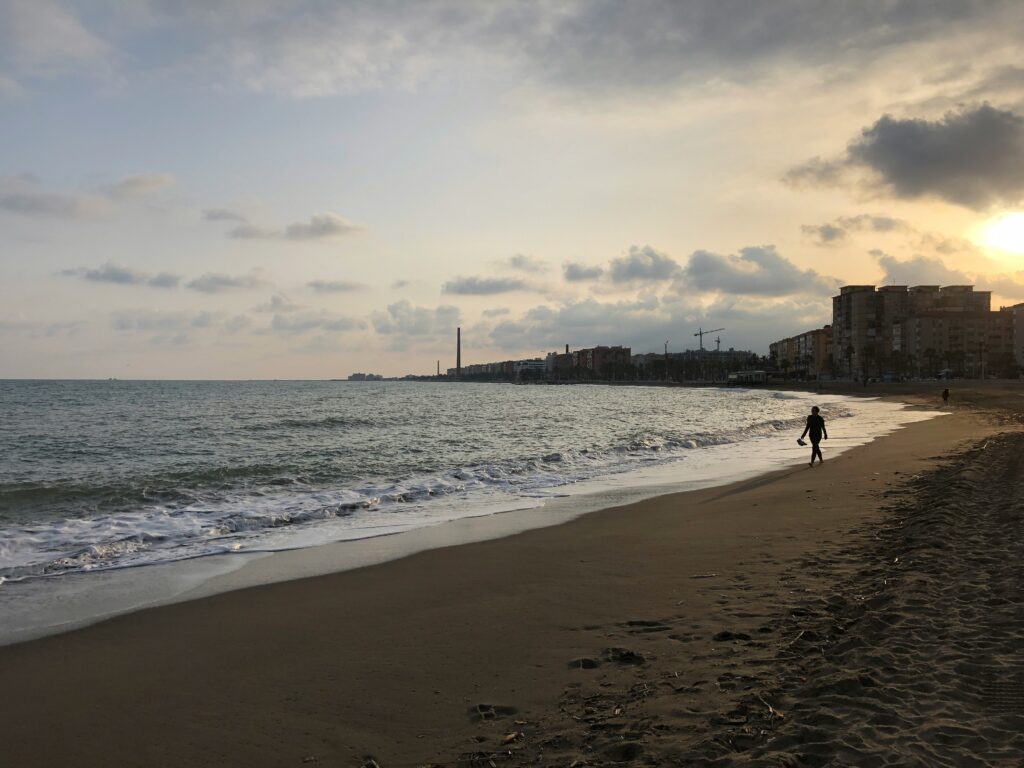
Since coming back from my time in Spain for a year. There has also been a deep sense of homesickness.
Living in Spain felt more like home than anywhere else, yet after Brexit the visa process made it difficult to feel settled. I struggled to get a TIE appointment as they never had appointments available.
Since then, I have grieved Spain every day and have missed the sunshine, blue sky, warmth, culture, beautiful architecture, mountains and the sea.
But since then I have come back to my home city and have had to let go of Spain and focus on my life here.
More recently, I have started to integrate Spain into my daily life to deal with my grief. Now that I have more space in my life to not have visa anxiety, it’s freed me time to learn Spanish and appreciate the moments i miss.
I’ve realised that I don’t need to forget about it completely and I can integrate it into my life here. I’ve done this by going to language exchange to meet international people, joining language apps to practice Spanish daily and listening to flamenco music from Andalusia. I’ve also become more confident speaking and understanding from listening to music.
I’ve met people in the north east through pub quiz, salsa and international nights and I’ve been able to integrate both identities and parts of myself.
Rather than forcing one place to hold everything, there is a shift toward living across places.
In the future, I’d like to live part of the year in Spain, part in the UK. Allowing identity to exist in multiple places. Then eventually, I may end up moving to Spain entirely but not doing it in a rush or a form of escape but going slowly when I have an established support system there.
Since coming back to the UK, I have seen that there are things to value in both. The UK offers support, familiarity and ease. I can speak English with anyone and make friends easily here and be free of visa anxiety.
Spain offers a better quality of life and lifestyle that I’m working towards in the future. I miss the food, the music, the vitamin D, but instead of choosing one, I can take my time.
Returning to places connected to past pain, like going back to the north east after being bullied, also brings the belonging wound into awareness again. But it also creates an opportunity to rewrite that relationship and my experiences here.
Belonging in Moments Rather Than Places

I had a realisation that changed everything.
You may not fully belong anywhere, but you can still experience belonging.
The belonging wound begins to soften when you stop expecting one place or one group to provide it. Belonging can exist in moments. In conversations. In connection. In interests. In experiences.
You can take the best and leave the rest. You can gather moments of belonging and hold onto them.
Even brief interactions can create a genuine sense of connection where, in that moment, you feel like you belong.
The beautiful thing of being an immigrant in Spain has meant that now I can speak some Spanish with Spanish speakers and can form connections through that shared identity of being an immigrant and can go to international nights talking about my experience of living in Spain and how I miss it. I’ve also met friends who have felt the same and we share that goal of wanting to return.
Becoming Your Own Sense of Belonging
Healing the belonging wound is ultimately about creating belonging within yourself.
It is about becoming your own person. Owning your individuality. Knowing your worth.
It’s about honouring the different parts of you and experiences you’ve had that have shaped your identity.
It’s also about not settling for friendships or relationships that do not meet your emotional needs and building a strong support network of friends that protect you from feelings of depression.
When you heal the belonging wound, you stop trying to fit in and start allowing yourself to stand out.
Rewriting Your Identity
When you begin healing the belonging wound and working with the parts of you that feel like they do not belong, something powerful happens.
You can alchemise those parts.
You can take what you have learned from your past, and consciously choose who you want to become.
Healing the belonging wound allows you to rewrite your identity. To take the parts you like, and leave the rest.
You are no longer defined by where you did not belong.
You become someone who creates belonging, from within.
Curious to find belonging in yourself?
Are you curious to feel more confident, whole and socially connected? If you’d like to heal parts of you that feel hurt, rejected and not included, IFS therapy can be a powerful therapy for integrating parts of yourself and feeling more emotionally whole and self-confident. You are welcome to get in contact and we can have a conversation to see if I’m the right therapist for you.
Read More
IFS for Social Anxiety (Understanding the Protective System Beneath the Fear)
Inner Child Healing CPTSD: Healing from Complex Trauma and Relationship Patterns
IFS for CPTSD: Understanding Trauma, Parts, and Healing
IFS Self Abandonment, CPTSD, and Codependency: How We Learned to Leave Ourselves to Stay Safe