

Stop Caretaking the Borderline or Narcissist: Reclaim Your Energy and Your Life
Many people come to me seeking guidance on how to stop caretaking the borderline or narcissist in their lives. They often feel drained, anxious, or guilty for setting boundaries, yet they can’t seem to stop overgiving to people who don’t reciprocate or respect them. Understanding why we fall into these patterns and how to break free is the first step toward reclaiming your energy, your peace, and your sense of self.
Understanding Why We Caretake
Caretaking is often learned early in life. Many children grow up in homes with emotionally unavailable, controlling, or abusive parents, including narcissistic or borderline parents. In order to survive, we adapt. Magical thinking and hope become essential strategies:
- “I hope mum will be in a good mood today.”
- “I hope they won’t fight tonight.”
- “I hope mum will acknowledge my feelings”
These are not signs of weakness, they are strategies for survival. Caretaking and codependency, often rooted in this hopeful thinking, helps children feel some sense of control over an unpredictable environment.
As children, we don’t yet have the capacity to separate our needs from the emotional instability around us.
Over time, these early survival strategies can carry forward into adulthood, particularly in relationships with partners or family members who are emotionally unavailable or manipulative. This is why so many people struggle to stop caretaking the borderline or narcissist, because they are unconsciously repeating patterns learned in childhood.
Signs You’re in a Relationship with a Narcissist or Borderline
Recognizing the dynamics at play is crucial to breaking free from caretaking. Some common signs include:
- Threats of abandonment used as control
- Disrespect for boundaries
- Extreme jealousy and controlling behavior
- Monitoring your whereabouts
- Severe emotional dysregulation
- Coldness or emotional withdrawal
- Guilt and emotional manipulation
- Lack of personal responsibility for their mental health
If you recognize these patterns, it’s a clear signal to reassess the relationship and reclaim your boundaries.
The Origins of Caretaking and Codependency
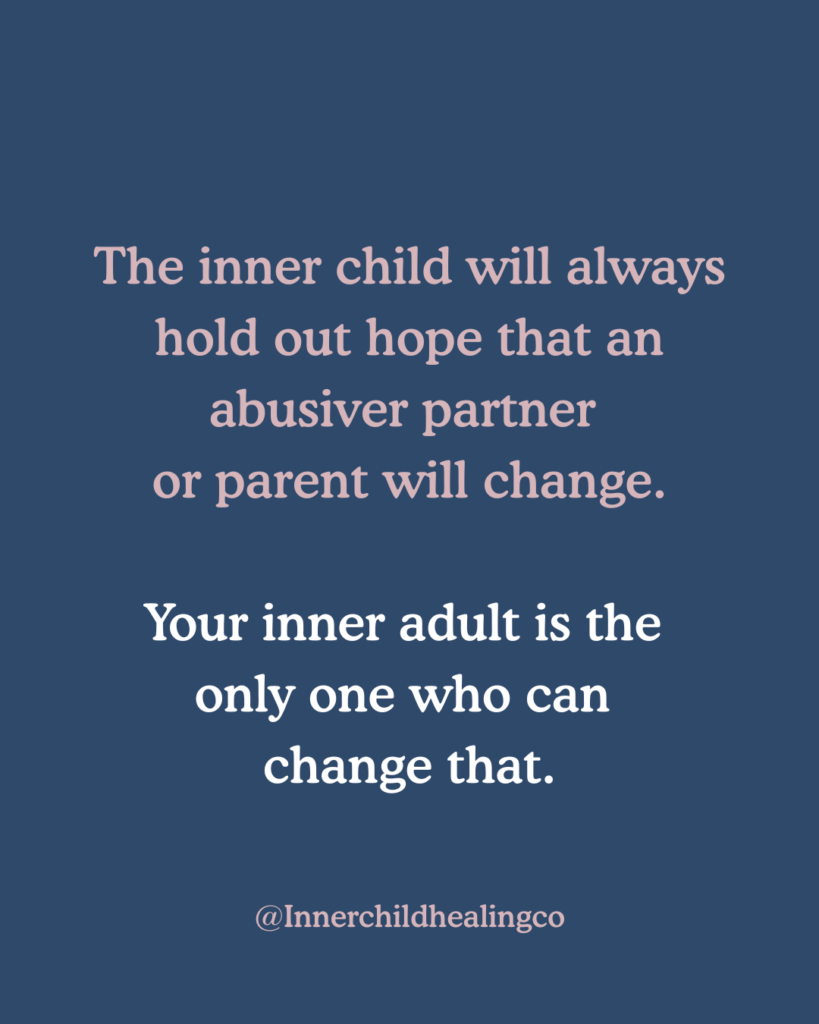
Caretaking often stems from early childhood experiences. Children adapt to unpredictable, neglectful, or abusive environments by creating protective strategies, which can persist into adulthood.
A child’s inner world develops around hope: hope that the parent will change, hope that they will finally be seen, hope that love can be earned.
Unfortunately, this hope can extend into adulthood, manifesting as caretaking in relationships with narcissists or borderlines.
The inner child continues to operate with rose-colored glasses, wanting to heal or “fix” someone who cannot or will not change.
At some point, the adult self must step in. The adult self reads the books, seeks therapy, joins support groups, and begins the conscious work of reclaiming energy, setting boundaries, and letting go of unhealthy patterns.
Often, this awakening is triggered by a crisis. This might be another betrayal, exploitation, or letdown from the abusive parent or partner.
For women, particularly those raised to be caretakers or people-pleasers, this can feel like unlearning a lifetime of habits.
Many women were trained to give empathy and care even when it wasn’t reciprocated, especially if their parents were narcissistic or emotionally unavailable.
Hyper-empathy becomes a way to compensate for the lack of care received in childhood.
But eventually, continuing this pattern with toxic people only reinforces the same cycle.
Putting Yourself First

The first step to stop caretaking the borderline or narcissist is asking a simple but powerful question:
“I want to care for them as no one cared for me the way I needed to, but who cares for me?”
The answer is: you can be. You become the person who provides the empathy, support, and care that your neglected parts of self never received.
This is not selfish. It is essential. Without this internal support, it’s impossible to fully break free from caretaking cycles.
IFS Therapy and the Mind-Body Connection
One of the most effective tools to support this journey is Internal Family Systems (IFS) therapy. IFS helps you identify the parts of yourself that unconsciously pull you into draining or codependent relationships.
Common protective parts include:
- Caretaking parts that try to “fix” a narcissistic partner or parent
- People-pleasing parts that seek approval from emotionally unavailable individuals
- Hyper-empathetic parts that overcompensate for neglect or abandonment
- Self-doubt parts that carry toxic shame from abusive environments
- Overthinking parts that fear abandonment and replay past traumas
Through IFS, you learn to acknowledge these parts, validate their intentions, and gently help them release the roles they’ve been carrying. Rather than pushing them away, you integrate these parts into a balanced self, reclaiming your energy and freedom.
The Adult Self: Healing the Past

A central concept in IFS is connecting with your adult self. The part of you that is stable, grounded, and capable of providing the empathy and regulation that your younger parts lacked.
The adult self can:
- Comfort the inner child parts that experienced neglect
- Offer the emotional co-regulation that was missing
- Model healthy boundaries and self-respect
- Reassure you that your needs matter
By building a secure attachment with your adult self, you learn to create safety internally, instead of seeking it externally from the borderline or narcissist. This internal security is foundational to breaking free from caretaking.
Signs You’re Becoming Stronger
As you begin to stop caretaking the borderline or narcissist, you may notice tangible shifts in your behavior and energy:
- Drawing your energy back to yourself instead of overgiving
- Setting and enforcing stronger boundaries
- Trusting your intuition over hope for someone to change
- Pushing back against controlling or manipulative behavior
- Accepting reality rather than clinging to potential
- Focusing your energy on your career, hobbies, health, and education
- Letting go of the need to fix or control others
- Prioritizing friendships and activities that genuinely energize you, like dancing, learning, or creative expression
These changes are not just behavioural. They reflect profound internal shifts in your nervous system and sense of self-worth.
Signs IFS Therapy Is Working
If you are exploring IFS therapy as a tool to stop caretaking the borderline or narcissist, signs of progress include:
- Increased self-awareness of protective parts
- Ability to pause before reacting to manipulative behaviours and set boundaries
- Greater emotional regulation and calm in triggering situations
- Feeling more connected to your adult self and less dominated by inner child fears
- A growing sense of personal empowerment and agency in relationships
IFS therapy provides a structured way to reclaim the energy that was previously spent trying to manage or fix someone else.
It Takes Practice
Stopping caretaking requires daily practice. Begin by noticing when you are overextending for someone who cannot meet your needs. Ask yourself:
“Am I giving to heal them, or to heal the part of me that was never cared for?”
Shift your focus to the parts of your life you can nourish, your body, mind, goals, and relationships that truly reciprocate. Over time, the compulsive caretaking impulses weaken as your internal adult self strengthens.
The Importance of Putting Yourself First: Physically, Emotionally, and Spiritually

A key part of learning to stop caretaking the borderline or narcissist is embracing the principle of always putting yourself first as a necessary practice for your well-being and growth.
Physically
A key part of learning to stop caretaking the borderline or narcissist is putting yourself first physically. Physically, this means protecting your energy and your body. Prioritise rest, nutrition, movement, and self-care rituals that make you feel strong and grounded. If you are constantly over-giving to others, your body bears the cost—fatigue, tension, chronic pain or illness often follow. Putting yourself first physically ensures you have the strength to set boundaries and engage with the world from a place of stability.
Emotionally
A key part of learning to stop caretaking the borderline or narcissist is putting yourself first emotionally. Emotionally, putting yourself first means acknowledging your feelings, setting clear boundaries, and giving yourself permission to say no. It’s about resisting the urge to appease others or manage their emotions at your own expense. When you protect your emotional space, you prevent burnout, reduce anxiety, and stop feeding the cycle of codependency.
Spiritually
A key part of learning to stop caretaking the borderline or narcissist is putting yourself first spiritually. Spiritually, this means honoring your inner guidance, your values, and the practices that nurture your soul. Whether through meditation, prayer, journaling, or creative expression, putting yourself first spiritually allows you to reconnect with your inner self, your purpose, and your truth. It helps you stay grounded even when others try to pull you into chaos or manipulation.
Putting yourself first is not a one-time act. It’s a daily commitment. By prioritising your physical, emotional, and spiritual well-being, you reinforce your adult self, reclaim your energy, and create a foundation from which you can engage with others without losing yourself.
This principle is essential in breaking free from caretaking patterns, reclaiming your autonomy, and living a life aligned with your true self.
Final Thoughts
To stop caretaking the borderline or narcissist is to reclaim your life. It is to recognize that your energy, time, and compassion are finite and that they deserve to be invested in places that respect and support you.
By understanding your inner parts, connecting with your adult self, and practicing consistent self-care, you can break free from codependent cycles, regain your autonomy, and build healthier relationships. This helps you to break the cycle and stop caretaking the borderline or narcissist and pour that energy back to you.
This is not a journey of blame. It’s a journey of empowerment. Every step you take to stop caretaking the borderline or narcissist brings you closer to your most grounded, confident, and authentic self.
Looking for Therapy to Break Codependent Patterns?
If you’re ready to stop caretaking the borderline or narcissist and break free from codependent patterns, protect your energy, and prioritise your mental health, you’re not alone.
You’re welcome to get in touch to explore therapy options.
Together, we can determine whether I might be the right therapist to support you. Therapy is most effective when the relationship feels safe, supportive, and empowering, so it’s important that it feels like a good fit for you.
Taking this step is not just about ending unhealthy patterns; it’s about reclaiming your energy, building healthier relationships, and reconnecting with the parts of yourself that deserve care and attention.
Read More
How to Stop Being a Caretaker in a Relationship and Let go of Caretaker Parts IFS
How Would You Explain a Healthy Relationship to a Codependent Person?