Inner Child Work

  • Revolutionary Inner Child Therapy For Women That Protects Your Mental Health From Harmful Relationships

    inner child therapy for women inner child therapy inner child therapist inner child work ifs therapist 2

    Revolutionary Inner Child Therapy For Women That Protects Your Mental Health From Harmful Relationships

    Inner child therapy for women is one of those things you might come across when you are struggling. Maybe relationships feel hard. Maybe your emotions feel intense or confusing. Maybe there is this quiet sense that the emotional pain that you repressed in childhood is surfacing.

    For a lot of women, inner child therapy for women becomes relevant when you start noticing patterns you cannot seem to think your way out of. You might understand things logically, but emotionally, it still feels the same.

    This is because the inner child is part of the subconscious mind that drives a lot of our relationships. Often we unconsciously choose relationships based on our unmet emotional needs in childhood, and we are seeking resolution or repair in some way.

    The inner child feels neglected or abandoned and is unconsciously choosing emotionally unavailable partners in an attempt to heal themselves.

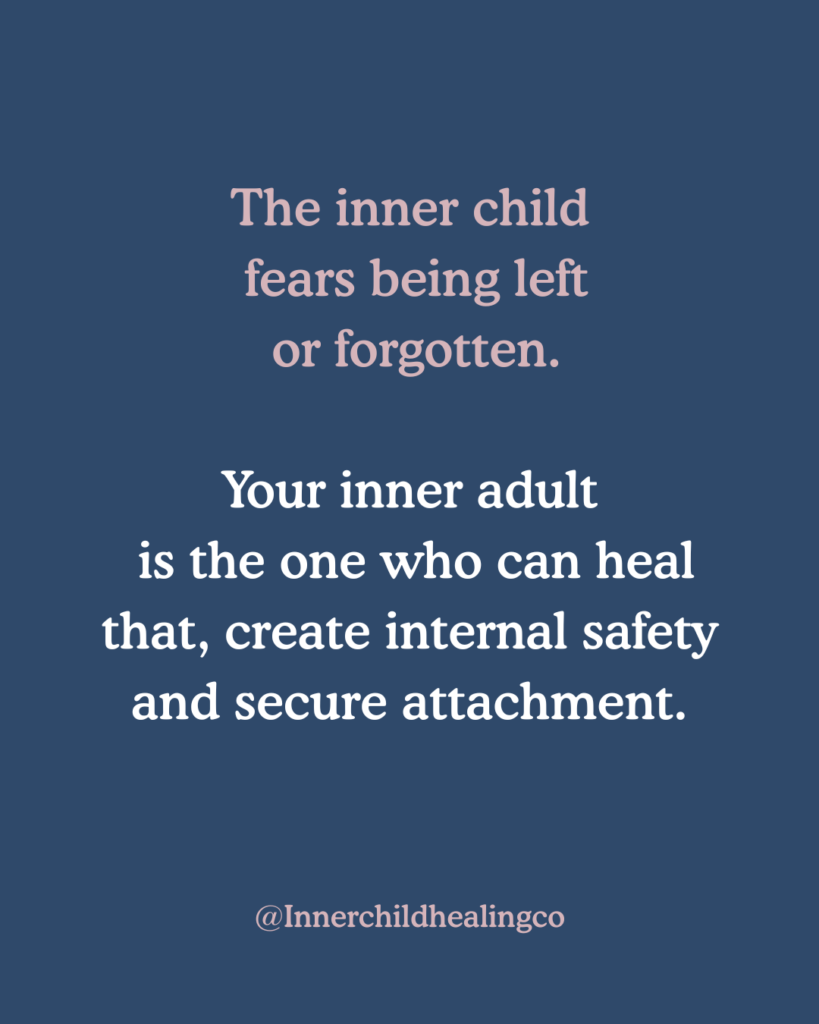
    The inner adult is the one who can create internal safety and secure attachment.

    Inner child therapy for women is not really about “fixing” yourself. It is more about understanding what drives your behaviour and taking your power back by being the caregiver you didn’t get as a child.

    Why This Work Matters More Than You Think

    Inner child therapy for women can feel quite confronting at first, because it asks you to look back.

    A lot of women were taught, directly or indirectly, to be easy to be around. To not be too emotional. To not take up too much space. To be the one who keeps things together.

    So you learn to adapt.

    You learn to read people.
    You learn to anticipate needs.
    You learn to manage how you are perceived.

    Inner child therapy for women starts to unpack that and psychotherapeutically unravel the driving forces behind the relationships that trigger you into anxiety and depression. It helps you to have self-awareness and reclaim your autonomy by healing your inner child and have more agency over the relationships you allow into your life.

    Inner child therapy for women helps you heal past unresolved experiences, strengthen the mind-body connection and set stronger boundaries in your life.

    The Patterns That Follow You Into Adulthood

    One of the biggest things inner child therapy for women highlights is how much of your adult life is shaped by your earlier experiences.

    You might notice you feel anxious in relationships, even when nothing is “wrong”.

    You might overthink everything you say.
    You might feel like you have to earn love.
    You might struggle to say no, even when you want to.

    Inner child therapy for women connects those patterns back to the moments where you first learned that love, safety, or belonging were conditional and you didn’t receive unconditional love as a child.

    How Inner Child Therapy for Women Protects You from Harmful Relationships

    One of the most empowering outcomes of inner child therapy for women is how it changes the relationships you choose and tolerate.

    Before doing this work, many women find themselves in patterns that feel familiar but painful.

    That is because many adult relationships unconsciously mirror childhood dynamics.

    Inner child therapy for women helps you see that clearly.

    You begin to recognise that the attraction to certain people is not random. It is often connected to unresolved emotional wounds.

    The part of you that learned to earn love may be drawn to people who make love feel conditional.

    The part of you that felt unheard may be drawn to emotionally unavailable partners.

    The part of you that learned to caretake may be drawn to people who need fixing.

    Inner child therapy for women helps you heal these parts rather than letting them run the show.

    As you begin to build a relationship with yourself, those patterns start to lose their pull.

    Inner child therapy for women protects you from becoming the caretaker to someone who cannot meet you. It helps you step out of codependent dynamics where your worth is tied to being needed. It creates awareness around emotionally unavailable partners who trigger abandonment wounds and anxiety.

    It also protects you from situationships where there is a lack of clarity, commitment, and emotional care.

    Because when you are connected to your inner child, you are more attuned to what actually feels safe and nourishing.

    You are no longer chasing what feels familiar.

    You are choosing what feels healthy.

    The Boundaries You Begin to Set After Inner Child Therapy

    As you continue with inner child therapy for women, boundaries begin to be something that naturally emerges. You start to protect your energy in a different way.

    Inner child therapy for women helps you recognise what does not feel good, and trust that feeling. You may find yourself no longer entertaining relationships with emotionally unavailable people.

    Your intuition becomes stronger. You begin to notice red flags earlier, before you are deeply invested.

    Inner child therapy for women sharpens your awareness. You are less likely to override your instincts or ignore discomfort.

    Your boundaries also become clearer and more consistent.

    You say no when something does not align. You communicate your needs more openly. You stop over explaining or justifying your limits.

    There is also often a shift toward valuing friendships more deeply. Instead of placing all emotional needs onto romantic relationships, you begin to build a supportive network around you.

    Inner child therapy for women encourages connection that feels safe, mutual, and grounding.

    This can be incredibly protective for your mental health, especially when it comes to preventing isolation or depression.

    Over time, your life begins to feel more stable.

    Not because everything is perfect, but because you are no longer abandoning yourself in the process of trying to belong.

    The Frustration Many Women Experience in Therapy

    Many people in therapy share a common experience.

    They go to therapy with the goal of wanting to improve their mental health and emotional regulation.

    Yet when it comes to strong emotions bubbling up to the surface, their therapist is ill-equipped to provide them the tools to regulate themselves and heal themselves.

    Perhaps a client feels abandoned by a parent and the therapist may make suggestions that they need to heal their inner child, but they fail to show their client how to heal their inner child.

    Inner child therapy is different.

    In inner child therapy, the inner child therapist will give a client tools to explore their emotions with a meditative state of mind.

    What Inner Child Therapy Actually Looks Like

    Inner child therapy for women is not about sitting there and forcing yourself to relive painful memories and come away feeling overwhelmed and broken.

    It’s not about stripping you back and then leaving a client to feel alone and flooded by their emotions.

    Most of the time, it is much quieter and gentler than that.

    It might look like noticing when you are triggered and asking “where do you feel this in your body“.

    It might look like asking you “how do you feel toward this part of you?” “Do you feel open and curious?

    It might look like imagining your younger self a few feet away from you and asking “Does this part of you see that you’re here?

    Inner child therapy for women is about building a relationship with that younger part of you.

    Not judging it. Not trying to get rid of it. Just understanding it.

    The Shift That Happens When You Stop Fighting Yourself

    Something interesting happens when you start doing inner child therapy in this way.

    Often there might be other parts that pop up. These might be overthinking parts, analytical parts, personal growth parts that want to fix.

    Inner child therapy would acknowledge these protective parts and build relationship with these parts of you.

    Instead of thinking “why am I like this?” and being critical to yourself, you start building compassion towards yourself.

    That shift alone can be huge.

    Inner child therapy for women helps you to experience a deep, calming felt-sense experience of calm and compassion in your body.

    And when you stop fighting yourself and having an internal battle, but meet yourself with curiosity, things begin to soften.

    Reparenting: Learning How to Show Up for Yourself

    A big part of inner child therapy for women is something called reparenting.

    Which basically means learning how to give yourself what you needed back then.

    When you have built a trusting relationship with protectors and you feel open and curious to the inner child parts of you, this is when reparenting starts.

    Reparenting starts by asking these parts of you “what did you need at the time?”

    That might be emotional support, consistency, love and compassion.

    Inner child therapy for women is not about doing this perfectly. It is about showing up, again and again, in small ways. When you consistently show up to your inner child with love, compassion and support, your inner child starts trusting you.

    This is how a secure internal attachment is formed.

    Unburdening: Letting Go of What Was Never Yours to Carry

    A really powerful part of inner child therapy for women is something called unburdening.

    Over time, your inner child does not just carry memories. They carry beliefs, emotions, and patterns that formed because of what they went through.

    Things like:
    I am not enough
    I have to earn love
    I am too much

    Inner child therapy for women helps you gently question where those beliefs came from and whether they were ever really yours to carry in the first place.

    Unburdening is the process of letting those things go. Not by forcing them away, but by allowing your system to release them when it feels safe enough to do so. This often happens through guided visualisation.

    You might imagine your inner child in a safe, peaceful place. For a lot of people, this naturally becomes somewhere like a beach, a forest, or somewhere that feels calm and expansive.

    Then, you begin to notice what they are holding.

    It could be a heavy feeling in the body. A belief. An emotion that has been stuck for a long time.

    Inner child therapy for women allows you to symbolically release this.

    You might imagine placing those feelings into the ocean, letting the waves take them away.

    Inner child therapy for women teaches that these burdens were never your fault, and they do not have to define you. When unburdening happens, you start feeling lighter. More spacious. Less reactive. The emotional weight of the past begins to loosen. And that creates room for something new.

    A new sense of self.
    A new way of relating to your emotions.
    A new belief about who you are.

    Unburdening is not something you rush.

    It happens gradually, as trust builds between you and your inner world.

    But when it does happen, it can feel like finally putting something down that you have been carrying for far too long.

    Emotional Triggers Start to Make Sense

    Before doing inner child therapy for women, emotional triggers can feel overwhelming or confusing.

    You might feel like your reactions are “too much”.

    But when you start this work, you begin to see that those reactions are not random. They are connected to earlier experiences.

    Inner child therapy for women helps you pause in those moments. Instead of reacting automatically, you can ask: what part of me is feeling this?

    And often, there is a younger part underneath it. A part that feels hurt, scared, or unseen.

    The Role of Anger

    A lot of women struggle with anger. Either they suppress it completely, or it comes out in ways that feel uncomfortable.

    Inner child therapy for women helps reframe anger. It is not something to be ashamed of.

    It is often a sign that something mattered. That something was unfair. That your voice wasn’t heard. That a boundary was crossed.

    When you start listening to that anger instead of pushing it away, you begin to understand yourself more deeply.

    Anger in current relationships can also be a sign that your emotional needs aren’t being met and you can start honouring yourself by setting stronger boundaries.

    Visualisation and Connecting With Your Younger Self

    One of the more practical parts of inner child therapy for women is visualisation. It might feel a bit strange at first. But over time, it can become quite natural.

    You might imagine your younger self sitting somewhere. Notice how they look. Notice how they feel. You might sit beside them. Talk to them. Or just be there.

    Inner child therapy for women is not about forcing anything to happen. It is about creating a space where connection can build over time.

    Why Self Worth Starts to Change

    A lot of self worth issues are rooted in early experiences. If you grew up feeling like you were not enough, that belief can stay with you.

    Inner child therapy for women helps you challenge that, not just logically, but emotionally. By consistently showing up for yourself, you start to internalise a different message.

    That you matter. That your needs matter. That you are allowed to take up space.

    Relationships Begin to Shift

    As you continue with inner child therapy for women, your relationships often start to change.

    Not because you are trying to control them, but because you are relating to yourself differently.

    You might find it easier to set boundaries.
    You might stop overgiving.
    You might choose people who feel safer.

    Inner child therapy for women creates change from the inside out.

    This Work Takes Time and That Is Okay

    One thing that is important to say is that inner child therapy for women is not a quick fix.

    It is not something you do once and everything changes. It is a process.

    Some days it feels clear and meaningful. Other days it might feel slow or even frustrating. But over time, there is a shift.

    You feel more grounded.
    More connected to yourself.
    Less reactive.

    Inner child therapy for women builds something steady.
    inner child therapy for women inner child therapy inner child work 67

    Coming Back to Yourself

    At its core, inner child therapy for women is about coming back to yourself.

    To the parts of you that had to adapt. The parts that felt unseen. The parts that learned to survive.

    And meeting them differently now. Not with pressure. Not with judgement. But with curiosity, patience, and care.


    Curious to Go Deeper?

    If you feel like inner child therapy for women resonates and you would like support in building a more secure relationship with yourself, you are welcome to get in touch.

    Read More

    Inner Child Therapist Online

  • 15 Deep Ways To Heal Your Inner Child And Rebuild Your Sense Of Self

    ways to heal your inner child inner child therapy inner child work inner child therapist v1

    15 Deep Ways to Heal Your Inner Child And Rebuild Your Sense Of Self

    Learning ways to heal your inner child is not just about feeling better in the moment. It is about repairing the relationship you have with yourself at the deepest level.

    When people begin exploring ways to heal your inner child, they often realise that many of their struggles are not random. Patterns like anxiety, emotional triggers, people pleasing, or feeling “not enough” are often rooted in earlier experiences.

    Ways to heal your inner child are about meeting the parts of you that were once alone, misunderstood, or unsupported and giving them something different now.

    This is not surface level work. It is relational work. It is learning how to become a safe place for yourself.

    1. Treat Yourself in the Opposite Way You Were Treated

    One of the most powerful ways to heal your inner child is to consciously interrupt the old pattern.

    Children internalise how they were treated. That voice often becomes your inner voice.

    So if you were criticised, you may criticise yourself.
    If you were dismissed, you may ignore your own needs.
    If you were controlled, you may struggle to trust yourself.

    Ways to heal your inner child involve doing the opposite.

    When you are triggered, instead of repeating the pattern, you respond differently.

    You speak gently to yourself.
    You slow down.
    You validate your feelings instead of overriding them.

    Over time, this creates a new internal environment.

    And often, through healthier relationships and friendships, you begin to realise something important.

    You were never the problem.

    2. Validate Your Anger Instead of Silencing It

    ways to heal your inner child inner child work inner child therapy inner child therapist g1

    Many people were not allowed to feel anger as children.

    So instead of expressing it, they suppressed it.

    But anger is often a protective emotion. It signals that something was unfair, unsafe, or crossed a boundary.

    Ways to heal your inner child include reconnecting with that anger in a safe way.

    Not acting it out, but listening to it.

    There is often a younger part of you that is still holding that emotion.

    For a long time, you may have pushed that part into a corner, silenced it, or tried to ignore it.

    But what that part actually needs is to be heard.

    When that anger shows up now, you can respond differently.

    You can listen.
    You can validate.
    You can say: it makes sense that you feel this way.

    Ways to heal your inner child are not about getting rid of emotions. They are about building a relationship with them.

    3. Address Imposter Syndrome in Relationships

    A common experience when doing ways to heal your inner child is noticing fear in relationships.

    A fear that if people really knew you, they would leave.

    This can feel like imposter syndrome in connection.

    You might feel like you are pretending to be okay. Like you are hiding parts of yourself.

    Ways to heal your inner child involve recognising that this fear belongs to an earlier time.

    It comes from experiences where being fully yourself did not feel safe.

    Now, the work is gently allowing yourself to be seen by safe people.

    And reassuring that younger part that things are different now.

    4. Connect Daily Through Visualisation

    Consistency matters more than intensity when it comes to ways to heal your inner child.

    Daily visualisation can be a simple but powerful practice.

    You might imagine your younger self sitting somewhere. Notice how they feel. Notice their body language.

    Then approach them gently.

    Sit beside them. Talk to them. Ask how they are.

    Ways to heal your inner child include building familiarity and trust over time.

    You are not forcing anything. You are showing up.

    5. Check In With Your Needs

    Many people who begin exploring ways to heal your inner child realise they are disconnected from their own needs.

    So this step is about rebuilding that connection.

    Start with what you feel in the moment.

    If you feel lonely, offer connection.
    If you feel overwhelmed, offer rest.
    If you feel unseen, offer attention.

    You can also ask directly: what do you need from me?

    Ways to heal your inner child involve trusting that your needs matter.

    And learning to respond to them consistently.

    Even if you do not get a clear answer, simply being present is enough.

    Your inner child may be cautious at first.

    Trust builds slowly.

    6. Reparent Your Inner Child with Support

    Reparenting is one of the deepest ways to heal your inner child.

    It is about becoming the adult you needed.

    Working with a therapist can help you learn how to do this in a safe and grounded way.

    A good therapist models curiosity, patience, and emotional safety.

    Ways to heal your inner child through reparenting involve speaking to yourself with kindness, setting boundaries, and holding space for your emotions.

    You begin to relate to yourself differently.

    7. Self-Soothe by Comforting the Child Within

    When anxiety shows up, it is often not random.

    It is a younger part of you trying to feel safe.

    Ways to heal your inner child include responding to that anxiety with care.

    You might imagine your inner child holding onto you.

    Instead of trying to fix the anxiety, you comfort the child.

    This shift can be powerful.

    Because you are no longer fighting yourself. You are supporting yourself.

    8. Become the Adult You Needed

    ways to heal your inner child inner child therapy inner child work inner child therapist v3

    At some point in this process, you begin to step into a new role.

    You stop waiting to be rescued.

    You become the one who shows up.

    One practical exercise is to write down four qualities of your primary caregiver, and then write the opposite qualities you needed.

    For example:
    Critical becomes supportive
    Dismissive becomes attentive
    Unpredictable becomes consistent
    Cold becomes nurturing

    Ways to heal your inner child involve embodying these qualities for yourself.

    You become a stable, safe presence in your own life.

    9. Engage in Play and Comfort

    ways to heal your inner child inner child therapy inner child work inner child therapist v2

    Healing is not just emotional processing.

    It is also allowing yourself to experience joy.

    Ways to heal your inner child include doing things that bring comfort and playfulness.

    Spending time with pets.
    Creative activities.
    Games.
    Music.
    Simple pleasures.

    These experiences help rebuild a sense of safety and enjoyment.

    10. Create Safe Routines

    Structure can feel incredibly grounding.

    Ways to heal your inner child include creating small, consistent routines.

    A bedtime routine, for example, can communicate care.

    These small acts build trust with yourself over time.

    You show yourself that you are reliable.

    11. Build Self Trust Through Acknowledgement

    Self esteem grows through acknowledgement.

    Ways to heal your inner child include recognising your efforts.

    Each day, write down things you are proud of.

    Even small things matter.

    This helps shift your focus from what is lacking to what is present.

    12. Use IFS to Build Internal Attachment

    Internal Family Systems offers deep ways to heal your inner child.

    It helps you understand that your inner child is one part of a larger internal system.

    Ways to heal your inner child through IFS involve listening to these parts, validating them, and building trust.

    Over time, this creates a secure internal attachment.

    13. Let Your Inner Parts Communicate

    You may notice different inner voices.

    A younger part. A protective part. A more grounded adult part.

    Ways to heal your inner child include allowing these parts to communicate.

    You can journal or reflect to understand their perspectives.

    This creates integration rather than conflict.

    14. Use the Question Exercise

    Writing from your younger self’s perspective can be powerful.

    Ask questions. Express confusion. Share feelings.

    Then respond from your current self.

    Ways to heal your inner child through this process create understanding and compassion.

    15. Surround Yourself with Safe People

    Healing does not happen in isolation.

    Ways to heal your inner child include building relationships where you feel safe.

    People who can co regulate with you. People you can be honest with. People you can lean on for support when things get hard.

    These relationships help reinforce new patterns.

    Bringing It All Together

    Ways to heal your inner child are not about fixing yourself. They are about building a relationship with yourself.

    One where you feel seen, supported, and safe. Over time, something shifts.

    You stop abandoning yourself. You start showing up for yourself.And that changes everything.

    Curious to Go Deeper?

    If you want to explore deeper ways to heal your inner child and build a secure internal attachment using IFS, you are welcome to get in touch. I provider inner child therapy and IFS therapy online.

  • Healing the Belonging Wound and Finding Belonging Within Yourself

    Healing the Belonging Wound and Finding Belonging Within Yourself

    The belonging wound is one of the most painful and deeply rooted emotional wounds a person can carry. The belonging wound often begins in childhood, especially in environments shaped by CPTSD, where safety, emotional attunement, and connection were inconsistent or absent.

    When the belonging wound forms early, it creates a sense of not belonging anywhere. Not fully in your family, not with peers, and not within society. The belonging wound can leave you feeling ostracised, different, or like you are always on the outside looking in.

    Over time, the belonging wound does not just stay as a feeling. It becomes part of your identity.

    The Belonging Wound and CPTSD

    The belonging wound is often closely linked to CPTSD. When a child grows up feeling unseen, misunderstood, or emotionally unsafe, they begin to internalise the belief that they do not belong.

    The belonging wound can develop through emotional neglect, instability, bullying, or simply feeling different in ways that were not accepted. When this happens repeatedly, the belonging wound becomes a core narrative.

    You may move through life expecting disconnection. Even when connection is available, the belonging wound can make it feel unfamiliar or unsafe.

    How the Belonging Wound Impacts Your Sense of Self

    The belonging wound has a profound impact on your sense of self and self esteem.

    You may feel like you have to earn your place in relationships. You may shape shift, adapt, or suppress parts of yourself in order to feel accepted. The belonging wound creates a tension between authenticity and acceptance.

    Over time, you can lose clarity on who you really are, because so much of your energy has gone into trying to belong.

    The Impact of the Belonging Wound

    The belonging wound shows up in very real life patterns.

    It can lead to addictions, as a way to cope with the emptiness or disconnection the belonging wound creates.

    It can lead to codependent relationships, where your sense of worth becomes tied to being needed or chosen.

    It can create social anxiety, where interactions feel threatening because the belonging wound expects rejection.

    It can also make someone an easy target for bullies, especially when self esteem is low and your sense of self is not fully grounded.

    These are not flaws. They are adaptations to the belonging wound.

    The Cost of Not Healing the Belonging Wound

    Pain that is not transformed, is transmitted.

    When the belonging wound is not healed, it does not disappear. It continues to shape behaviour and relationships.

    Unhealed trauma will almost always cause us to hurt others, often without realising it. We may become controlling, because we don’t feel we have control in our lives, we may become the fixer in a relationship where we deny another person their autonomy of their own lives. 

    The belonging wound can keep cycles of disconnection and pain repeating.

    Shadow Work and the Belonging Wound

    One way to begin healing the belonging wound is through shadow work.

    Shadow work is a concept that is common in therapy. It has as a premise that there is a shadow version of us that needs to be integrated into our conscious self.

    The shadow includes the parts of us we have hidden, rejected, or suppressed in order to belong. These parts often carry the pain of the belonging wound.

    It is not so much the wound itself that is the issue when you are an adult, but the adaptations you made to your behaviour in order to deal with the belonging wound or prevent it from happening again.

    The things that kept you safe as a child are often the things that make it hard to live fully as an adult.

    Working with a therapist can help you do this safely. When your mind starts to spiral or shut down, having someone neutral who understands the process can bring you back.

    If you have never done this work before, it can be helpful to go through it with someone experienced so the emotions do not become overwhelming or retraumatising.

    Working with the Belonging Wound Through IFS

    Another way to heal the belonging wound is through Internal Family Systems.

    Instead of seeing the belonging wound as one fixed issue, IFS helps you understand the parts of you that carry it.

    There may be a part that feels excluded or not included. A part that feels neglected. A part that feels ostracised and feels like they don’t have family. A part that doesn’t feel integrated. A part that feels anxious. A part that fears others will be jealous of them, because of experiences of bullying and ostracism.

    There may be another part that tries to overcompensate by fitting in, pleasing others, or becoming who it thinks it needs to be.

    Even those the parts work hard to protect us from re-experiencing further pain the cost can be that we abandon ourselves and lose ourselves. 

    IFS allows you to build a relationship with these parts, rather than fighting them. Over time, this helps soften the belonging wound and creates more internal safety.

    Self Abandonment and Shrinking Yourself to Belong

    One of the deepest patterns that can come from this is self abandonment.

    We can learn to shrink ourselves so small just to feel safe. To not be a threat. To not be too much. To avoid being ostracised, judged, or rejected.

    We dim our light. We soften our presence. We hold back our intelligence, our beauty, our expression. Not because there is anything wrong with us, but because at some point, it felt safer to be less.

    Safer to not stand out. Safer to not trigger jealousy. Safer to not make others uncomfortable.

    But the cost of this is that we abandon ourselves.

    We trade authenticity for acceptance.

    And the truth is, if you are surrounded by people who feel threatened by your presence, your energy, or who you naturally are, there is nothing you can do to make them comfortable.

    Their insecurity is not something you can fix.

    You can spend years trying to manage how you are perceived, shaping yourself into something more acceptable, but it will never truly work with the wrong people.

    It only becomes self sacrifice.

    A slow erosion of who you are.

    At some point, you have to face a deeper truth.

    You can dim your light to make others comfortable, or you can choose yourself.

    And healing the belonging wound requires that you choose yourself.

    The Freedom of Not Belonging

    There is another side to the belonging wound that is rarely talked about. There can be freedom in not belonging in the traditional sense.

    I found belonging in myself and leaned into my mercurial qualities. I do not belong fully to any one group, but I walk between different spaces and carry the capability for dialogue between these differences.

    I moved so many times in my life and there is no places that feels fully mine. Too esoteric for 9 to 5 friends, too ambitious for bohemian circles, too free spirited for structured environments. Too neurospicey for Spanish spaces, where I’m sensitive to loudness and bright lights, yet too empathetic for banter British culture.

    At one point, this felt like the belonging wound. Now it feels like range.

    Instead of trying to conform to one identity or one box, I allow different parts of my identity to exist in different places.

    I take elements of the spaces that nourish me.

    Home, Displacement, and Identity

    Since coming back from my time in Spain for a year. There has also been a deep sense of homesickness.

    Living in Spain felt more like home than anywhere else, yet after Brexit the visa process made it difficult to feel settled. I struggled to get a TIE appointment as they never had appointments available. 

    Since then, I have grieved Spain every day and have missed the sunshine, blue sky, warmth, culture, beautiful architecture, mountains and the sea. 

    But since then I have come back to my home city and have had to let go of Spain and focus on my life here.

    More recently, I have started to integrate Spain into my daily life to deal with my grief. Now that I have more space in my life to not have visa anxiety, it’s freed me time to learn Spanish and appreciate the moments i miss.

    I’ve realised that I don’t need to forget about it completely and I can integrate it into my life here. I’ve done this by going to language exchange to meet international people, joining language apps to practice Spanish daily and listening to flamenco music from Andalusia. I’ve also become more confident speaking and understanding from listening to music.

    I’ve met people in the north east through pub quiz, salsa and international nights and I’ve been able to integrate both identities and parts of myself.

    Rather than forcing one place to hold everything, there is a shift toward living across places. 

    In the future, I’d like to live part of the year in Spain, part in the UK. Allowing identity to exist in multiple places. Then eventually, I may end up moving to Spain entirely but not doing it in a rush or a form of escape but going slowly when I have an established support system there.

    Since coming back to the UK, I have seen that there are things to value in both. The UK offers support, familiarity and ease. I can speak English with anyone and make friends easily here and be free of visa anxiety.

    Spain offers a better quality of life and lifestyle that I’m working towards in the future. I miss the food, the music, the vitamin D, but instead of choosing one, I can take my time.

    Returning to places connected to past pain, like going back to the north east after being bullied, also brings the belonging wound into awareness again. But it also creates an opportunity to rewrite that relationship and my experiences here. 

    Belonging in Moments Rather Than Places

    the belonging wounds ifs therapy ifs therapist inner child therapy inner child therapist ce

    I had a realisation that changed everything.

    You may not fully belong anywhere, but you can still experience belonging.

    The belonging wound begins to soften when you stop expecting one place or one group to provide it. Belonging can exist in moments. In conversations. In connection. In interests. In experiences.

    You can take the best and leave the rest. You can gather moments of belonging and hold onto them.

    Even brief interactions can create a genuine sense of connection where, in that moment, you feel like you belong.

    The beautiful thing of being an immigrant in Spain has meant that now I can speak some Spanish with Spanish speakers and can form connections through that shared identity of being an immigrant and can go to international nights talking about my experience of living in Spain and how I miss it. I’ve also met friends who have felt the same and we share that goal of wanting to return.

    Becoming Your Own Sense of Belonging

    Healing the belonging wound is ultimately about creating belonging within yourself.

    It is about becoming your own person. Owning your individuality. Knowing your worth.

    It’s about honouring the different parts of you and experiences you’ve had that have shaped your identity.

    It’s also about not settling for friendships or relationships that do not meet your emotional needs and building a strong support network of friends that protect you from feelings of depression.

    When you heal the belonging wound, you stop trying to fit in and start allowing yourself to stand out.

    Rewriting Your Identity

    When you begin healing the belonging wound and working with the parts of you that feel like they do not belong, something powerful happens.

    You can alchemise those parts.

    You can take what you have learned from your past, and consciously choose who you want to become.

    Healing the belonging wound allows you to rewrite your identity. To take the parts you like, and leave the rest.

    You are no longer defined by where you did not belong.

    You become someone who creates belonging, from within.

    Curious to find belonging in yourself?

    Are you curious to feel more confident, whole and socially connected? If you’d like to heal parts of you that feel hurt, rejected and not included, IFS therapy can be a powerful therapy for integrating parts of yourself and feeling more emotionally whole and self-confident. You are welcome to get in contact and we can have a conversation to see if I’m the right therapist for you.

    Read More

    IFS for Social Anxiety (Understanding the Protective System Beneath the Fear)

    Inner Child Healing CPTSD: Healing from Complex Trauma and Relationship Patterns

    IFS for CPTSD: Understanding Trauma, Parts, and Healing

    IFS Self Abandonment, CPTSD, and Codependency: How We Learned to Leave Ourselves to Stay Safe

  • Inner Child Healing CPTSD: Healing from Complex Trauma and Relationship Patterns

    inner child healing cptsd inner child cptsd inner child work inner child therapy inner child therapist ifs therapy ifs therapist inner child work

    Inner Child Healing CPTSD: Healing from Complex Trauma and Relationship Patterns

    Healing from trauma is a journey that requires patience, self-compassion, and understanding. For those who have experienced prolonged, repeated, or relational trauma, the effects can be deep and complex. This is often referred to as complex trauma, and it can leave lasting imprints on the mind, body, and spirit.

    Inner child healing CPTSD is one approach that can help individuals navigate the long-term impact of these experiences.

    By reconnecting with and caring for the wounded parts of ourselves, we can begin to build emotional resilience, regulate our responses, and foster deeper connections with others.

    In this blog, I’ll talk about inner child healing CPTSD for releasing trauma and building secure internal attachment.

    Understanding Complex Trauma and CPTSD

    Complex trauma typically arises from prolonged exposure to distressing experiences, often in childhood, such as neglect, abuse, or unstable family dynamics. Unlike a single traumatic event, complex trauma is repetitive and occurs in a context where the victim feels trapped or unable to escape.

    Over time, complex trauma can manifest as CPTSD—Complex Post-Traumatic Stress Disorder. CPTSD includes many of the symptoms of traditional PTSD, such as intrusive thoughts, hypervigilance, and emotional dysregulation, but also involves difficulties with self-concept, emotional regulation, and interpersonal relationships.

    Some common signs of CPTSD include:

    • Feeling persistently unsafe or on edge
    • Difficulty regulating emotions, such as sudden anger, sadness, or shame
    • Low self-esteem or feelings of worthlessness
    • Difficulty trusting others or forming close relationships
    • Persistent anxiety or panic in social situations
    • Feeling disconnected from your body or emotions
    • Self-sabotaging behaviors or patterns

    Recognizing these signs of CPTSD is a critical first step. Awareness allows us to understand that our reactions and coping strategies are not flaws, but adaptive responses developed during childhood to survive complex trauma.

    Shifting Mindsets: From Fixing to Curiosity

    One of the most important steps in inner child healing CPTSD is evaluating the mindset we bring to the healing process.

    Often, people approach healing with a “fixing mindset.” They analyze their emotions, behaviors, and past experiences with the goal of changing or “fixing” themselves. They may hear advice like, “You should do this” or “You need to do this,” which can unintentionally add pressure and reinforce self-criticism.

    Healing from CPTSD works differently. It requires a curiosity mindset, an approach that is gentle, exploratory, and compassionate.

    Ask yourself:

    • “What am I noticing about my emotions right now? Is it sadness, frustration, or anger?”
    • “What sensations am I feeling in my body? A tight chest? Fast breathing?”

    Through this lens, healing becomes less about judgment and more about noticing and acknowledging what arises. Inner child healing CPTSD involves unlearning the habits of numbing or suppressing feelings, strategies we often developed in childhood to prevent overwhelming our vulnerable inner child. Learning to feel our emotions fully is essential not only for emotional well-being but also for forming authentic connections with others.

    The Inner Child and Emotional Patterns

    Even when we understand these concepts intellectually, our inner child may still feel insecure, anxious, or unsafe. This is because complex trauma in childhood often left us without a parent or caregiver to guide us through challenges, regulate our emotions, or provide reassurance.

    Many adults with CPTSD find themselves stuck in habitual fight, flight, or freeze responses. Their nervous system learned to anticipate danger, and even safe situations can feel threatening.

    Learning more theories or techniques about inner child healing CPTSD can sometimes feel overwhelming, especially if the inner child’s wounds are deep. The key is not the accumulation of knowledge, but consistent practice of soothing and reparenting.

    Inner child healing CPTSD emphasizes habits and practices that provide comfort, reassurance, and care to the wounded parts of ourselves. These practices are about creating the nurturing environment that may have been missing in childhood.

    Some practical prompts include:

    • Write a letter to your inner child: “As a caring and loving parent, write a letter to your inner child who struggled alone.”
    • Soothe your inner child: “Write a letter to comfort your inner child who felt sad or left out.”
    • Acknowledge their feelings: Spend a few minutes noticing and naming emotions as they arise, validating them as real and understandable.

    Through consistent practice, these small acts of compassion strengthen the bond between your adult self and your inner child. Over time, they can reduce feelings of anxiety, shame, and self-criticism.

    Codependency and Emotionally Unsafe Relationships

    Many clients enter therapy because they are tired of repeating the same relationship patterns.

    They often arrive at their first session feeling confused, frustrated, and emotionally drained. They may have tried to leave more than once, yet somehow find themselves pulled back into the same dynamic.

    They ask questions like:

    • “Why do I keep attracting emotionally unavailable people?”
    • “Why do I keep ending up in relationships with controlling partners?”

    Beneath these questions lies a quieter, more painful one: How do I stop going back to an abusive relationship when I know it is hurting me?

    Understanding this requires exploring deeper emotional patterns—often rooted in codependency and complex trauma.

    How Codependency Develops

    The inner child often holds onto hope in situations where love was inconsistent. When affection, attention, or emotional safety was unpredictable, children developed strategies to survive emotionally.

    A child might think:

    • “I hope Mum will be in a good mood today.”
    • “I hope they won’t argue tonight.”

    Hope becomes a coping strategy, allowing children to remain emotionally connected even when caregivers are unpredictable.

    This is where codependent patterns begin and where the roots of returning to unhealthy relationships are often found. Codependency, rooted in hope and magical thinking, can help children tolerate instability while still holding onto the possibility that things might improve.

    However, these patterns often continue into adulthood. Many adults still hold onto hope that emotionally unavailable partners will change, or that difficult family members will finally provide care or validation.

    Emotionally Unsafe Partners

    Emotionally unavailable partners often avoid communication, defend over repair, or act out of their own feelings of inadequacy. They may sabotage intimacy through threats of abandonment, using control as a coping mechanism to feel safe themselves.

    Staying in a relationship with such a partner, or with a codependent partner who refuses help, can trap you in the role of the “fixer.” Over time, this reinforces old inner child patterns—hoping that love and emotional safety will arrive if you try hard enough.

    Learning how to stop going back to an abusive relationship involves gently letting go of these old patterns of hope and becoming grounded in reality. The inner child still carries the emotional blueprint formed earlier in life, and it can quietly influence decisions unless actively nurtured and guided.

    How Inner Child Therapy Builds Emotional Safety and Secure Attachment

    inner child healing cptsd inner child cptsd inner child work inner child therapy inner child therapist ifs therapy ifs therapist inner child work 3

    One of the most powerful outcomes of inner child healing CPTSD is the development of a secure internal attachment. Childhood experiences of complex trauma often leave us with an insecure attachment style, where we struggle to trust ourselves, others, or even our emotional responses.

    Inner child therapy works by helping you reconnect with the part of you that learned early on that the world, or those closest to you, might not be safe. By practicing compassion, validation, and consistent care toward your inner child, you begin to create a sense of safety within yourself.

    This internal sense of security has wide-ranging benefits:

    • Improved emotion regulation: By soothing and acknowledging your inner child, you reduce reactive fight, flight, or freeze responses, allowing you to respond to situations rather than overreact.
    • Greater emotional stability: Regular inner child work helps you feel more grounded and steady, even when confronted with triggers from past trauma.
    • Stronger boundaries: A secure internal attachment makes it easier to identify and enforce personal boundaries in relationships, reducing the likelihood of falling back into codependent or unhealthy dynamics.
    • Enhanced trust in intuition: When your inner self feels safe, you can rely on your gut feelings about people and situations, making healthier choices.
    • Healthier relationship choices: With increased emotional security and clarity, you are better equipped to choose partners and friendships that honor your needs, rather than repeating patterns from childhood.

    Through inner child healing CPTSD, therapy not only addresses the symptoms of trauma but also rewires your internal sense of trust, safety, and self-worth. It transforms your relationship with yourself, which in turn transforms your relationships with others.

    Rebuilding Trust in Yourself and Others

    Inner child healing CPTSD is not only about addressing trauma, but also about building self-trust. Childhood experiences of complex trauma often leave us doubting our worth or feeling unsafe in relationships.

    Through reparenting practices, we learn to:

    • Validate our own emotions
    • Recognize triggers and respond with compassion instead of fear
    • Set healthy boundaries
    • Notice when we are repeating old patterns of people-pleasing or self-neglect

    This becomes essential for breaking the cycle of emotionally unsafe or codependent relationships.

    Integrating Mind, Body, and Emotion

    The impact of CPTSD extends beyond thoughts and emotions, it also lives in the body. Many individuals experience tension, hypervigilance, dissociation, self-doubt and guilt.

    Inner child healing CPTSD involves noticing bodily sensations without judgment:

    • “What sensations am I noticing right now?”
    • “Where am I holding tension or discomfort?”

    Connecting with your body while attending to emotions creates a holistic approach to healing, reinforcing safety and presence, and supporting the ability to navigate relationships without falling back into old patterns.

    Is Inner Child Healing for CPTSD Effective?

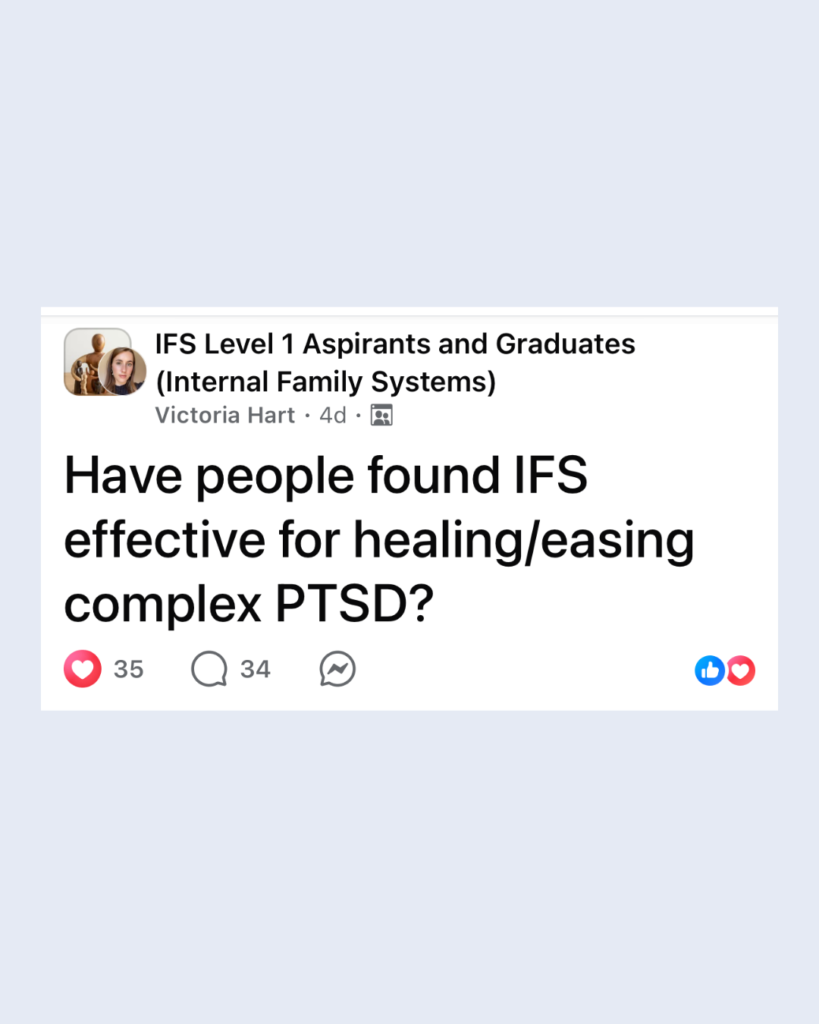
    A question people might ask is “Is inner child healing for CPTSD really effective?” To get a sense of real experiences, I asked this in a Facebook group dedicated to trauma recovery. The responses were overwhelmingly positive. Many people shared that inner child work helped them build a secure internal attachment.

    This feedback aligns with research and clinical observations. Inner child healing CPTSD is not a quick fix, but it is a structured and compassionate approach that helps repair the internal attachment system disrupted by complex trauma. 

    Over time, it fosters emotional safety and a stronger sense of self, which are crucial for breaking cycles of codependency, unhealthy relationships, and self-sabotaging behaviors.

    For many, the practice of inner child healing creates a profound shift: it’s no longer about trying to “fix” oneself, but about nurturing, validating, and supporting the parts of you that need care. This foundation of internal security becomes a cornerstone for long-term recovery, healthier relationships, and emotional resilience.

    The Role of Patience in Healing

    Healing from complex trauma and codependent patterns is a gradual process. It requires patience and consistent self-compassion.

    Your inner child may resist or fear certain experiences, and old relationship patterns may reemerge. The goal is not perfection, but curiosity, awareness, and repeated practice of self-soothing and boundary-setting.

    The Transformative Power of Inner Child Healing CPTSD

    The beauty of inner child healing CPTSD lies in its compassionate approach. By reparenting the parts of yourself that felt abandoned, unsafe, or unheard, you gradually:

    • Learn to regulate intense emotions
    • Develop a more stable sense of self-worth
    • Reduce feelings of shame or guilt
    • Build healthier relationships
    • Reclaim joy, playfulness, and creativity

    This work helps you move from surviving trauma and toxic relational patterns to thriving in adulthood with authenticity, resilience, and self-respect.

    Final Thoughts

    Inner child healing CPTSD and breaking free from codependent or emotionally unsafe relationships is a deeply personal journey. There is no single right way to heal.

    Inner child healing CPTSD encourages a curiosity mindset rather than a fixing mindset. By exploring emotions, reconnecting with your inner child, practicing self-soothing, and setting boundaries, you can begin to heal patterns rooted in complex trauma.

    This approach is not about erasing the past, it’s about creating a compassionate relationship with it, fostering self-trust, and reclaiming your emotional freedom. By giving your inner child the care and validation they may have missed, you can break the cycle of unhealthy relationships and build a life grounded in safety, joy, and authentic connection.

    Curious To Go Deeper?

    If you feel ready to go deeper, therapy can provide a structured space to explore these questions safely. Through consistent guidance, reflection, and inner child work, you can:

    • Strengthen emotional regulation
    • Build secure internal attachment
    • Set and maintain healthy boundaries
    • Choose relationships that truly honor and respect you
    • Foster a sense of self-trust and empowerment

    You’re welcome to get in touch to see if I am the right therapist to guide you through this.

    Read More

    IFS for CPTSD: Understanding Trauma, Parts, and Healing

    IFS Self Abandonment, CPTSD, and Codependency: How We Learned to Leave Ourselves to Stay Safe

    IFS Therapy for Complex PTSD: Healing Developmental Trauma from the Inside Out

    IFS Boundaries – Balancing Compassion and Self-Respect to Break Trauma Bonds, Codependency and Create Healthy Relationships

    IFS for CPTSD: Understanding Trauma, Parts, and Healing

    Is Inner Child Work Evidence-Based? How Memory Reconsolidation Heals Childhood Trauma

  • How to Heal Abandonment Issues With Inner Child Therapy

    how to heal abandonment issues inner child therapy inner child therapist inner child work ifs therapy ifs therapist v1

    How to Heal Abandonment Issues With Inner Child Therapy

    Many clients come to therapy feeling a deep fear of being left, rejected, or forgotten.

    They might ask:

    “Why do I get so anxious when someone pulls away?”

    “Why do I feel like people will eventually leave me?”

    For many people, the answer lies in the inner child.

    The inner child often carries a fear of abandonment when love, attention, or presence felt inconsistent growing up. When a child experiences emotional distance, unpredictability, or disconnection from caregivers, a younger part of the psyche learns that closeness is not guaranteed.

    The inner child might feel:

    “I hope they don’t leave.”

    “I hope they still love me.”

    “I hope I haven’t done something wrong.”

    Over time, this creates a deep sensitivity to any sign of distance or withdrawal.
    For a child, connection equals safety. If that connection feels unstable, the nervous system adapts by becoming hyper-aware of potential loss.

    This isn’t weakness, it’s survival.

    But these patterns don’t just disappear with age.

    They often show up in adult relationships as anxiety, overthinking, people-pleasing, or a strong need for reassurance. Even small shifts in someone’s behaviour can trigger that younger part that once felt unsafe or unsure.

    This is where the inner adult becomes essential.

    The inner adult is the part of you that can begin to create the safety that once felt uncertain. It reassures, grounds, and supports the inner child instead of abandoning it.

    Healing isn’t about getting rid of the fear. It’s about no longer leaving yourself when that fear shows up.

    How to Heal Abandonment issues by Understanding Your Parts

    When exploring how to heal abandonment issues, it’s important to recognise that your reactions come from different parts of you trying to help.

    Often they’re trying to protect you from experiencing further pain and hurt.

    If you’re wondering how to heal abandonment issues, the first step is not to fix yourself but to understand yourself.

    This is why, it’s helpful to go into inner child therapy with a curious mindset, as opposed to a fixer mindset.

    Often, these parts are trying to protect you from experiencing more pain, rejection, or emotional hurt.

    If you’re wondering how to heal abandonment issues, the first step is to practice co-regulation with yourself.

    Co-Regulation and the Role of the Inner Adult

    When learning how to heal abandonment isssues, it’s important to understand the difference between self-care and co-regulation.

    There are many gentle ways to connect with your inner child through inner child activities and inner child exercises such as hobbies, creativity, rest, and nurturing routines. These can be really supportive when you are feeling calm or grounded.

    But when you are emotionally triggered and shift into a younger, more vulnerable state, those tools often are not enough.

    This is where co-regulation becomes essential.

    As children, we rely on others to help us regulate our emotions. When that support is inconsistent or missing, the nervous system can struggle to settle during moments of distress.

    As adults, part of how to heal abandonment isssues is learning how to offer that co-regulation to yourself through your inner adult.

    Your inner adult becomes the steady, reassuring presence that your inner child needed.

    In moments of big emotions, instead of trying to shut the feeling down, you can begin to respond internally in a supportive and grounding way.

    You might say:

    “It’s okay to cry when you’re sad.”

    “I can see why you feel angry.”

    “I’m here with you, you’re not alone.”

    “Are you feeling scared? I’ve got you.”

    “Don’t give up, we can figure this out together.”

    This is not about dismissing your feelings or rushing past them. It is about staying with yourself through them.

    This is how to heal abandonment isssues at a nervous system level.

    You are no longer leaving yourself in moments of distress. You are learning to stay, support, and guide yourself through difficult emotions in the same way a safe and attuned caregiver would.

    Over time, this builds a deeper sense of internal safety, trust, and emotional resilience.

    Before going straight into healing the inner child, it is important to first get to know the protectors that have been working hard to keep you safe.

    The Power of a Curious Mindset in Healing

    When thinking about how to heal abandonment issues, it can be helpful to pause and ask yourself what mindset you are bringing into the process.

    Many people naturally enter healing with a fixing mindset.

    This can sound like, “I need to sort this out” or “I should not feel like this.” It often involves analysing thoughts, trying to control emotions, or pushing feelings away.

    A curious mindset is different.

    It sounds more like:

    “What is happening for me right now?”

    “What emotions are present?”

    “Is this sadness, frustration, or anger?”

    “What do I notice in my body?”

    You might begin to notice sensations like a tight chest, shallow breathing, or restlessness.

    This shift into curiosity is a key part of how to heal abandonment issues because it helps you reconnect with your emotional world without feeling emotionally overwhelmed.

    For many people, there has been a long history of needing to numb or disconnect from feelings. These were protective strategies that helped the inner child cope with overwhelming experiences.

    But over time, this can make it harder to recognise and process emotions.

    Healing often involves gently unlearning this pattern and allowing yourself to feel again in a safe and supported way.

    Your emotions are not the problem. They are signals.

    And learning to stay present with them, rather than push them away, is an essential part of how to heal abandonment issues.

    Before going straight into healing the inner child, it is important to talk about protectors.

    The Importance of Getting to Know Protectors First

    A common mistake when learning how to heal abandonment issues is trying to access the inner child too quickly.

    Protectors are the parts of you that developed to prevent you from feeling the full pain of abandonment. These might show up as anxiety, overthinking, avoidance, people-pleasing, or emotional shutdown.

    If you’re serious about how to heal abandonment issues, you need to build trust with these parts first.

    Protectors do not trust easily. They have been working hard for years to keep you safe.

    When you rush past them, they often become louder.

    When you slow down and listen, something begins to shift.

    Example: Befriending an Anxious Part

    A key step in how to heal abandonment issues is learning to relate to your anxiety differently.

    Instead of asking, “How do I stop feeling this way?” try asking, “What is this anxious part trying to protect me from?”

    You might notice a tight chest, racing thoughts, or a need for reassurance.

    Rather than pushing it away, you can say internally, “I see you. I know you’re trying to help.”

    This is how to heal abandonment issues in a way that builds internal trust.

    When the anxious part feels heard, it begins to soften.

    Underneath it, there is often something more vulnerable.

    Witnessing and Reparenting the Abandoned Inner Child

    how to heal abandonment issues how to heal abandonment inner child work inner child therapy inner child therapist i1

    At the core of how to heal abandonment issues is the ability to gently witness the part of you that felt left, unseen, or unimportant.

    This is the inner child.

    Once protectors feel safe enough, you can begin to connect with this younger part by noticing when it shows up, validating its feelings, and offering reassurance.

    You might say, “You didn’t deserve to feel alone.”

    “I’m here with you now.”

    “You’re not being left anymore.”

    This process is known as reparenting.

    If you are exploring how to heal abandonment issues, this is where real change begins, not by changing others, but by becoming the consistent presence you needed.

    How IFS Therapy Helps Heal Abandonment

    Internal Family Systems therapy offers a powerful approach to how to heal abandonment issues because it understands the mind as made up of different parts.

    In this model, protectors try to keep you safe, while exiled parts such as the inner child carry emotional pain. The Self is your grounded inner adult that can lead with calm and compassion.

    When learning how to heal abandonment issues through this approach, you are not forcing change. You are creating connection.

    You begin to build relationships with your parts, listen instead of suppress, and respond with compassion instead of fear.

    This is why it can be so effective for how to heal abandonment issues.

    The Antidote: Inner Child Therapy and Secure Internal Attachment

    If you have been exploring how to heal abandonment issues, one of the most important shifts is understanding that healing comes from within.

    The goal is not to find people who never trigger you. The goal is to become someone who can stay with yourself when you are triggered.

    This is where inner child therapy becomes so important.

    When working on how to heal abandonment issues, many people focus on relationships or external reassurance. Lasting change happens when your internal world begins to feel safe and consistent.

    Inner child therapy helps you reconnect with the part of you that felt left or uncertain and meet that part with presence.

    At the same time, developing the inner adult allows you to stay grounded, offer reassurance, and create stability within yourself.

    Over time, this builds a secure internal attachment.

    You begin to trust that you can handle emotional moments, that you will not leave yourself, and that you are able to create safety from within.

    This is how to heal abandonment issues at a deeper level.

    It is not about never feeling fear again. It is about having a steady internal relationship that can hold that fear when it arises.

    Inner child therapy, supported by a strong inner adult, creates a new pattern where connection feels more stable because it is rooted internally.

    A Gentle Reminder

    If you have been searching for how to heal abandonment issues, remember this.

    You are not too much.

    You are not too sensitive.

    Your system adapted in the best way it could.

    Healing is not about becoming someone new.

    It is about reconnecting with the parts of you that had to carry too much, too early.

    And learning how to heal abandonment issues means you no longer leave yourself when it matters most.

    Curious to go deeper?

    Hey, I’m Vicky. I offer inner child therapy for those who want to heal early wounds, release C-PTSD patterns, work through fear of abandonment, and build a strong sense of internal safety and secure attachment.

    If you’re ready to go deeper and create more emotional stability in your life, I currently have availability for new clients in-person in Newcastle, UK and online.

    Feel free to get in touch to arrange a consultation.

    Read More

    Inner Child Healing: 12+ Powerful and Practical Tools

    Is Inner Child Work Evidence-Based? How Memory Reconsolidation Heals Childhood Trauma

    9 Inner Child Work Questions to Soothe Emotional Pain

    IFS Self Abandonment, CPTSD, and Codependency: How We Learned to Leave Ourselves to Stay Safe

    Internal Family Systems Abandonment Work – Healing Early Wounds with Compassion