
Inner Child Work

  • How to Heal Abandonment Issues With Inner Child Therapy

    how to heal abandonment issues inner child therapy inner child therapist inner child work ifs therapy ifs therapist v1

    How to Heal Abandonment Issues With Inner Child Therapy

    Many clients come to therapy feeling a deep fear of being left, rejected, or forgotten.

    They might ask:

    “Why do I get so anxious when someone pulls away?”

    “Why do I feel like people will eventually leave me?”

    For many people, the answer lies in the inner child.

    The inner child often carries a fear of abandonment when love, attention, or presence felt inconsistent growing up. When a child experiences emotional distance, unpredictability, or disconnection from caregivers, a younger part of the psyche learns that closeness is not guaranteed.

    The inner child might feel:

    “I hope they don’t leave.”

    “I hope they still love me.”

    “I hope I haven’t done something wrong.”

    Over time, this creates a deep sensitivity to any sign of distance or withdrawal.
    For a child, connection equals safety. If that connection feels unstable, the nervous system adapts by becoming hyper-aware of potential loss.

    This isn’t weakness, it’s survival.

    But these patterns don’t just disappear with age.

    They often show up in adult relationships as anxiety, overthinking, people-pleasing, or a strong need for reassurance. Even small shifts in someone’s behaviour can trigger that younger part that once felt unsafe or unsure.

    This is where the inner adult becomes essential.
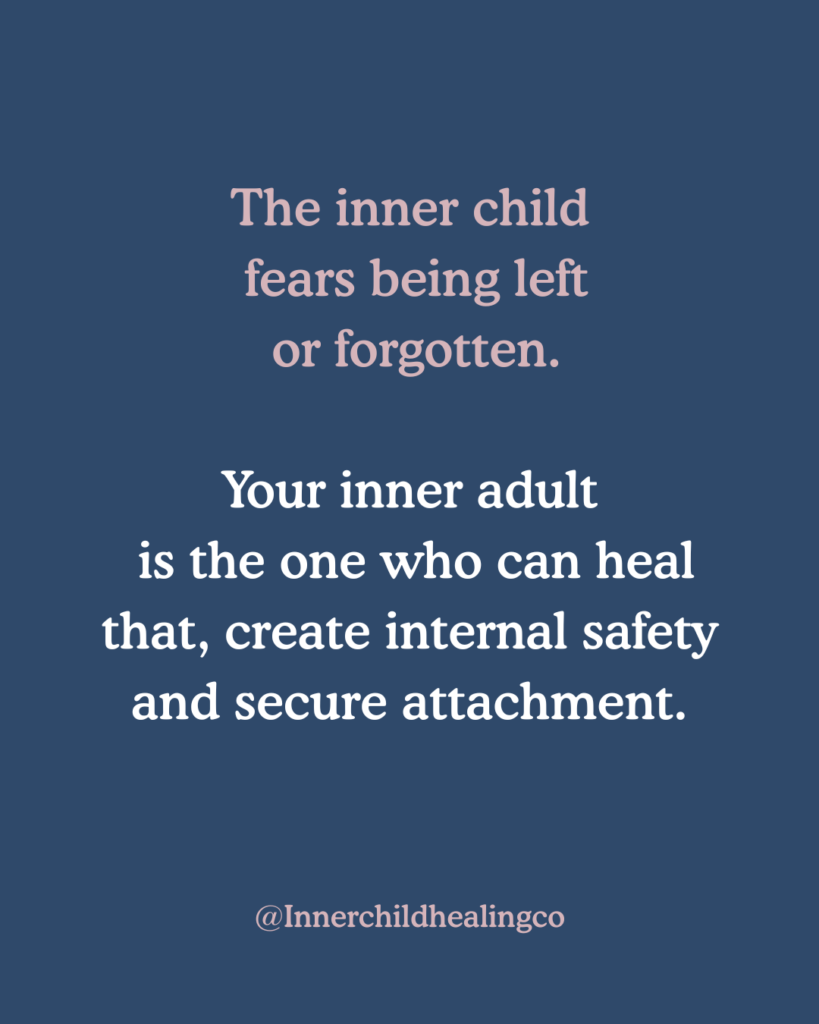
    The inner adult is the part of you that can begin to create the safety that once felt uncertain. It reassures, grounds, and supports the inner child instead of abandoning it.

    Healing isn’t about getting rid of the fear. It’s about no longer leaving yourself when that fear shows up.

    How to Heal Abandonment issues by Understanding Your Parts

    When exploring how to heal abandonment issues, it’s important to recognise that your reactions come from different parts of you trying to help.

    Often they’re trying to protect you from experiencing further pain and hurt.

    If you’re wondering how to heal abandonment issues, the first step is not to fix yourself but to understand yourself.

    This is why, it’s helpful to go into inner child therapy with a curious mindset, as opposed to a fixer mindset.

    Often, these parts are trying to protect you from experiencing more pain, rejection, or emotional hurt.

    If you’re wondering how to heal abandonment issues, the first step is to practice co-regulation with yourself.

    Co-Regulation and the Role of the Inner Adult

    When learning how to heal abandonment isssues, it’s important to understand the difference between self-care and co-regulation.

    There are many gentle ways to connect with your inner child through inner child activities and inner child exercises such as hobbies, creativity, rest, and nurturing routines. These can be really supportive when you are feeling calm or grounded.

    But when you are emotionally triggered and shift into a younger, more vulnerable state, those tools often are not enough.

    This is where co-regulation becomes essential.

    As children, we rely on others to help us regulate our emotions. When that support is inconsistent or missing, the nervous system can struggle to settle during moments of distress.

    As adults, part of how to heal abandonment isssues is learning how to offer that co-regulation to yourself through your inner adult.

    Your inner adult becomes the steady, reassuring presence that your inner child needed.

    In moments of big emotions, instead of trying to shut the feeling down, you can begin to respond internally in a supportive and grounding way.

    You might say:

    “It’s okay to cry when you’re sad.”

    “I can see why you feel angry.”

    “I’m here with you, you’re not alone.”

    “Are you feeling scared? I’ve got you.”

    “Don’t give up, we can figure this out together.”

    This is not about dismissing your feelings or rushing past them. It is about staying with yourself through them.

    This is how to heal abandonment isssues at a nervous system level.

    You are no longer leaving yourself in moments of distress. You are learning to stay, support, and guide yourself through difficult emotions in the same way a safe and attuned caregiver would.

    Over time, this builds a deeper sense of internal safety, trust, and emotional resilience.

    Before going straight into healing the inner child, it is important to first get to know the protectors that have been working hard to keep you safe.

    The Power of a Curious Mindset in Healing

    When thinking about how to heal abandonment issues, it can be helpful to pause and ask yourself what mindset you are bringing into the process.

    Many people naturally enter healing with a fixing mindset.

    This can sound like, “I need to sort this out” or “I should not feel like this.” It often involves analysing thoughts, trying to control emotions, or pushing feelings away.

    A curious mindset is different.

    It sounds more like:

    “What is happening for me right now?”

    “What emotions are present?”

    “Is this sadness, frustration, or anger?”

    “What do I notice in my body?”

    You might begin to notice sensations like a tight chest, shallow breathing, or restlessness.

    This shift into curiosity is a key part of how to heal abandonment issues because it helps you reconnect with your emotional world without feeling emotionally overwhelmed.

    For many people, there has been a long history of needing to numb or disconnect from feelings. These were protective strategies that helped the inner child cope with overwhelming experiences.

    But over time, this can make it harder to recognise and process emotions.

    Healing often involves gently unlearning this pattern and allowing yourself to feel again in a safe and supported way.

    Your emotions are not the problem. They are signals.

    And learning to stay present with them, rather than push them away, is an essential part of how to heal abandonment issues.

    Before going straight into healing the inner child, it is important to talk about protectors.

    The Importance of Getting to Know Protectors First

    A common mistake when learning how to heal abandonment issues is trying to access the inner child too quickly.

    Protectors are the parts of you that developed to prevent you from feeling the full pain of abandonment. These might show up as anxiety, overthinking, avoidance, people-pleasing, or emotional shutdown.

    If you’re serious about how to heal abandonment issues, you need to build trust with these parts first.

    Protectors do not trust easily. They have been working hard for years to keep you safe.

    When you rush past them, they often become louder.

    When you slow down and listen, something begins to shift.

    Example: Befriending an Anxious Part

    A key step in how to heal abandonment issues is learning to relate to your anxiety differently.

    Instead of asking, “How do I stop feeling this way?” try asking, “What is this anxious part trying to protect me from?”

    You might notice a tight chest, racing thoughts, or a need for reassurance.

    Rather than pushing it away, you can say internally, “I see you. I know you’re trying to help.”

    This is how to heal abandonment issues in a way that builds internal trust.

    When the anxious part feels heard, it begins to soften.

    Underneath it, there is often something more vulnerable.

    Witnessing and Reparenting the Abandoned Inner Child

    how to heal abandonment issues how to heal abandonment inner child work inner child therapy inner child therapist i1

    At the core of how to heal abandonment issues is the ability to gently witness the part of you that felt left, unseen, or unimportant.

    This is the inner child.

    Once protectors feel safe enough, you can begin to connect with this younger part by noticing when it shows up, validating its feelings, and offering reassurance.

    You might say, “You didn’t deserve to feel alone.”

    “I’m here with you now.”

    “You’re not being left anymore.”

    This process is known as reparenting.

    If you are exploring how to heal abandonment issues, this is where real change begins, not by changing others, but by becoming the consistent presence you needed.

    How IFS Therapy Helps Heal Abandonment

    Internal Family Systems therapy offers a powerful approach to how to heal abandonment issues because it understands the mind as made up of different parts.

    In this model, protectors try to keep you safe, while exiled parts such as the inner child carry emotional pain. The Self is your grounded inner adult that can lead with calm and compassion.

    When learning how to heal abandonment issues through this approach, you are not forcing change. You are creating connection.

    You begin to build relationships with your parts, listen instead of suppress, and respond with compassion instead of fear.

    This is why it can be so effective for how to heal abandonment issues.

    The Antidote: Inner Child Therapy and Secure Internal Attachment

    If you have been exploring how to heal abandonment issues, one of the most important shifts is understanding that healing comes from within.

    The goal is not to find people who never trigger you. The goal is to become someone who can stay with yourself when you are triggered.

    This is where inner child therapy becomes so important.

    When working on how to heal abandonment issues, many people focus on relationships or external reassurance. Lasting change happens when your internal world begins to feel safe and consistent.

    Inner child therapy helps you reconnect with the part of you that felt left or uncertain and meet that part with presence.

    At the same time, developing the inner adult allows you to stay grounded, offer reassurance, and create stability within yourself.

    Over time, this builds a secure internal attachment.

    You begin to trust that you can handle emotional moments, that you will not leave yourself, and that you are able to create safety from within.

    This is how to heal abandonment issues at a deeper level.

    It is not about never feeling fear again. It is about having a steady internal relationship that can hold that fear when it arises.

    Inner child therapy, supported by a strong inner adult, creates a new pattern where connection feels more stable because it is rooted internally.

    A Gentle Reminder

    If you have been searching for how to heal abandonment issues, remember this.

    You are not too much.

    You are not too sensitive.

    Your system adapted in the best way it could.

    Healing is not about becoming someone new.

    It is about reconnecting with the parts of you that had to carry too much, too early.

    And learning how to heal abandonment issues means you no longer leave yourself when it matters most.

    Curious to go deeper?

    Hey, I’m Vicky. I offer inner child therapy for those who want to heal early wounds, release C-PTSD patterns, work through fear of abandonment, and build a strong sense of internal safety and secure attachment.

    If you’re ready to go deeper and create more emotional stability in your life, I currently have availability for new clients in-person in Newcastle, UK and online.

    Feel free to get in touch to arrange a consultation.

    Read More

    Inner Child Healing: 12+ Powerful and Practical Tools

    Is Inner Child Work Evidence-Based? How Memory Reconsolidation Heals Childhood Trauma

    9 Inner Child Work Questions to Soothe Emotional Pain

    IFS Self Abandonment, CPTSD, and Codependency: How We Learned to Leave Ourselves to Stay Safe

    Internal Family Systems Abandonment Work – Healing Early Wounds with Compassion

  • Inner Child Healing: 12+ Powerful and Practical Tools

    Inner Child Healing: 12+ Powerful and Practical Tools

    Many clients enter therapy because they are tired of repeating the same relationship patterns.

    Often they arrive at their first session asking questions like:

     “Why do I keep attracting emotionally unavailable people?” or

     “Why do I keep ending up in relationships with controlling partners?”

    For many people, the answer lies in the inner child.

    The inner child often holds onto hope in situations where love was inconsistent. When someone grows up in an environment where affection, attention, or emotional safety were unpredictable, a younger part of the psyche learns to survive through hope.

    Young children, especially during toddlerhood and early school years, rely heavily on hope to emotionally survive difficult family environments.

    A child might think:

    “I hope Mum will be in a good mood today.”

    “I hope they won’t argue tonight.”

    “I hope they’ll come to my final game.”

    Hope becomes a coping strategy. It allows children to remain emotionally connected to caregivers even when those caregivers are unpredictable or unavailable.

    If a six-year-old fully recognised that their caregiver could not consistently provide emotional safety, the reality would feel overwhelming. A child depends on their caregiver for survival, so the mind adapts.

    This is often where codependent patterns begin.

    Codependency, rooted in hope and magical thinking, can be an effective survival strategy during childhood. It helps children tolerate emotional instability while still holding onto the possibility that things might get better.

    However, these patterns often continue into adulthood.

    Many of these responses are connected to survival strategies the nervous system developed earlier in life. These responses can include fight, flight, freeze, or fawn behaviours, which are common trauma responses that emerge when the nervous system perceives threat or emotional danger.

    Part of the adult mind understands what is happening. They may  read books, reflect on patterns, and recognise unhealthy dynamics.

    But another part of the psyche, the inner child, still carries the emotional blueprint formed earlier in life.

    Before healing begins, that younger part can quietly influence many decisions. It may see relationships through hopeful, rose-coloured lenses, longing for love and validation from people who are unable to provide it.

    Inner child healing offers a different path.

    Through inner child healing, people can begin to release the emotional strings that keep them hoping their parent will finally change. Instead of staying trapped in those old dynamics, they can begin rewriting the story of their inner child.

    This process involves stepping into the role of the supportive adult that was needed earlier in life.

    Rather than continuing to seek unconditional love from people who cannot provide it, people can begin offering that love to themselves.

    They become their own inner parent.

    This means learning to provide unconditional love, compassion, respect for boundaries, self-confidence, and space for authentic self-expression.

    Over time, this shift can feel incredibly empowering. The inner child no longer has to keep searching for safety or approval in the wrong places. Instead, the adult self begins providing the support and protection that was missing.

    Below are more than ten practical tools that can help support the process of inner child healing.

    1. Ask Intuitive Questions to Your Inner Child

    One of the most powerful inner child healing practices is learning to communicate with the younger part of you that carries emotional pain.

    Instead of analysing your reactions or judging yourself, the goal is to approach your inner world with curiosity and compassion.

    You might begin by asking simple internal questions:

    • How old do you feel right now?
    • When did you first start feeling this way?
    • What happened that made you feel like this?
    • What do you want me to understand?
    • What are you carrying that feels heavy?

    Sometimes deeper questions can unlock emotional memories connected to abandonment, rejection, or shame.

    You might also ask:

    If you could redo that moment, what would you need to heal or change what happened?

    One of the most healing responses you can offer your inner child is validation. Even saying something as simple as “That makes sense” can be deeply healing.

    2. Notice Emotions in the Body

    Emotional memories are not just stored in thoughts. They are also held in the body and nervous system.

    This is why inner child healing often involves learning to notice physical sensations connected to emotions.

    You might experience emotional activation as:

    • a tight chest
    • a racing heart
    • a knot in the stomach
    • heaviness in the shoulders
    • pressure in the throat

    These sensations are signals from your nervous system. Instead of ignoring them, pause and gently ask:

    What am I feeling in my body right now?

    Listening to your body helps reconnect you with emotions that may have been suppressed for many years.

    3. Befriend Your Emotions

    Many people try to eliminate uncomfortable emotions such as anxiety or sadness.

    However, emotions exist for a reason. They often carry important information about our past experiences and emotional needs.

    Inner child healing encourages curiosity toward emotions rather than trying to eliminate them.

    For example, anxiety may not mean something bad is about to happen. Often it means your nervous system remembers a time when something painful did happen.

    A powerful question to ask is:

    What is this emotion trying to protect me from?

    You may discover that anxiety is protecting you from rejection, abandonment, or feeling unsupported.

    When emotions are understood rather than resisted, they often soften.

    4. Practice Compassionate Self-Talk

    Many adults carry a harsh inner critic that developed during childhood.

    If you grew up with criticism, emotional neglect, or high expectations, you may have internalised a voice that constantly tells you that you are not doing enough.

    Replacing this voice with compassion is an important part of inner child healing.

    You might repeat supportive phrases such as:

    • I’m allowed to make mistakes.
    • I deserve kindness.
    • I’m worthy even when things feel hard.
    • I’m not behind in life.
    • Struggling doesn’t mean I’m failing.

    Over time, compassionate self-talk helps reshape the way you relate to yourself.

    5. Offer Your Inner Child Validation

    Many people grew up without their feelings being acknowledged.

    They may have been told they were too sensitive, ignored when upset, or expected to suppress their emotions.

    Inner child healing involves learning to validate yourself.

    You can speak internally to your younger self with statements such as:

    • You matter.
    • You are safe now.
    • Your feelings are valid.
    • What happened wasn’t your fault.
    • You didn’t deserve to be neglected.

    These messages help rebuild emotional safety within the nervous system.

    6. Unblend from Protective Parts

    When you try to connect with your inner child, another voice may appear first.

    This might be an inner critic, an analysing part, or a part that tries to distract you.

    These parts are not obstacles to healing. They developed to protect you.

    You can gently ask these protective parts if they would be willing to give you space.

    You might ask internally:

    Would you be willing to step back so I can understand what this younger part is feeling?

    If they hesitate, you can ask what they fear might happen.

    Respecting these parts helps build trust within your internal system. An inner child therapist can support you with this process to help you understand the positive intent of parts and feel a deep felt-sense experience of love and compassion in your mind, body, soul and nervous system.

    7. Identify Codependent Patterns

    Another important part of inner child healing is becoming aware of codependent patterns that may have developed earlier in life.

    When children grow up in environments where love, approval, or safety are inconsistent, they often learn to adapt by becoming highly attuned to other people’s emotions and needs. This can help them survive difficult family dynamics, but those patterns may continue into adulthood in ways that become exhausting or one-sided.

    Codependent patterns often revolve around maintaining hope that others will eventually change. Instead of accepting people as they are in the present, a part of us may keep waiting for them to become more emotionally available, supportive, or respectful.

    This hope once helped us cope as children, but in adulthood it can keep us stuck in relationships that are not healthy or balanced.

    Some common signs of codependent patterns include:

    • holding onto the belief that someone will eventually change if you just try harder
    • over-extending yourself emotionally for others
    • being empathetic without clear boundaries
    • struggling to say no or prioritise your own needs
    • feeling responsible for fixing or rescuing other people
    • focusing on others’ problems instead of your own wellbeing

    These behaviours often come from a caring and compassionate place, but they can also lead to burnout, resentment, and emotional exhaustion.

    Inner child healing helps you gently explore where these patterns began and why they once felt necessary. When you begin to recognise them, you can slowly shift your energy back toward caring for yourself.

    This might involve learning to set healthier boundaries, accepting people as they are rather than who you hope they will become, and focusing more on your own growth and emotional needs.

    Over time, this shift allows relationships to become more balanced and authentic, rather than driven by old survival patterns. If you want to go deeper to let go of codependent patterns and build secure internal attachment and create better emotional wellbeing working with a therapist helps. I offer inner child therapy for those wanting to break codependent patterns and improve their emotional well-being.

    8. Explore Unmet Childhood Needs

    At the heart of inner child healing is understanding unmet emotional needs.

    Children rely on caregivers to help them feel safe, loved, and supported.

    When those needs were not consistently met, parts of us may carry those unmet needs into adulthood.

    Common unmet needs include:

    • feeling seen and heard
    • emotional safety
    • consistent love and affection
    • comfort during distress
    • encouragement and validation
    • guidance and protection

    Understanding these needs helps bring compassion to behaviours that once felt confusing.

    9. Practice Reparenting

    Reparenting is one of the most transformative parts of inner child healing.

    It means becoming the supportive adult your younger self needed.

    You might ask yourself:

    What do you need from me right now?

    Sometimes the answer is rest. Sometimes it is reassurance. Sometimes it is play.

    Reparenting might include setting boundaries, asking for help, or taking time to nurture yourself.

    Over time, your nervous system begins to feel safer because it learns that someone is finally showing up consistently.

    10. Reconnect with Joy

    Children naturally express themselves through play, creativity, and curiosity.

    But many adults lose touch with these experiences, especially if they grew up in stressful environments.

    Reconnecting with joy can be a powerful part of inner child healing.

    You might try dancing, painting, travelling, learning a new skill, or spending time with supportive friends.

    Joy is not separate from healing. It is part of the healing process.

    11. Identifying Childhood Triggers

    As people begin to explore their inner child, they often start recognising how past experiences influence emotional reactions in the present.

    Certain situations may trigger strong feelings that seem disproportionate to what is happening in the moment. These reactions can feel confusing at first, but they often make more sense when viewed through the lens of earlier experiences.

    One helpful part of inner child healing involves identifying triggers in everyday life. A trigger is simply a present-day situation that activates an emotional memory or protective response shaped in childhood.

    For example, someone might notice that they feel deeply hurt when a partner becomes distant, overly anxious when receiving criticism, or unusually upset when they feel ignored in a conversation.

    Exploring these reactions can help reveal patterns that developed earlier in life.

    A helpful starting point is to reflect on a recent situation where you reacted more strongly than you would have liked. Instead of judging yourself, approach the experience with curiosity.

    You might reflect on questions such as:

    • Is this something that happens often?
    • Where and when do these reactions tend to occur?
    • What emotions come up immediately when this happens?
    • Where do you notice these feelings in your body, such as your chest, stomach, or shoulders?
    • Do you tend to react quickly, become defensive, or withdraw and stay quiet?
    • Does this situation remind you of anything from your childhood or past relationships?

    Over time, people often begin to notice recurring patterns. A person who grew up feeling criticised may become highly sensitive to feedback. Someone who experienced emotional neglect may feel deeply triggered when others become distant.

    Understanding these patterns helps bring compassion to emotional reactions that once felt confusing.

    Many of these responses are connected to survival strategies the nervous system developed earlier in life. These responses can include fight, flight, freeze, or fawn behaviours, which are common trauma responses that emerge when the nervous system perceives threat or emotional danger.

    By identifying triggers and recognising their connection to earlier experiences, people can begin responding with greater awareness rather than automatically repeating old patterns.

    12. Exploring A Childhood Memory

    Another powerful inner child healing practice involves gently revisiting childhood experiences that may still carry emotional weight.

    While this can feel challenging, approaching these memories with curiosity and compassion can help people better understand how earlier environments shaped their emotional world.

    Visualization can be a helpful way to explore these memories safely. The goal is not to relive painful experiences, but rather to observe them from the perspective of your adult self.

    You might begin by finding a quiet place where you will not be interrupted. Take a few slow breaths and allow yourself to bring to mind a memory from childhood that feels emotionally significant.

    As you reflect on the memory, you might explore questions such as:

    • What was happening during that time?
    • How old were you?
    • What emotions were you experiencing at the time? Or what emotions did you not feel at the time?
    • What might your younger self want you to know now?
    • Does your inner child know that your wise, adult self is here?

    When people revisit childhood experiences with compassion rather than judgment, they often discover new insights about the emotional needs they carried at the time.

    In inner child therapy, a simple question: “Does your inner child know that your wise, adult self is here?”, can be surprisingly powerful. For many, it creates a moment of realisation. Making that connection between the vulnerable child within and the capable adult they are today can be the first step toward building a sense of safety and secure attachment within themselves.

    This process can also create space for something healing to occur: the adult self offering understanding, validation, and support to the younger part that once felt alone.

    If this feels challenging or overwhelming, it’s normal for inner child work to be difficult as it brings up repressed and unresolved emotions that you felt as a child but didn’t get to process at the time.

    This is why working with an inner child therapist can be an anchor and support you in witnessing these feelings with openness and calmness. Research has shown the power of inner child work for reconsolidating memories in a safe and effective way.

    Final Thoughts

    When we grow up in difficult relational environments, those dynamics often shape the patterns we carry into adulthood. Without realising it, many people repeat familiar emotional experiences in their relationships.

    Someone who felt emotionally neglected as a child may find themselves drawn to emotionally unavailable partners. Someone who grew up in a controlling environment may be unconsciously drawn to controlling relationships where their autonomy is limited.

    These patterns are not signs of weakness or failure. They are often the result of an inner attachment system that developed early in life to help us adapt to our environment.

    Maintaining our mental wellbeing requires developing a healthier relationship with ourselves and learning how to manage that internal attachment system with awareness and compassion.

    For many people, inner child healing becomes the first step toward reconnecting with themselves. Practices such as meditation, reflecting on past experiences, recognising present-day triggers, journaling, and creating internal boundaries can all support this process.

    The goal is not to stay stuck in the past, but to acknowledge our history with love, compassion and understanding. By doing this, we can begin to reclaim a sense of awareness, choice, and emotional stability in the present.

    Benefits of Working With A Inner Child Therapist

    Many people also benefit from working with a therapist during this process. Inner child therapy provides a supportive space to explore intense emotions that may feel difficult to navigate alone. Through the relationship with a therapist, clients often experience co-regulation, where the therapist’s calm and grounded presence helps the nervous system settle.

    In approaches such as Internal Family Systems and inner child therapy, a therapist may also “lend Self-energy,” offering compassion, curiosity, and steadiness while clients learn to access those qualities within themselves.

    Over time, this support helps people build a stronger inner foundation. Instead of repeating painful relational patterns, they begin developing a deeper sense of self-trust, emotional safety, and connection with themselves and others.

    Curious About Inner Child Healing Therapy?

    If you’re curious about inner child healing and would like support exploring this work, you’re welcome to get in touch.

    Inner child therapy can help you gently heal unresolved childhood wounds, build a more secure internal attachment, improve emotional regulation, and develop healthier, more fulfilling relationships.

    This work can feel sensitive at times, which is why having the right support can make such a difference. As a therapist, I approach this process with deep compassion and care. My goal is to create a safe space where you feel understood, supported, and able to explore your experiences at your own pace.

    You don’t have to navigate this journey alone. I’m here to guide you through the process, offering support and steadiness as you reconnect with yourself and begin building a kinder, more secure relationship with your inner world.

    Read More

    Is Inner Child Work Evidence-Based? How Memory Reconsolidation Heals Childhood Trauma

    9 Inner Child Work Questions to Soothe Emotional Pain

    Inner Child Healing Therapy For Childhood Trauma and Emotional Balance

    12 Powerful Inner Child Healing Exercises For Your Personal Journey Home to Wholeness

    Inner Child Therapy Online

  • Is Inner Child Work Evidence-Based? How Memory Reconsolidation Heals Childhood Trauma

    is inner child work evidence-based inner child work inner child therapy inner child therapist inner child therapy ic1

    Is Inner Child Work Evidence-Based? How Memory Reconsolidation Heals Childhood Trauma

    Many people exploring therapy, trauma healing, and emotional recovery eventually ask the same question: is inner child work evidence-based? It is a fair question. The phrase can sound soft, symbolic, or even vague at first. Some people hear it and imagine something abstract rather than something grounded in psychology. Yet when we look more closely at what inner child work actually involves, the picture becomes much clearer.

    Inner child work is not about pretending there is literally a child inside you. It is a way of describing the younger emotional parts of the self that still carry pain, unmet needs, fear, shame, or loneliness from earlier life. These younger parts can become activated in adult life when something reminds the nervous system of what happened before. That is why a present day rejection can feel far bigger than the current situation, or why a small amount of criticism can trigger intense shame.

    So when people ask is inner child work evidence-based, what they are often really asking is whether there is research behind working with younger emotional states, unresolved childhood wounds, attachment trauma, and internal healing. The answer is increasingly yes. While not every study uses the exact words “inner child work,” many trauma therapies are built around very similar principles. They focus on how early experiences shape the brain, the body, emotions, and relationships, and how healing can happen when those experiences are revisited with safety, compassion, and support.

    In that sense, is inner child work evidence-based is not just a trendy question. It opens the door to a deeper understanding of trauma, memory, emotional regulation, and the healing relationship between the adult self and the wounded parts within.

    What Inner Child Work Really Means

    To understand is inner child work evidence-based, it helps to define what inner child work is in practical terms. Inner child work usually refers to therapy that helps someone connect with earlier emotional experiences that still live on inside them. These can include memories of abandonment, emotional neglect, criticism, rejection, fear, or feeling unseen.

    Often, these early experiences do not disappear just because time passes. They shape beliefs such as “I am too much,” “I am not important,” “I have to earn love,” or “Something is wrong with me.” These beliefs then show up in adult life through anxiety, people pleasing, low self worth, perfectionism, poor boundaries, and relationship difficulties.

    Inner child work helps people return to those younger emotional places with a more resourced adult presence. Rather than leaving those younger parts alone with what happened, therapy helps them feel seen, supported, and understood. This can create deep emotional change.

    When people ask is inner child work evidence-based, it is worth remembering that many well respected therapies do exactly this, even if they use different language. They work with early attachment wounds, trauma responses, internal parts, and emotional memories that continue to shape present day life.

    Research on IFS and Trauma Healing

    One useful way to answer is inner child work evidence-based is to look at therapies that include inner child style work. Internal Family Systems therapy, or IFS, is one example. IFS helps people work with different parts of themselves, including younger wounded parts that carry pain from childhood. This overlaps strongly with what many people mean by inner child healing.

    There is growing research on IFS in trauma treatment. One study published in the Journal of Child Sexual Abuse looked at Internal Family Systems therapy with adults who had experienced childhood trauma. The study found improvements in PTSD related symptoms, dissociation, depression, and self compassion. You can read the study here: https://www.tandfonline.com/doi/full/10.1080/10926771.2021.2013375

    Another piece discussing a group based online IFS intervention highlighted promising findings for trauma survivors, including reductions in distress and improvements in emotional wellbeing. You can read that article here: https://www.psychologytoday.com/gb/blog/internal-family-systems-therapy-for-shame-and-guilt/202603/study-group-based-online-ifs

    So when people ask is inner child work evidence-based, these kinds of studies matter. They show that approaches focused on internal wounded parts, compassion, and emotional healing are not just ideas floating around on social media. They are increasingly being explored in research and used in structured trauma therapy.

    Memory Reconsolidation and Why Healing Can Feel So Deep

    is inner child work evidence-based inner child work inner child therapy inner child therapist inner child therapy ic2

    One of the strongest scientific ideas behind the question is inner child work evidence-based is memory reconsolidation. Memory reconsolidation refers to the brain’s ability to update old emotional learning when a memory is reactivated under the right conditions.

    This matters because trauma is not just about remembering what happened. It is about the emotional and physiological imprint that experience left behind. If a child felt terrified, alone, powerless, or ashamed, that emotional state can remain linked to the memory. Later in life, situations that feel similar can reactivate the same response.

    In therapy, when an old memory is gently revisited while the person feels safe, supported, and emotionally present, the brain can begin to attach something new to that experience. Instead of the memory staying frozen in fear, shame, or abandonment, it can begin to shift. The person may feel compassion where there was once self blame. They may feel protection where there was helplessness. They may feel support where there was once aloneness.

    This is one reason is inner child work evidence-based has a meaningful answer. Inner child work is not only about talking about childhood. It can help transform the emotional meaning of what happened. That is part of what makes healing feel so real and lasting.

    Inner Child Reparenting, Guided Meditation, and Deep Emotional Change

    Another important part of the discussion around is inner child work evidence-based is the use of guided meditation, imagery, and visualisation. In therapy, guided inner journeys can help someone connect with younger parts of themselves in a way that feels contained and supportive.

    For example, a therapist might invite someone to imagine meeting a younger version of themselves in a safe place. They may ask what that child is feeling, what they needed back then, or what they want the adult self to understand now. Sometimes the person is invited to imagine comforting the child, protecting them, or giving them the care they did not receive at the time.

    These practices often bring someone into a deeply focused and relaxed state of mind. It is not sleep, but it can feel very inward, slowed down, and emotionally open. Some people describe this as a lightly hypnotised state. In that state, the nervous system can access emotional material more directly, and new experiences can be introduced.

    This is where reparenting comes in. Reparenting means offering the younger part what was missing. That might be safety, warmth, protection, soothing, reassurance, or the clear message that none of it was their fault. As this happens repeatedly, the brain and body begin to form new associations. Instead of the younger part being alone with terror, shame, or abandonment, they begin to experience support and care.

    So if someone asks is inner child work evidence-based, guided meditation and reparenting can be understood through trauma therapy, memory reconsolidation, and nervous system regulation. The process may feel imaginative, but it can produce very real emotional shifts.

    The Prefrontal Cortex and the Adult Self

    A helpful way to understand is inner child work evidence-based is through brain function. The prefrontal cortex is the part of the brain involved in reflection, regulation, empathy, planning, and grounded decision making. It helps us pause, think clearly, and respond with perspective instead of reacting automatically.

    In many trauma informed models, this regulated adult state is what allows healing to happen. In IFS, this is often described as Self energy. Self energy is associated with calm, compassion, curiosity, clarity, confidence, courage, creativity, and connectedness. These are the qualities that help someone sit with pain without becoming flooded by it.

    When a person is connected to this adult self state, they are more able to approach younger wounded parts with understanding. Instead of judging them, shutting them down, or feeling overwhelmed by them, they can stay present. That presence is healing.

    So when people ask is inner child work evidence-based, the prefrontal cortex is an important part of the answer. Healing involves strengthening the brain’s capacity for reflective awareness, compassion, and emotional regulation. In simple terms, the adult self becomes more available, and that adult self can finally care for the younger emotional parts that were left alone.

    The Inner Child, the Subconscious, and the Amygdala

    While the prefrontal cortex supports calm reflection, the amygdala plays a major role in emotional memory and threat detection. The amygdala helps the brain register danger, especially when something feels similar to a past wound.

    This is one reason inner child wounds can feel so intense in adulthood. A present day experience may trigger an old emotional memory stored in the subconscious emotional brain. A delayed text reply might activate abandonment. Criticism might trigger shame. Distance from someone we love might bring up panic or despair.

    When people ask is inner child work evidence-based, this link between past emotional memory and present day reactivity matters. The inner child is not just a poetic idea. It reflects the reality that early emotional experiences become stored in the nervous system and continue to shape our feelings and reactions later on.

    Inner child work helps bring compassionate awareness to these reactions. Instead of seeing them as irrational or dramatic, therapy helps a person understand that a younger emotional part has been activated. Once that part is met with care rather than criticism, the reaction often begins to soften.

    Signs of Complex Trauma

    Many people drawn to inner child work are living with the effects of complex trauma. Complex trauma usually develops through repeated relational pain over time, especially in childhood. This can include emotional neglect, chronic criticism, inconsistent caregiving, abuse, rejection, or feeling unsafe in important relationships.

    When asking is inner child work evidence-based, it helps to understand the kinds of difficulties complex trauma can create. Signs of complex trauma can include:

    • difficulty regulating emotions

    • intense emotions that feel overwhelming

    • feeling numb or disconnected from emotions

    • chronic shame or a deep sense of being flawed

    • poor boundaries

    • people pleasing

    • fear of abandonment

    • difficulty trusting others

    • anxiety and depression

    • dissociation

    • relationship instability

    • strong inner criticism

    These are not signs that someone is broken. They are often survival responses shaped in environments where emotional safety was missing. Inner child work can be especially helpful here because it helps a person understand the younger wounds underneath these patterns.

    Building Secure Internal Attachment

    One of the most powerful reasons many clinicians and clients value this work is because it helps build secure internal attachment. This is another big piece of the answer to is inner child work evidence-based.

    If a child grows up without steady emotional attunement, they may internalise the belief that they have to cope alone. They may not learn how to soothe themselves, trust support, or feel safe in closeness. Later in life, this can show up as anxious attachment, avoidance, fear of vulnerability, poor boundaries, or unstable relationships.

    IFS therapy can be especially helpful for complex trauma because it helps someone build a new relationship with themselves. Rather than abandoning their pain, they learn to turn toward it. Rather than shaming wounded parts, they learn to understand them. This creates a more secure internal bond.

    The therapist also plays an important role. A compassionate therapist lends Self energy through their calm presence, empathy, steadiness, and non judgement. Over time, the client begins to internalise that way of relating. They start to treat themselves with the same compassion they are receiving in therapy.

    That is why the answer to is inner child work evidence-based is not only about symptom reduction. It is also about attachment repair. The person begins to become the caregiver they did not have, and that can be profoundly healing.

    So, Is Inner Child Work Evidence-Based?

    Coming back to the original question, is inner child work evidence-based, there are studies to show that trauma therapy, such as IFS therapy shows promising result. The exact phrase may not appear in every academic paper, but the principles underneath it are strongly connected to research on trauma, attachment, emotional regulation, memory reconsolidation, and therapies like Internal Family Systems.

    When someone revisits younger emotional wounds with compassion, safety, and support, real change can happen. Old beliefs can soften. Emotional reactions can become less intense. Shame can ease. Boundaries can strengthen. Relationships can become healthier. A person can begin to feel more whole.

    So if you have been wondering is inner child work evidence-based, it may help to think of inner child work not as something fluffy or ungrounded, but as a trauma informed way of healing what was never properly held in the first place.

    And for many people, that is exactly why the question is inner child work evidence-based matters so much. They are not looking for a trend. They are looking for something that helps them feel safer, stronger, and more connected to themselves.

    Curious to go deeper?

    If this resonates with you, inner child therapy can offer a gentle and powerful way to explore the roots of depression, anxiety, complex trauma, emotional dysregulation, and the lasting pain of emotional neglect or abandonment. As an inner child therapist, I offer a compassionate space to help you understand your patterns, reconnect with wounded parts of yourself, and begin building a more secure, grounded relationship within. If you’re ready to explore this work more deeply, you can book a consultation here.

    Read More

    Inner Child Work UK

    What is Reparenting and Inner Child Work (Using IFS to Heal)

    Inner Child Therapy Online

    10 Powerful Inner Child Therapy Techniques Using Body-Based Therapy

    Unlocking the Emotional Brain

  • 9 Inner Child Work Questions to Soothe Emotional Pain

    inner child work questions inner child work inner child therapy inner child therapist What is a profound truth bomb on assertiveness?

    9 Inner Child Work Questions to Soothe Emotional Pain

    Many people begin exploring personal healing because they notice emotional patterns that keep repeating in their lives. You may find yourself feeling overly responsible for others, anxious in relationships, highly self-critical, or easily overwhelmed by certain situations. Even when you understand logically that you are safe now, your emotional reactions can still feel intense.

    Often these patterns have roots in earlier experiences that were never fully processed. This is where inner child work questions can become a powerful way to explore what is happening beneath the surface.

    Inner child work is about reconnecting with the younger parts of ourselves that still carry emotions, memories, and beliefs from childhood. These parts may hold feelings of fear, loneliness, shame, or abandonment that were never fully acknowledged at the time.

    Using inner child work questions allows you to approach these parts with curiosity rather than judgment. Instead of pushing emotions away, you gently create space for them to be heard. Over time, this process helps the younger parts feel supported and understood, which can lead to deep emotional healing.

    What Is Inner Child Work?

    Inner child work is based on the understanding that the emotional experiences we had growing up continue to influence our inner world today. As children, we depend on caregivers to help us understand our emotions and feel safe in the world.

    When those emotional needs are met consistently, children develop a sense of security and self worth. But when those needs are not met, children often carry the emotional impact of those experiences into adulthood.

    This is why inner child work questions are used in many therapeutic approaches. They help us reconnect with the younger parts of ourselves that may still be holding unresolved feelings.

    The goal of inner child work questions is not to force memories or relive painful experiences. Instead, they create a gentle conversation with the younger part so that it can share what it has been carrying.

    Many people discover that the emotions they feel today are connected to experiences that happened years earlier. Through inner child work questions, those emotions finally have space to be acknowledged and understood.

    How Do You Know Your Inner Child Is Active?

    Your inner child is always present within your emotional system, but it becomes more noticeable when it is activated. Inner child activation often occurs when something in the present moment reminds you of an unmet need, fear, or emotional wound from childhood. Recognising when your inner child is active is a key step in inner child therapy because it signals an opportunity to connect, listen, and provide care.

    Some common signs that your inner child is active include:

    Intense emotional reactions: Feeling overwhelmed, sad, scared, or anxious more strongly than the current situation might warrant.

    Overreactions to criticism or rejection: Even mild disapproval or disagreement may trigger feelings of shame or fear rooted in childhood experiences.

    Strong urges to withdraw or hide: Wanting to avoid situations or people because they feel unsafe, replicating patterns of childhood fear.

    Impulsive behaviors: Acting out or seeking comfort in ways that may not serve you, often to soothe unresolved emotional needs.

    Self-criticism or perfectionism: Internal voices that repeat messages from childhood, such as “I’m not good enough” or “I must be perfect to be loved.”

    Longing for comfort or reassurance: Feeling a deep desire to be seen, understood, or cared for that goes beyond normal adult needs.

    When you notice these patterns, it often means your inner child is seeking attention and care. Using inner child work questions at these moments can help you connect with the younger part, validate its feelings, and provide the nurturing it needs.

    Paying attention to these signs is crucial because it allows you to respond consciously rather than reactively. By noticing when your inner child is active, you can begin interrupting old patterns, offering compassion, and building a sense of safety and trust within yourself. This awareness is a cornerstone of healing in inner child therapy.

    Protective Parts in Inner Child Work

    Before connecting directly with the inner child, many people notice protective parts showing up first. These parts developed earlier in life to help you cope with difficult emotional situations.

    Protective parts can appear in different ways. You may notice a judgemental voice that criticises your feelings, an overthinking mind that constantly analyses situations, or a restless part that distracts you from uncomfortable emotions.

    These protective parts are extremely important when working with inner child work questions. They are not obstacles to healing. They are parts of your system that once helped you survive emotionally challenging environments.

    It’s important that before diving to the inner child, that you seek permission from these protector parts first. This ensures that inner child work is carried out in a safe way and you’re not emotionally flooded.

    When a protective part appears, it can help to pause and become curious about it.

    You might ask yourself:

    How do I feel toward this part?

    Does it feel frustrating or irritating, or do I feel curious and compassionate toward it?

    If you notice a sense of openness and curiosity toward the part, that is often a sign you are connected to Self energy. From this place, you can continue exploring inner child work questions in a safe way.

    You might also ask the protector:

    What do you want me to know?
    What are you worried would happen if you didn’t do this job?

    When protective parts feel heard and understood, they often relax. This allows deeper emotional parts to emerge naturally without being forced.

    Attachment Trauma and Inner Child Wounds

    Many inner child wounds are connected to early attachment experiences.

    Attachment refers to the bond between a child and their caregivers. When caregivers provide emotional attunement, safety, affection, and compassion, children develop a secure sense of connection.

    However, when those experiences are missing or inconsistent, children may develop attachment wounds that continue affecting them later in life.

    Attachment trauma often involves a lack of emotional attunement. The child’s feelings may have been dismissed, minimised, or misunderstood. Instead of receiving comfort when distressed, they may have been left alone to manage overwhelming emotions.

    Over time this can lead to inner child wounds connected to feeling unsafe, unseen, or unworthy of love.

    These early experiences can influence adult behaviour in several ways.

    Some people develop difficulty regulating their emotions because they never had a caregiver helping them learn how to soothe distress.

    Others may unconsciously choose relationships that feel emotionally distant or neglectful. In some cases this happens because the person was parentified as a child, meaning they had to provide emotional support to a parent rather than receiving care themselves.

    As adults, they may avoid emotionally demanding relationships because they do not want to feel responsible for someone else’s needs again. This can sometimes appear as avoidant attachment.

    Attachment wounds can also affect boundaries. When someone grew up prioritising a parent’s emotions, they may struggle to recognise or protect their own needs.

    At the same time, these individuals often develop strong empathy and deep care for others. They are highly sensitive to emotional dynamics because they learned early on to monitor the feelings of those around them.

    Inner child work questions can help explore these patterns gently and begin healing the emotional wounds underneath them.

    Why Inner Child Work Alone Can Feel Overwhelming

    Although inner child work questions can be incredibly powerful, many people find that doing this work alone can feel overwhelming.

    When you reconnect with childhood emotions, you may start touching experiences that were very intense when they originally happened. These feelings might include sadness, loneliness, fear, or abandonment.

    The reason these emotions can feel so powerful is because they often come from a time when you had very little support.

    As a child, you may have been left to deal with these emotions alone. There may not have been a caregiver available to comfort you, listen to you, or help you process what you were feeling.

    When these emotions resurface during inner child work questions, the nervous system can briefly return to that earlier experience of feeling alone.

    This is why it is important to move slowly and gently when exploring inner child work questions. The goal is not to push yourself into emotional intensity. Instead, it is about creating a compassionate connection with the younger part of you.

    Simply recognising that these emotions once had to be carried alone can already bring relief.

    Now you are no longer facing them without support.

    Questions to Connect With the Inner Child

    Once protective parts feel calmer and there is a sense of curiosity, inner child work questions can help you connect more deeply with the younger part of yourself.

    These questions are invitations rather than demands. The inner child can respond in whatever way feels natural.

    You might begin with simple questions such as:

    What do you want me to know?

    This question allows the inner child to express something important that may have been ignored or overlooked in the past.

    What is on your mind?

    This invites the younger part to share thoughts or memories that might still be present.

    What are you worried about?

    Many inner children carry fears that were never addressed. Asking this question creates space for those fears to be acknowledged.

    What do you need from me?

    This is one of the most powerful inner child work questions because it invites the adult self to become a supportive presence.

    Sometimes the answers appear as emotions, memories, images, or body sensations. The most important thing is simply to listen with patience and compassion.

    Reparenting the Inner Child

    inner child work questions inner child work inner child therapy inner child therapist 2

    After the inner child shares their experience, the next step often involves reparenting.

    Reparenting means offering the younger part the support, comfort, and care that may have been missing at the time.

    Inner child work questions can help guide this process.

    You might ask:

    If we could redo what happened, what would you need?

    This allows the younger part to express the emotional support they were longing for.

    What do you need from me now?

    This question invites the adult self to become a nurturing presence in the inner child’s life.

    You might also ask:

    How do you feel after sharing?

    Many inner children feel relief when they realise someone is finally listening.

    Through inner child work questions, the younger part begins experiencing something different than before. Instead of being alone with their pain, they now have a compassionate adult presence supporting them.

    The Power of Self Energy and Working With a Therapist

    One of the most important elements in healing through inner child work questions is Self energy.

    Self energy refers to a calm, compassionate, and grounded state within each person. When someone is connected to this state, they naturally respond to their emotions with curiosity rather than judgment.

    For the inner child, this experience can feel profoundly healing.

    However, accessing Self energy consistently can be difficult when doing this work alone. When childhood wounds are activated, protective parts may quickly take over.

    This is where working with an inner child therapist can be incredibly helpful.

    A therapist who has done their own inner work and unburdened many of their exile parts is often able to remain more consistently in Self energy. This allows them to lend Self energy to the client during the healing process.

    This compassionate presence can feel like unconditional acceptance and emotional safety. For many people, it is the first time they have experienced their emotions being witnessed without criticism or dismissal.

    Through guided inner child work questions, the therapist helps the client stay grounded while exploring deeper emotional experiences.

    If we want to go deeper and create sustainable healing, it can be very difficult to do this work entirely alone. Having a therapist who can lend Self energy creates a supportive environment where the inner child finally feels safe enough to express what it has been carrying.

    Deep Healing in Inner Child Therapy

    In inner child therapy, people can often reach a hypnotic or deeply relaxed state that allows them to access memories, emotions, and parts of themselves that are normally out of reach. In this state, therapists guide clients through inner journeys, visualisations, guided meditations, reparenting exercises, soul retrieval, and opportunities to “redo” childhood experiences.

    These techniques can be tremendously effective in healing complex trauma, including attachment trauma. By creating a safe internal environment and supporting the client with Self energy, inner child therapy helps the younger parts feel seen, validated, and nurtured. In this state, clients can reconnect with the emotional needs of their inner child, provide the care they didn’t receive at the time, and integrate these experiences into the present. This work helps release burdens carried for years, fosters emotional regulation, and creates a foundation for healthier patterns in adulthood.

    Results of Inner Child Therapy

    Clients who engage in inner child therapy often notice significant changes in both their internal experience and their external relationships. Some of the most common results include:

    • Improved emotion regulation: Learning to respond to feelings with awareness and compassion instead of reactivity.
    • Healing inner child wounds: Younger parts feel seen, validated, and integrated.
    • Stronger boundaries: Increased ability to say no and protect personal space.
    • Breaking patterns of emotionally over-extending: Reducing the tendency to constantly meet others’ needs at the expense of self.
    • Stopping self-abandoning behaviors: Learning to prioritize one’s own needs without guilt.
    • Improved self-care: Feeling entitled to care, rest, and nourishment.
    • Increased self-confidence: A growing sense of inner security and self-trust.
    • More social connectedness: Feeling safer and more authentic in relationships, which supports meaningful connections with others.

    These results show that inner child therapy not only addresses the symptoms of trauma but also fosters lasting personal growth and relational health. By reconnecting with and nurturing the inner child, people can experience profound healing that transforms the way they live, relate, and care for themselves.

    Conclusion

    Inner child work questions offer a powerful way to reconnect with the younger parts of ourselves that still carry emotional wounds from the past.

    By approaching these parts with curiosity and compassion, we begin creating a new relationship with the emotions that once felt overwhelming. Instead of ignoring or criticising these feelings, we learn to listen and respond with care.

    Protective parts, attachment wounds, and unresolved childhood experiences can all influence how we feel and behave today. Inner child work questions help bring awareness to these patterns and create space for healing.

    Although this work can begin through personal reflection, many people find that deeper and more sustainable healing happens when they are supported by a compassionate therapist.

    When younger parts are finally witnessed with patience and understanding, something powerful begins to shift. The emotions that were once carried alone are now met with presence, compassion, and care.

    Over time, this allows the inner child to relax and the adult self to move forward with greater emotional freedom and self understanding.

    Curious to Start Inner Child Therapy?

    If this resonates with you, you may be curious about exploring inner child work questions in a safe and supportive environment.

    Inner child therapy can help people heal patterns connected to anxiety, depression, attachment trauma, and unresolved childhood experiences.

    In therapy, we gently explore inner child work questions together so that younger parts of you can be heard, supported, and integrated at a pace that feels safe.

    If you would like to explore this work further, you are welcome to book a consultation below. This conversation is simply an opportunity to talk about what you have been experiencing and whether inner child therapy feels like the right step for you.

    Read More

    12 Powerful Inner Child Healing Exercises For Your Personal Journey Home to Wholeness

    How to Heal Lonely Inner Child – Separation to Integration

    Inner Child Healing Therapy For Childhood Trauma and Emotional Balance

    IFS Inner Child Exercises (A Gentle and Respectful Way to Heal Younger Parts)

    Inner Child Work and Protectors: Why Befriending Protectors Is Key to Healing

  • Inner Child Healing Therapy For Childhood Trauma and Emotional Balance

    Inner child healing therapy inner child therapy inner child 1 therapist innerchildworkco

    Inner Child Healing Therapy For Childhood Trauma and Emotional Balance

    Many people move through adulthood carrying emotional pain that began much earlier in life. Even when life appears stable on the surface, old wounds can continue to influence how we think, feel, and relate to others. Patterns such as people pleasing, anxiety, self criticism, or difficulty trusting others often have roots in earlier experiences.

    This is where inner child healing therapy can be incredibly powerful. Rather than focusing only on present day symptoms, this approach gently explores the younger parts of us that still carry emotional wounds from the past.

    At its heart inner child healing therapy is about reconnecting with the younger versions of ourselves that did not receive the emotional safety, validation, or care they needed growing up. These parts of us may still hold feelings of loneliness, fear, shame, or abandonment.

    When these younger parts are ignored, they often show up in adult life through emotional triggers, relationship struggles, or a sense that something inside us still feels unresolved. Through inner child healing therapy, we begin building a compassionate relationship with these parts so they can finally receive the understanding and care they needed all along.

    What Is Inner Child Healing Therapy?

    Inner child healing therapy is a therapeutic approach that focuses on the emotional experiences we had during childhood and how they continue to shape our inner world today.

    Every child develops emotional needs. Children need to feel safe, seen, valued, and loved. When those needs are met consistently, a child develops a strong sense of security and self worth. However, when those needs are not met, children often carry the emotional impact of those experiences into adulthood.

    This is why inner child healing therapy can be so transformative. It recognises that the younger parts of us that were hurt or neglected are still present within our emotional system.

    These younger parts are often referred to as the inner child. They may hold memories, feelings, and beliefs that were formed when we were very young. Even though we have grown up physically, these emotional parts can still influence our reactions and relationships.

    Through inner child healing therapy, we begin to build a compassionate relationship with these younger parts rather than ignoring or suppressing them.

    Offering the Love We Didn’t Receive

    At its core, inner child healing therapy is about offering a younger version of ourselves the love they did not receive as a child.

    When children grow up in environments where emotional needs are overlooked or dismissed, they may learn to suppress their feelings. Some children become highly independent, believing they must handle everything alone. Others develop people pleasing behaviours to gain approval and avoid rejection.

    The purpose of inner child healing therapy is not to blame parents or dwell on the past. Instead, it focuses on helping the younger parts of us finally feel seen, heard, and understood.

    Inner child work is about offering a younger version of us the love they didn’t get as a child and reclaiming them into the present moment.

    This process allows the inner child to experience something they may not have had before. Instead of being ignored or dismissed, their feelings are acknowledged with compassion.

    Over time, this can help reduce emotional triggers because the younger part no longer feels alone or abandoned.

    How Childhood Experiences Shape Adult Life

    One of the reasons inner child healing therapy is so powerful is because childhood experiences shape how we understand ourselves and the world.

    Children naturally assume that the way they are treated reflects their worth. If a child grows up in an environment where they are frequently criticised or emotionally ignored, they may develop beliefs such as:

    I am not good enough
    My feelings do not matter
    I must earn love by being perfect
    It is not safe to express my needs

    These beliefs can become deeply embedded within the emotional system. Even when life circumstances change, the internal beliefs formed in childhood can continue influencing behaviour and relationships.

    This is why inner child healing therapy focuses on understanding the emotional experiences that shaped these beliefs. By reconnecting with the younger parts that formed them, healing can begin at the root rather than just addressing surface symptoms.

    Signs Your Inner Child May Need Healing

    Many people benefit from inner child healing therapy even if they are not fully aware of their childhood wounds.

    Sometimes the signs appear in subtle ways through emotional patterns that repeat in adulthood.

    These patterns might include:

    • Feeling easily rejected or abandoned
    • Struggling with low self worth
    • Being overly critical of yourself
    • Difficulty trusting others
    • People pleasing or struggling to set boundaries
    • Feeling emotionally overwhelmed in relationships

    These reactions are often signals that a younger part of us is being activated. The goal of inner child healing therapy is not to eliminate these parts, but to understand and care for them.

    When younger parts feel supported and protected, they often relax and stop needing to react so strongly.

    The Power of Self-Energy

    Inner child healing therapy inner child therapy inner child therapist innerchildworkco 2

    One of the most profound elements of inner child healing therapy is the experience of connecting with Self energy.

    Self energy refers to the calm, compassionate, and grounded presence that exists within every person. It is the part of us that can approach our emotions with curiosity instead of judgment.

    When someone connects with Self energy, something powerful happens within the healing process.

    The younger parts of us finally feel safe.

    In inner child healing therapy, Self energy allows us to witness the inner child with patience and compassion rather than trying to fix or suppress their feelings.

    For many people, this experience is incredibly healing because it may be the first time their emotions are met with genuine understanding.

    Instead of being criticised, dismissed, or rushed, the inner child is simply listened to.

    Self energy creates a sense of emotional safety that allows the younger part to express what they have been carrying for years. As this happens, the emotional burdens that the inner child holds can gradually begin to soften.

    This is why inner child healing therapy can feel like a deeply transformative experience. The inner child is no longer alone with their pain.

    They are finally met with presence, compassion, and care.

    Healing Emotional Wounds Through Relationship

    Healing the inner child does not happen through insight alone. It happens through relationship.

    In inner child healing therapy, the relationship between the therapist and the client often plays a key role. When a therapist approaches the client with warmth, compassion, and emotional attunement, it can create a powerful corrective experience.

    For many people, this may be the first time they have felt truly listened to without judgment.

    Through this process, the inner child begins to learn that emotional expression is safe and that their feelings matter.

    Over time, inner child healing therapy helps individuals build a stronger connection with themselves. Instead of rejecting or criticising their emotions, they develop a more compassionate internal relationship.

    Reclaiming the Inner Child

    One of the most beautiful aspects of inner child healing therapy is that it allows people to reclaim parts of themselves that were lost or suppressed.

    Children naturally possess qualities such as creativity, curiosity, joy, and playfulness. When childhood environments are stressful or emotionally unsafe, these qualities can become hidden as the child focuses on survival.

    Through inner child healing therapy, people often rediscover these parts of themselves.

    As emotional wounds heal, individuals may begin to feel lighter, more spontaneous, and more connected to their authentic selves.

    Reclaiming the inner child is not about becoming childish. It is about reconnecting with the natural vitality and emotional openness that existed before those wounds formed.

    Moving Toward Wholeness

    Healing the inner child is a gradual process that unfolds with patience and compassion. The goal of inner child healing therapy is not to erase the past but to create a new relationship with it.

    When younger parts feel supported and understood, they no longer need to carry their burdens alone.

    This creates space for greater emotional freedom, self compassion, and resilience.

    Through inner child healing therapy, many people discover that the healing they were searching for was not about becoming someone new. It was about reconnecting with parts of themselves that had been waiting to be seen and loved.

    And when those parts are finally welcomed back into the present moment, a deeper sense of wholeness begins to emerge.

    Curious to Start Inner Child Healing Therapy?

    If this resonates with you, you might be wondering whether inner child healing therapy could support your own healing. Many people begin exploring this work when they notice patterns such as anxiety, self criticism, people pleasing, or relationship struggles that seem connected to earlier life experiences.

    Inner child healing therapy can be a gentle and powerful way to understand where these patterns come from and begin healing them at their root. Instead of only focusing on symptoms, this work helps you reconnect with the younger parts of yourself that may still be carrying feelings of loneliness, fear, abandonment, or shame.

    I offer inner child healing therapy for individuals experiencing depression, anxiety, and complex trauma, including difficulties related to attachment, emotional neglect, and early relational wounds. In our work together, we focus on creating a safe and compassionate space where these younger parts can be heard, supported, and gradually integrated into the present.

    Many people find that through inner child healing therapy, they begin developing a kinder relationship with themselves. As the inner child feels more supported, emotional triggers often soften, self compassion grows, and relationships can begin to feel safer and more authentic.

    If you are curious about exploring inner child healing therapy, you are welcome to book a session. Our first conversation is simply an opportunity to talk about what you have been experiencing, what you hope to change, and whether working together feels like a good fit for you.

    Healing early emotional wounds takes time and care, but you do not have to go through the process alone. Inner child healing therapy can help you reconnect with yourself in a deeper and more compassionate way.

    Read More

    12 Powerful Inner Child Healing Exercises For Your Personal Journey Home to Wholeness

    10 Powerful Inner Child Therapy Techniques Using Body-Based Therapy

    Inner Child Work and Protectors: Why Befriending Protectors Is Key to Healing

    What is Reparenting and Inner Child Work (Using IFS to Heal)

    Inner Child Work Benefits: How Healing Your Younger Self Transforms Your Life