

The 4 Attachment Styles: A Complete Guide
The 4 attachment styles shine light on our tendency for how we behave in relationships.
They influence how we love, how we communicate, and how safe or unsafe we feel with others. Understanding your attachment style of the 4 attachment styles can be the missing piece that helps make sense of your relationship patterns.
As an anxious woman, I struggled with anxious attachment for a long time. I found myself constantly overthinking, feeling anxious in relationships, and deeply affected by even small shifts in someone’s behaviour. I often felt neglected, dismissed, and like my emotional needs were never truly met. It took me a long time to realise that what I was experiencing wasn’t “too muchness” or insecurity, it was anxious attachment.
My emotional needs things like consistency, communication, and emotional validation were scarce. I was repeatedly drawn to emotionally unavailable relationships where I felt abandoned and unseen. Looking back, I can see that much of my anxious attachment stemmed from a lack of secure attachment in childhood. I experienced emotional and physical departures from a parent, which deeply impacted my sense of safety and contributed to anxious attachment and complex PTSD. It has taken me a long time to begin building a secure attachment within myself through healing.
Typically, when a child feels anxious or distressed, a parent or caregiver responds by soothing them holding them, comforting them, helping them regulate their emotions. Over time, the child internalizes this sense of safety and learns how to self-soothe. But when this doesn’t happen, the child is left alone in their distress. They grow up feeling anxious, struggling with separation, and carrying attachment wounds that shape how they relate to others.
To cope with this, protective patterns often develop. This can look like overthinking, people-pleasing, caretaking, constantly seeking reassurance, or ignoring red flags in relationships. These patterns aren’t random, they are learned responses, shaped by early experiences where emotional needs were not fully met.
The Origins of Attachment

For example, when a young child experiences separation from a parent, they naturally feel anxious. In secure environments, the parent returns and soothes the child, restoring a sense of safety. Over time, the child learns that connection is reliable. But when that reassurance is inconsistent or absent, the child is left carrying that anxiety alone. That feeling of fear, abandonment, and emotional uncertainty can follow them into adulthood.
As an adult, you may logically know that you are safe, but emotionally, you may still feel unsettled in relationships like something could go wrong at any moment. This can show up as constant worry, overanalysing situations, needing reassurance, or reacting strongly to perceived distance or disconnection.
In response to this underlying anxiety, the mind often tries to stay ahead of potential pain. It scans for signs of rejection or abandonment and takes action to prevent it. This might look like rereading messages, checking for hidden meanings, becoming overly focused on a partner’s behavior, or even pushing people away out of fear of being hurt. At times, it can also show up as frustration or anger toward others who are perceived as distant.
Now, my purpose is to help others move from anxious attachment toward secure attachment by building a safe and loving relationship with themselves. Healing isn’t about fixing who you are. It’s about understanding why you feel the way you do, meeting your own emotional needs, and creating the safety you may not have experienced before.
When you begin to approach yourself with compassion instead of judgment, everything starts to shift. And from that place, a more secure, grounded way of relating to yourself and to others can begin to grow.
What Are The 4 Attachment Styles?
The realm of attachment theory is comprised of 4 attachment styles that shape our relationships: Secure, Anxious, Avoidant, and Disorganized.
These 4 attachment styles serve as the foundation upon which we form emotional bonds, guiding our behaviors, thoughts, and emotions within interpersonal connections.
Understanding the nuances of these 4 attachment styles can provide valuable insight into how we engage with others, fostering self-awareness and promoting healthier relationships. By delving into the distinct characteristics of the 4 attachment styles, we can enhance our emotional intelligence and cultivate more fulfilling connections in our personal and professional lives.
Attachment is the emotional bond we form with our primary caregivers early in life. It sets the foundation for how we form and maintain relationships throughout our lives.
Have you ever wondered why you behave, feel, or think the way you do in relationships? Our attachment style, formed during our early years, holds the answers.
This emotional bond with our primary caregivers sets the stage for how we connect with others throughout life. By delving into our own attachment style, we can unlock valuable insights about ourselves, paving the way for self-awareness and personal growth. Understanding our past experiences and their impact on our present relationships is the first step toward building healthier connections and fostering a more fulfilling life. So let’s dive in and explore the world of attachment styles together!
Together, let’s delve into the four attachment styles, secure, anxious, avoidant, and disorganised and explore how our past experiences influence our present connections.
Reflecting on our own attachment style can be a powerful tool in understanding our behaviors, thoughts, and feelings in relationships. By exploring our attachment style, we can gain insight into why we behave and feel the way we do, and make positive changes to foster healthier connections with others. It’s a journey of self-awareness and growth, and it begins with taking a deeper look at our past experiences and how they’ve shaped us.
What is Attachment?
When we’re talking about attachment, we’re talking about our connection and capacity to emotionally connect with others.
It’s about our capacity to form emotional bonds with others, which is essential for building strong, healthy relationships. It shapes how we communicate, show affection, and handle conflict. Our attachment style can influence everything from the way we form friendships to the way we relate to romantic partners.
It’s a fundamental aspect of our emotional makeup that impacts every facet of our relationships and interactions with others.
Reflecting And Identifying The 4 Attachment Styles
As you think about your upbringing, I invite you to reflect on the quality of your relationship with your caregivers. How loving and nurturing were they? How reliable and present were they during times of stress or fear? When you were around them, did you feel safe and secure? Seen and heard? Loved and valued? And when you expressed your needs or showed your emotions, did they meet them with empathy and support, or did they dismiss them? These factors all play a role in shaping which of the 4 attachment styles you developed and your beliefs about yourself and your relationships.
If we grew up with mostly responsive and caring caregivers, then we will grow up feeling safe, cared for, wanted and loved. This tends to prime us for a secure attachment as we are likely to approach the world with confidence that we will be loved.
I like to think of a secure attachment style as the roots of a tree as it’s what grounds you and helps you blossom.
If your caregivers were loving and supportive, you’re more likely to develop a secure attachment style, which means you approach the world with a sense of confidence and security in your relationships.
This confidence and trust cultivated by a positive early attachment leads to a bloom of self-expression and self-actualization. It’s like a flower that has been nurtured and cared for, bursting forth with vibrant color and growth.
When you are fed and nurtured, you can become more confident in your abilities, more accepting of your identity, and more open to new experiences. The sense of security creates fertile ground for creativity, curiosity, and risk-taking, allowing you to blossom into your full potential.
This self-assuredness likely flows from a positive internal narrative, built on the foundation of feeling loved and cared for as a child. This core belief helps you navigate relationships with trust and confidence, knowing that you are worthy of love and connection.
It fosters a sense of security that allows for risk-taking, learning, and the pursuit of passions. It’s like having a safety net that lets you take leaps of faith, knowing that you are supported and valued.
Secure Attachment Style

So with that, let’s talk about the key ingredients of a secure attachment style. Having a secure attachment means I can trust that there are people who genuinely care about me and my well-being. I feel a deep sense of worthiness and confidence in my own self-value, which empowers me to explore the world and all its possibilities. I can be open to new identities, relationships, and knowledge without fear or hesitation. This gives me a rock-solid foundation that allows me to take risks and dive into new adventures without hesitation. And it all stems from that initial secure attachment that nurtured my emotional availability.
With a secure attachment style, communication in relationships becomes easier. I am able to be open and honest with my partner, sharing my thoughts, feelings, and needs without fear of judgment or rejection. I know that my partner is there for me, and that creates a sense of safety and security in our relationship. It’s like having a space where I can be my true self, and that encourages me to communicate freely and honestly with my partner. The sense of trust and respect in the relationship makes communication a breeze.
With a secure attachment style, conflict resolution in relationships becomes a strength. I am able to handle disagreements in a healthy and mature way, without fear of losing the relationship. I am confident that my partner and I can work through issues together and come out stronger on the other side. I am able to repair any ruptures in the relationship with empathy and compassion. That secure base of trust and respect allows for open and honest communication during times of conflict, leading to a resolution that leaves both partners feeling heard and valued.
A secure attachment style means that I am able to enjoy independence in relationships. I am able to appreciate and accept the freedom to pursue my own interests and passions, while still being committed to the relationship. I am confident that my partner will support my independence and that our bond is strong enough to withstand time apart. I am able to trust that my partner will be there for me when I need them, and I am able to enjoy my own space without fear of abandonment or jealousy. That secure base of trust and respect allows me to embrace independence and still feel connected to my partner.
Anxious Attachment Style

Another one of the 4 attachment styles is an anxious attachment style. How this shows up is: When we are anxiously attached, we worry about the reliability of others, we worry about how they perceive us, I worry about whether they truly care.
We might find it difficult to trust them, and we feel insecure about our worth and significance. This pattern leads us to constantly seek reassurance from others, but no matter how many times they reassure us, we still struggle to fully believe them. My relationship style is one marked by worry, dread, insecurity, and anxiety, making it a constant challenge to feel stable and secure.
One of the signs of an anxious attachment style is a fear of abandonment. It means I am uncertain that people will stick around and uncertain that they truly care. I am doubtful that they will show up for me the way I want them to, and uncertain about my own worth. This creates a need for constant reassurance from others, and no matter how much they try to provide it, it never feels like enough. My fear of abandonment drives me to cling to my relationships, but the anxiety that comes with it makes it hard to fully trust anyone.
So with that, it’s important that we ask ourselves: what is the root of my abandonment issues? What experiences have contributed to my fear of abandonment? Where did I learn that when I love people they will leave me?
Another characteristic of anxious attachment is a tendency to be drawn to emotionally unavailable partners. This pattern often stems from a fear of rejection and a desire for approval. Anxious individuals may seek out partners who are aloof, distant, or inconsistent in their behavior, in the hopes that they can ‘fix’ them or make them more available. This can create a pattern of unfulfilling and tumultuous relationships, as the emotionally unavailable partner often cannot provide the security and intimacy that the anxious individual craves. The anxious individual may become even more anxious and clingy in the face of this lack of emotional connection, perpetuating the cycle.” Am I avoiding the risk of being vulnerable in a healthy, available relationship by instead choosing an emotionally distant partner? What unmet needs am I trying to fulfill by seeking out emotionally unavailable people?
Another hallmark of anxious attachment is feeling stressed and anxious when someone doesn’t respond or is unavailable. This anxiety is fueled by a fear of abandonment and a desire for constant connection and reassurance. It can lead to a spiral of negative thoughts and behaviors, such as texting or calling excessively, or even showing up unannounced. This can create an environment of distrust and tension in the relationship, as the anxious individual’s actions may be perceived as smothering or controlling. So with that, it’s important that I ask myself: Am I projecting my own fears onto my partner? Am I clinging to this person because of my own insecurity, or because we have a strong, healthy connection? Is my behavior helping or harming our relationship in the long run?
Those with anxious attachment may find themselves rushing into relationships and moving too fast. They may feel the need to move quickly to secure their partner’s affection and attention, afraid that if they don’t, the person will lose interest or leave. This rush can lead to overlooking important compatibility issues or missing red flags. And so with that, I invite you to self-reflect and ask yourself: Why do I feel the need to move so quickly? What am I afraid of losing if I take my time? Am I overlooking important signs that the relationship is unhealthy?”
Another sign of anxious attachment is struggling to set boundaries and so with an anxious style setting boundaries is often difficult. My fear of rejection and abandonment makes me hesitant to set limits with others. I worry that if I assert myself, they will leave or stop caring about me. I struggle to believe that I deserve respect and consideration, so I often don’t advocate for myself. This uncertainty leaves me feeling vulnerable and unprotected, causing me to become even more anxious. And so as we reflect on our relationship to boundaries, some questions we might ask are: Where did I learn that I need to stay small to make other people feel uncomfortable? Where did I learn that I was not worthy of respect and consideration from others? Who taught me that my own desires and limits were less important than those of others?
Avoidant Attachment Style

The other type of the 4 attachment styles is avoidant attachment.
People with an avoidant attachment style find it difficult to form close, intimate bonds with others due to an underlying belief that their emotional needs won’t be met in a relationship. They often prioritize independence and distance themselves from emotional intimacy, afraid that the pain of rejection or disappointment is too great a risk. Avoidant individuals may put up walls to protect themselves, but this can also prevent them from truly connecting with others and feeling secure in relationships.
This is what avoidant attachment sounds like:
When I am avoidant, I am an expert at detachment and emotional shutdown. I have a tendency to cut off people when I see any hint of rejection as a reason to run. I’m going to avoid connection, and I’m going to avoid intimacy because in my mind, if I’m emotionally unavailable, then I can’t be hurt. It’s a way to protect myself, but it’s also a way to push others away.
People with avoidant attachment tend to prioritize independence and autonomy in their relationships. They may fear vulnerability and intimacy, and may see emotional closeness as a threat to their freedom. This can lead to an avoidance of intimacy and a tendency to keep others at a distance. They may also prioritize their own goals and desires over their partner’s needs. While independence is a positive trait, an excessive need for it can be harmful to relationships and one’s ability to form meaningful connections.
Individuals with avoidant attachment often have a fear of being controlled or dependent on others. They may see emotional closeness as a threat to their independence, and may be wary of asking for help or expressing their needs. Avoidant individuals may also resist efforts by their partner to influence them or exert control over their lives, even if these efforts are well-intentioned. This fear of control can manifest as a reluctance to compromise or make joint decisions, as they may see it as a loss of autonomy. Ultimately, this fear of control can make it challenging for avoidant individuals to form healthy, interdependent relationships. And so as we consider our relationship to conflict we may want to consider these self-reflective questions, Do I feel like I need to maintain control in relationships, even if it means not compromising or giving up some power? Do I struggle to trust others and rely on them, because I fear that they might try to control me?
Avoidant attachment can also make it difficult for individuals to express their emotions. They may struggle to open up and be vulnerable with their partner, fearing that doing so will leave them feeling exposed and out of control. As a result, they may come across as cold, detached, or unemotional, even when they’re experiencing strong emotions. This can create a disconnect in the relationship, as their partner may feel that they are not truly seen or understood. Avoidant individuals may need to work on their emotional communication skills in order to improve the quality of their relationships.” And so as we consider our relationship to conflict we may want to consider these self-reflective questions, Am I comfortable sharing my feelings with others? Do I tend to bottle up my emotions or avoid expressing them? Do I struggle to understand and identify my own emotions, let alone express them to others?
Those with an avoidant attachment style have a strong tendency to be self-sufficient. They believe they can and should handle everything on their own, and may struggle to ask for help or admit they need support. This can manifest in a preference for independence and a reluctance to depend on others, as well as an emotional distance in relationships. Avoidant individuals may believe that admitting vulnerability or needing help is a sign of weakness, and may go to great lengths to maintain a façade of self-sufficiency, even if it causes strain in their relationships.” And so as we consider our relationship to conflict we may want to consider these self-reflective questions, Do I have trouble admitting when I’m struggling or need help? Do I feel more comfortable when I can handle things by myself, even if it would be easier to have support? Am I afraid of being seen as weak or incompetent if I rely on others?
Individuals with an avoidant attachment style often struggle to handle conflict in a healthy way. They may avoid conflict altogether, shutting down or withdrawing in an attempt to avoid confrontation. When they do engage in conflict, they may resort to stonewalling or becoming defensive. This can make resolving disagreements challenging, as it’s difficult to communicate effectively when one person is shutting down or deflecting. Additionally, avoidant individuals may internalize conflict and feel as though they are solely to blame, which can lead to feelings of shame and low self-esteem. And so as we consider our relationship to conflict we may want to consider these self-reflective questions: Do I tend to withdraw or shut down during conflict, rather than engaging in a constructive conversation? Do I feel like I need to be self-sufficient and handle everything on my own, even if it causes stress or strain? Do I have difficulty expressing my emotions or asking for help when I need it?
People with an avoidant attachment style often minimise the importance of relationships and downplay their needs for connection and intimacy. This can manifest in behaviors such as dismissing or minimizing the feelings of others and avoiding commitment or long-term relationships. At its core, dismissing others is a way of maintaining distance and protecting oneself from vulnerability and potential rejection. It can be a deeply ingrained pattern of behavior that takes time and effort to overcome. And so when you reflect on the avoidant attachment style, what do you notice about yourself? Ask yourself, Do I often brush off others’ concerns or problems?
Do I minimize or invalidate the emotions of others in an attempt to keep things light or avoid conflict? Do I find it difficult to empathize with the perspectives of others and truly understand where they’re coming from? These questions can help shed light on patterns of behavior that may contribute to dismissive attitudes towards others. It’s important to remember that everyone has feelings that are valid and deserve to be heard. Being dismissive can harm relationships and make others feel unheard or disregarded.
Fearful Avoidant Attachment

The fourth of the 4 attachment styles is the fearful avoidant, which means that I find it difficult to let others in.
This is what it sounds like:
When I am anxious, avoidant, I have this constant inner battle going on inside me. On one hand, I have this intense desire for connection and closeness. I want to find my soulmate and experience the joys of true intimacy. But on the other hand, there’s a nagging fear that stops me from fully committing. It’s like I’m a hot and cold faucet – one moment I’m all in, and the next I’m gone without a trace. It’s frustrating, both for me and for the people I care about.
When I am anxious-avoidant, I am always on guard, and I often feel like I’m waiting for the other shoe to drop. I am constantly worried that my relationships will not work out, and I am afraid of being abandoned. And so as I get into relationships, I tend to keep my distance. I avoid being vulnerable and opening up, because I don’t want to get hurt.
A sign of a fearful-avoidant is having difficulty regulating emotions. To cope with their emotions, people with fearful avoidant attachment may use various coping mechanisms, such as numbing themselves with substances or distracting themselves with work or other activities. But these strategies can backfire, making it harder to regulate emotions in the long run.
And so with that it’s important to use self-reflection as a tool for self-awareness, with self-awareness brings self-acceptance, and change. So consider to yourself, “Am I prone to outbursts of anger or sadness, even when the situation doesn’t warrant it?” “Do I have trouble calming myself down when I’m upset or anxious?” “Do I find it hard to manage my emotions in stressful or overwhelming situations, even if they’re not particularly severe?”
Another sign of a fearful avoidant style is craving closeness But this desire for closeness is often juxtaposed with a fear of vulnerability and a need for independence. People with this attachment style may sabotage potential relationships by constantly looking for reasons to doubt their partner or nitpicking small issues. This pattern can make it difficult to achieve the closeness they desire, leading to frustration and disappointment. They may also struggle to communicate openly and honestly, preferring to keep their true feelings to themselves. The end result is often a sense of loneliness and dissatisfaction, even when in a relationship.
And so as you’re learning about this, notice “Am I afraid of being alone or do I constantly need to be in a relationship, even if it’s not healthy?” “Do I find myself clinging to others or seeking constant validation and reassurance?” “Am I afraid of being abandoned or do I constantly worry that my partner will leave me?”
Another sign of a fearful avoidant style is trust issues and the tendency to be hypervigilant. People with a fearful avoidant attachment style may have a hard time trusting others due to past experiences of abandonment or rejection. They may constantly analyze their partner’s words and actions, looking for signs that they’re being let down or taken advantage of. This constant monitoring can create a sense of anxiety and insecurity, making it difficult to relax and enjoy the relationship. In some cases, this hypervigilance can lead to controlling or possessive behavior, as the person tries to maintain a sense of control in the relationship. And so,it’s important to be self reflective and ask ourselves “Do I struggle to trust others even when there’s no evidence to support my doubts?”
“Am I constantly testing my partner to see if they’re loyal or reliable, even when they haven’t given me a reason not to trust them?” “Do I find it hard to let go of past experiences of betrayal or disappointment, even if it’s preventing me from moving forward in the present?”
And finally, another sign of fa is push pull dynamics. This is when a person seeks out closeness and intimacy, but then suddenly pushes their partner away when things get too close or too real. This pattern can be frustrating and confusing for their partner, who may feel like they’re always being pushed and pulled in different directions. People with this attachment style may feel the need to test others and push them away to see if they’ll stay, even if they really want them to.
This can create a cycle of push-pull behavior that can be confusing and hurtful for others. The person with the fearful avoidant attachment style may also struggle with their own feelings of confusion and guilt, as they may not understand why they’re behaving this way. The underlying fear of getting hurt or being rejected drives this pattern, but it can create instability and uncertainty in the relationship.
And so, it’s important to be self reflective and ask ourselves “Am I afraid of getting too close to someone, even if I want the relationship to work?” “Do I feel overwhelmed or suffocated when things get too intimate, even if I was the one who initiated it?” “Do I feel like I’m constantly on the lookout for signs of rejection or betrayal, even if there’s no evidence to support it?”
Recap
The world of attachment styles encompasses 4 attachment styles that shape our relationships in unique ways. The secure style embodies a harmonious balance of trust and intimacy, allowing individuals to form strong, stable bonds. In contrast, the anxious style is marked by a longing for closeness that’s often overshadowed by insecurities and fear. On the other end of the spectrum, the avoidant style values independence and emotional distance, shying away from deep connections. Lastly, the disorganized style paints a picture of inner turmoil, where individuals struggle to reconcile their conflicting needs for both intimacy and autonomy.
Change you change your attachment style?
If you resonate with one of the 4 attachment styles and lean towards an insecure attachment style, the good news is that you can change your attachment style and become more secure.
Do you feel fear, panic and worry when someone pulls away? Maybe you get triggered by the smallest change in communication and take things personally? Are you tired of emotionally unavailable people and settling for breadcrumbs and want to call in safe and supportive relationships?
Don’t worry – you’re not alone! I used to get relationship anxiety in relationships and although my anxious attachment is style a part of me, I have managed to drastically reduce my anxiety and become more secure and protect myself.
Many courses on healing anxious attachment focus on conscious techniques, such as journaling and affirmations. But there is a problem with this.
The manifestations of attachment trauma are primarily subconscious, which means that healing anxious attachment requires healing the subconscious.
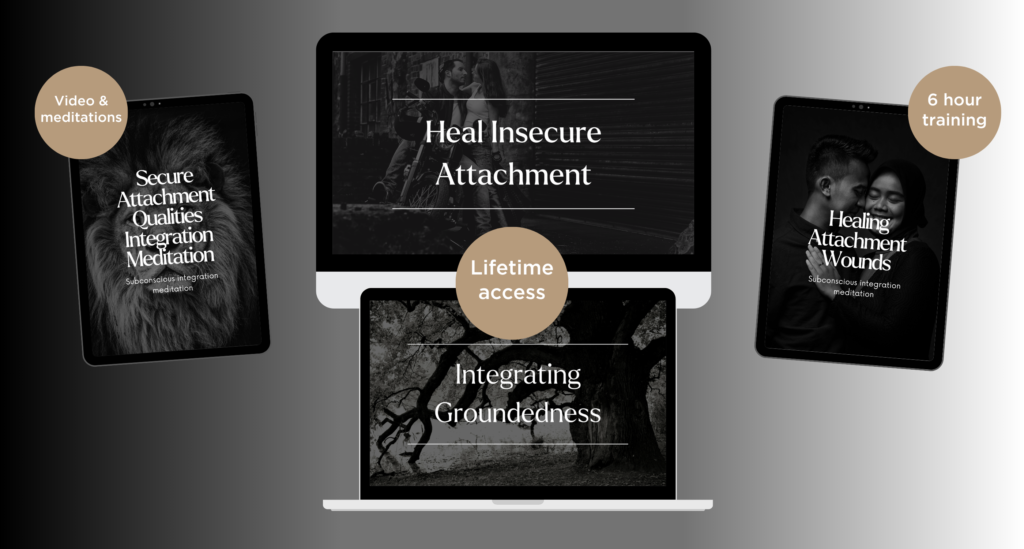
That’s why our course on Heal Insecure Attachment helps you to befriend your anxiety and heal the inner child so you can somatically release the stored emotional energy of anxiety from your nervous system and find inner security.
Our course equips you with the tools you need to delve into your subconscious patterns and integrate them, fostering a deep sense of inner security and ultimately releasing the energy of anxiety.
The guided Heal Insecure Attachment course arms you with techniques to befriend the nervous system, heal the inner child and integrate anxious attachment patterns, so you can become secure and create secure relationships. It’s packed with over 6 hours of enlightening video content, along with healing meditations.
By focusing on the subconscious roots of your anxious attachment patterns, my course provides you with a somatic and emotion-focused approach to healing and personal growth.
You can enroll in the course here.
Curious to Go Deeper?
If you’re curious to go deeper with IFS therapy and ease anxiety and create a secure internal attachment, I can help. Simply fill out the form below and I’ll be in touch.