

The Anxiously Attached Journey: Overcoming Insecurity in Love and Connection
It was during my long-distance relationship that I first became aware of my anxiously attached journey.
I remember the sinking feeling in the pit of my stomach every time my boyfriend would signal the end of our phone call. As soon as we hung up, a wave of anxiety would creep in, leaving me feeling unsettled and on edge. Looking back, this was a defining moment in my anxiously attached journey, where my fear of disconnection felt overwhelming.
Despite his reassurances, I couldn’t calm the anxiety inside me. I found myself clinging to him, needing constant reassurance just to feel okay. This pattern became a central part of my anxiously attached journey, where no amount of external validation ever truly felt like enough.
What made it even more difficult was that he struggled with conflict. We were rarely able to resolve issues because every time I tried to express how I felt, he would say I was arguing. Over time, I stopped speaking openly and started writing letters, hoping he would finally understand my needs, but he never did. It wasn’t until years later, when we spoke again, that he admitted he never felt good enough and struggled deeply with his emotions. That moment gave me a new layer of understanding within my anxiously attached journey.
This dynamic is incredibly common. In an anxious-avoidant relationship, one person craves closeness while the other avoids vulnerability. The more the avoidant partner withdraws, the more the anxious partner reaches out. This push-pull dynamic became a painful but important chapter in my anxiously attached journey.
Instead of recognizing that the relationship wasn’t meeting my emotional needs or making me feel safe, I tried harder. I over-explained, over-gave, and overextended myself. This is something many people experience in their own anxiously attached journey, where effort replaces self-awareness.
From the outside, this can look like blaming, nagging, or criticizing. But underneath it is a deep fear of abandonment. The avoidant partner, already sensitive to conflict, may feel attacked and withdraw further, while the anxious partner feels even more insecure. This cycle reinforces itself, becoming a core pattern in the anxiously attached journey.
For me, this dynamic left me feeling unheard, misunderstood, and emotionally exhausted. I was constantly questioning the stability of the relationship, never feeling fully secure. It was one of the most challenging phases of my anxiously attached journey, but also one of the most revealing.
Everything began to shift when I discovered attachment theory. For the first time, I had language for what I was experiencing. I could see that I wasn’t “too much”—I was anxiously attached. That realization became a turning point in my anxiously attached journey, allowing me to take responsibility for my healing instead of seeking constant reassurance from others.
I began learning how to meet my own emotional needs, regulate my feelings, and build a sense of safety within myself. Slowly, I started moving toward more secure ways of relating. This is the essence of the anxiously attached journey not staying stuck in patterns, but becoming aware of them and choosing to grow.
The journey toward healing and developing secure relationships begins with awareness. When we understand the signs of anxious attachment, we can start to make sense of our thoughts, emotions, and behaviors. This awareness is the foundation of the anxiously attached journey, opening the door to deeper self-understanding, healthier relationships, and lasting transformation.
Blaming and criticising
People who are on an anxiously attached journey often find themselves caught in a cycle of blame and criticism. When feeling insecure or anxious, they may focus on perceived flaws in themselves or their partners, leading to a pattern of self-doubt and mistrust. This tendency can erode the foundation of a healthy relationship, creating a negative and judgmental environment.
The first step in addressing this behavior is to recognise its roots in attachment-related anxiety. By understanding that blame and criticism stem from a place of insecurity, we can begin to develop self-compassion and shift their focus to constructive communication and understanding.
Seeking constant reassurance
People who are on an anxiously attached journey often seek constant reassurance from their partners, leading to a pattern of overanalyzing every interaction. This intense scrutiny can strain the relationship, causing emotional exhaustion for both parties. Recognising the link between anxious attachment and the need for validation is crucial in breaking this cycle.
To address this pattern, people on their anxiously attached journey can work on developing self-soothing techniques, such as mindfulness or meditation, to manage their emotions and reduce anxiety. Improving communication with their partners by expressing their needs and concerns constructively can also help to alleviate the constant need for reassurance.
Overanalysing

People who are on their anxiously attached journey often engage in overanalysing, a pattern of examining and dissecting every aspect of their relationships. Driven by the need for reassurance and security, they may spend countless hours examining every word, action, or gesture from their partners, looking for hidden meanings or signs of rejection.
Overanalysing can create an endless cycle of worry and doubt, leading to stress and exhaustion for both the anxiously attached individual and their partner. This pattern stems from a deep-seated fear of abandonment and a lack of trust in the relationship’s stability, causing individuals to seek constant validation and confirmation of their worthiness.
While overcoming the tendency to overanalyze can be challenging, it is possible with self-awareness and consistent effort. Anxiously attached people can benefit from developing mindfulness techniques that help them stay present in the moment and disengage from the endless loop of anxious thoughts.
Fixing others

People on their anxiously attached journey often find themselves drawn to emotionally unavailable partners, believing they can “fix” them and create the secure, loving relationship they crave. This pattern is rooted in a subconscious desire to prove their worthiness of love and a belief that by healing their partner’s emotional wounds, they can create the stability and intimacy they long for.
This can lead to over-functioning in relationships where they try and fix their partner, which leads to emotional burnout and anxiety.
However, this tendency to fix others often results in frustration and disappointment, as the anxiously attached people invest their emotional energy into someone who is unwilling or unable to reciprocate. This dynamic can perpetuate feelings of insecurity and anxiety, reinforcing the anxiously attached person’s belief that they are not worthy of love and support.
Struggling to set boundaries

People on their anxiously attached journey often have difficulty setting and maintaining boundaries in their relationships. Driven by their fear of abandonment and desperate need for reassurance, they may tolerate behaviors and dynamics that are detrimental to their emotional well-being.
This lack of boundaries allows their anxieties to perpetuate, creating an unhealthy and imbalanced relationship.
To establish healthier connections, it is crucial for anxiously attached individuals to learn to set and enforce boundaries.
This can involve recognizing their own needs and limits, communicating these boundaries to their partners, and consistently upholding them. By establishing clear boundaries, they can create a sense of safety and self-respect, ultimately fostering more secure and fulfilling relationships.
Emotional instability
People on their anxiously attached journey often struggle with emotional instability, often manifesting as intense mood swings, heightened sensitivity to rejection, and difficulty regulating emotions. This volatility stems from a deep-seated fear of abandonment, causing anxiously attached individuals to react strongly to perceived threats to their relationships.
The emotional instability can create tension and conflict within relationships, as partners may find it challenging to predict and manage these intense reactions. This unpredictability can reinforce the anxiously attached individual’s fear of abandonment, perpetuating a cycle of emotional volatility and insecurity.
To break this cycle, anxiously attached people need to address the root causes of their emotional instability. This can involve exploring past experiences, understanding their attachment style, and developing self-soothing techniques to manage their emotions.
By cultivating emotional resilience, anxiously attached individuals can learn to recognize and respond to their emotions in more adaptive ways. This may involve engaging in mindfulness practices, therapy, or other forms of self-care that promote emotional regulation and stability.
How to change your attachment style
While it may seem daunting, it is possible to change your attachment style and develop healthier relationship patterns. By addressing the underlying emotional energy and transforming your relationship dynamics, you can create secure connections and experience the love, intimacy, and security you crave.
Heal your inner child
An essential aspect of transforming your anxiously attached attachment style on your anxiously attached journey is healing your inner child. This involves addressing the emotional wounds and unmet needs that may have contributed to your anxious attachment. By healing your inner child and cultivating a secure attachment to yourself, you can create a foundation of inner safety that will positively impact your relationships and overall well-being.
Learn secure attachment
For those with anxious attachment and on their anxiously attached journey, learning secure relating is crucial for fostering healthy relationships and breaking the cycle of emotional volatility. By understanding and adopting secure relationship behaviours, you can create an environment of safety, trust, and mutual respect in your connections.
Start by reflecting on past relationship patterns and identifying areas where you can implement secure behaviors. Practice emotional regulation to manage your emotions effectively and avoid relying on your partner for constant reassurance. Develop open, honest, and respectful communication, ensuring both parties feel heard and understood.
Strive for a balance between independence and connection, respecting each other’s autonomy while maintaining intimacy. Actively work on building trust by being consistent and reliable. Lastly, develop healthy conflict resolution skills by focusing on solutions and avoiding blame or defensiveness. By incorporating these strategies, you’ll create a secure foundation for resilient and fulfilling relationships.
Qualify for partners

An essential aspect of developing secure relationships is learning to qualify potential partners. By assessing their emotional availability, communication skills, and compatibility, you can ensure that you are entering into relationships that support your growth and emotional well-being.
To qualify for secure partners, be observant of their behaviors and emotional responses during the early stages of dating. Notice how they handle conflict, express their emotions, and communicate their needs. Look for signs of emotional maturity, such as accountability, empathy, and a willingness to work through challenges. Prioritize compatibility in values and relationship goals, ensuring that you share a similar vision for the connection you want to build. By thoughtfully assessing potential partners, you can lay the groundwork for secure, fulfilling relationships that nurture your emotional growth.
Heal your anxiously attached attachment style for good
Having an anxiously attached attachment style can be a source of great emotional distress, particularly when faced with a partner pulling away or changes in communication.
It’s common for individuals who are anxiously attached to experience fear, panic, and worry while struggling to create secure relationships, often settling for less than they deserve.
From my experience, traditional talk therapy may not be enough to heal an anxious attachment style since the underlying trauma is largely subconscious.
To become more secure, it’s essential approach healing anxious attachment holistically that focuses on on three key components: cultivating inner safety, learning secure ways of relating, and choosing secure and compatible partners.
To support your journey towards secure attachment, my upcoming Ideal Relationship Pathway course offers guidance on creating your ideal relationship blueprint and looking for indicators of relationship compatibility in the early stages of dating.
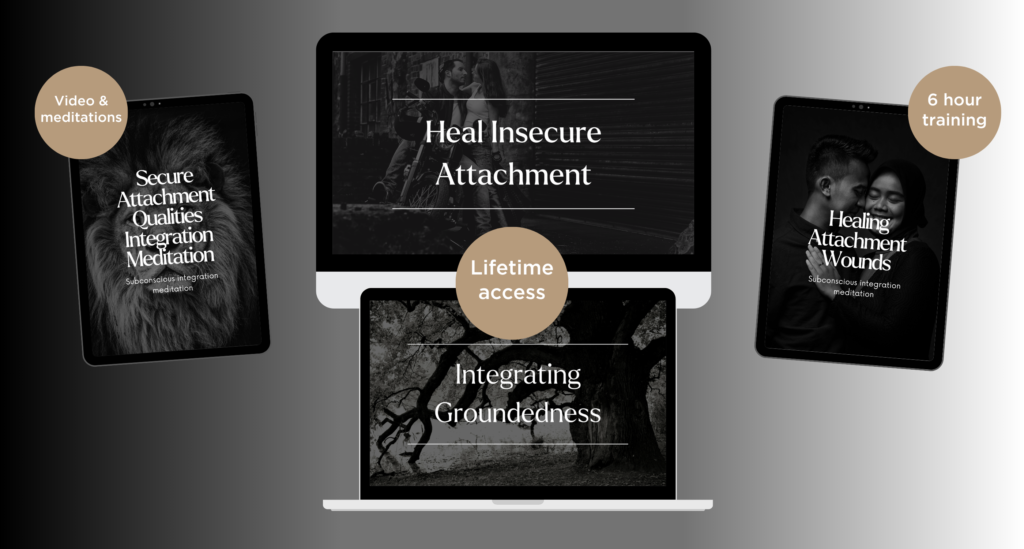
My other course Heal Insecure Attachment helps you to heal your subconscious mind and cultivate inner safety, so you have a stable foundation to build upon and learn secure ways of relating.
This course provides you with comprehensive video content and healing meditations to break subconscious patterns, heal emotional wounds and learn secure ways of relating. By prioritising this holistic approach, you can create secure, supportive relationships that foster love, security, and emotional well-being.
Curious to Go Deeper?
If you’re curious to go deeper with IFS therapy and ease anxiety and create a secure internal attachment, I can help. Simply fill out the form below and I’ll be in touch.
Read more
11 Signs of an Emotionally Unavailable Partner and How to Deal With It
7 Signs You’re Dating an Avoidant and How to Break the Cycle
8 Signs of Avoidant Men and How to Stop Chasing