Attachment

  • 11 Signs of Unhealthy Attachment: Recognising Patterns and Moving Toward Secure Relationships

    unhealthy attachment inner child work inner child therapy inner child therapist icw1

    11 Signs of Unhealthy Attachment: Recognising Patterns and Moving Toward Secure Relationships

    An unhealthy emotional attachment can develop due to a variety of factors, often rooted in past experiences, fears, or unmet needs. But how can you tell if your attachment to your partner is crossing into unhealthy territory? Recognizing the signs is the first step toward building healthier, more balanced relationships. Unhealthy attachment often emerges when we rely too heavily on our partner or the relationship itself to feel whole, valued, or secure. While it’s normal to seek comfort and connection, an excessive need for validation or support without reciprocity can signal an unbalanced dynamic that ultimately disrupts genuine connection.

    If you’re wondering whether your attachment to your partner might be unhealthy, identifying specific signs can help clarify your relationship patterns. When we attach to others in an unhealthy way, we may overlook our own boundaries, lose sight of our personal identity, or feel consumed by constant worry about the stability of the relationship. Unhealthy attachment can create dependency that doesn’t allow room for self-growth, mutual support, or respect for individual boundaries — essential components of a secure, lasting connection.

    In this post, we’ll explore eight signs of unhealthy attachment to help you determine whether these patterns might be impacting your relationships. By identifying these signs, you’ll gain the clarity needed to begin addressing attachment issues, fostering a more supportive and balanced connection. 

    Unhealthy attachment can take many forms, often rooted in deep-seated fears, unmet needs, or past relational experiences. Here are some common signs of unhealthy attachment that can impact the balance and stability of a relationship.

    Dependence on Your Partner for Self-Worth

    In unhealthy attachment, there’s a tendency to rely on the relationship to define your value. If your sense of self-worth fluctuates based on how your partner treats you or whether they’re giving you attention, it’s a sign that the attachment might be unbalanced. This can lead to feelings of insecurity or even desperation if the relationship feels unstable.

    Relying on a relationship to define self-worth can create a cycle of dependency and anxiety, where a person’s sense of value is constantly in flux, tied to their partner’s behavior and attention. If the partner is attentive and affirming, self-worth may temporarily rise, giving a fleeting sense of security. However, when attention wanes or minor conflicts arise, feelings of inadequacy, insecurity, or desperation often take over. This rollercoaster effect can become exhausting, as it places the entire burden of self-worth on the relationship’s stability rather than on an inner, resilient sense of self. Over time, this dependency creates a fragile foundation, making it difficult to feel truly secure or confident.

    In contrast, healthy attachment supports a balanced sense of self-worth that isn’t reliant on external validation. Individuals with secure attachment have a stable inner belief in their value, which allows them to approach the relationship from a place of wholeness rather than neediness. Building self-worth outside the relationship involves recognizing personal strengths, celebrating individual achievements, and nurturing passions and interests. By grounding self-worth internally, it becomes possible to enjoy a relationship without feeling that one’s identity or value hinges on it. This shift fosters a more stable, fulfilling connection, where both partners feel empowered to be themselves without fear of losing their worth if challenges arise.

    Difficulty Functioning Independently

    People with unhealthy attachment often struggle to feel secure or content without constant connection to their partner. This might show up as difficulty being alone, anxiety when apart, or an inability to make decisions without their partner’s input. Healthy relationships have a balance of togetherness and individuality, whereas unhealthy attachment makes it hard to function or find happiness on your own.

     This fear can manifest in habits like excessive texting, checking in frequently, or experiencing heightened worry whenever their partner is out of reach. Rather than finding comfort in moments of solitude or personal pursuits, individuals with unhealthy attachment may rely heavily on the presence of their partner to feel grounded. This dynamic not only limits personal growth but also places pressure on the partner to constantly reassure and validate the relationship.

    In healthy attachment, time spent apart is seen as an opportunity to recharge and pursue individual interests, ultimately enriching the relationship with new experiences and perspectives. The ability to feel secure while apart allows both partners to bring their best selves to the relationship and fosters a stronger bond based on trust and respect. Learning to cultivate a sense of inner peace and self-reliance can transform the need for constant closeness, helping create a balanced, more fulfilling connection.

    Ignoring or Compromising Boundaries

    In unhealthy attachment, boundaries become blurred or neglected as you prioritize the relationship over your own well-being. You may find yourself compromising on things you value, saying yes to things you don’t want, or avoiding setting boundaries out of fear of upsetting your partner. Over time, this erodes self-respect and your wellbeing. In fact, research shows that women who say no, are 4 times likely to die. They found that women who didn’t express their feelings and didn’t say no were 4 times more likely to die. This is because a lack of authenticity brings stress in the nervous system and leads to disease.

    When boundaries are neglected in an attempt to maintain closeness, the relationship can start to consume one’s identity, leaving little room for personal values, needs, or self-care. Continuously compromising on things that matter or ignoring discomfort to keep the peace may feel manageable at first, but over time it builds up a profound sense of dissatisfaction and stress. Living inauthentically—where one suppresses feelings, denies preferences, and avoids “no” in fear of conflict—disconnects individuals from their inner selves, creating emotional and physiological strain. This tension in the nervous system, caused by constantly overriding genuine feelings and needs, has been shown to have serious health impacts, including a higher risk of disease and even premature mortality.

    Studies underscore the importance of boundary-setting as an essential factor in long-term well-being, particularly for those who feel pressured to conform or remain agreeable in relationships. Authenticity and the ability to express boundaries are vital to maintaining a sense of self-respect, reducing stress, and promoting health. Embracing the right to say “no” and asserting one’s needs are not only empowering but also deeply protective. They help individuals reconnect with their own values, alleviate the physiological stress associated with people-pleasing, and build a relationship dynamic where both partners feel respected and valued. By honoring personal boundaries, individuals safeguard their mental, emotional, and physical health, cultivating a relationship environment that nurtures rather than depletes them.

    Controlling Behaviors in Relationships

    Controlling behaviors often emerge in relationships where attachment is unhealthy. These behaviors may involve attempts to limit your partner’s independence, monitor their actions, or dictate their choices in an effort to maintain a sense of security. For example, you might feel compelled to know their whereabouts at all times, become upset when they spend time away, or even try to influence their decisions in ways that align with your needs or expectations.

    While controlling behaviors may feel like a way to preserve the relationship, they ultimately erode trust and create tension. Healthy relationships are built on mutual respect and trust, allowing both partners to maintain their individuality while nurturing their bond. When control becomes a pattern, it often leads to feelings of suffocation, resentment, and emotional distance. To build a healthier relationship dynamic, it’s essential to recognize these patterns, work on fostering trust, and allow space for each partner to grow and thrive independently.

    Experiencing Significant Distrust 

    A pervasive sense of distrust is a common sign of unhealthy attachment, often rooted in past experiences of betrayal, abandonment, or inconsistent care. When we carry unresolved abandonment wounds or past relationship trauma, it’s natural to feel guarded and expect that others might let us down. However, significant distrust can become a barrier to forming genuine, secure connections. Instead of approaching relationships with openness, distrust creates an underlying anxiety, leading to patterns of suspicion, insecurity, and the urge to constantly monitor our partner’s behavior.

    In relationships marked by distrust, you might find yourself questioning your partner’s actions, reading into their words, or assuming negative intentions without clear evidence. This mindset can lead to jealousy, possessiveness, and even controlling behaviors, all of which stem from the fear of being hurt or abandoned. In the long term, this kind of distrust can damage both partners’ emotional well-being, creating a cycle of suspicion and defensiveness that erodes the foundation of trust necessary for a healthy relationship.

    Jealousy and Possessiveness

    Jealousy is common in unhealthy attachment, where the fear of losing your partner drives possessive behaviors. You might feel threatened by others, seek control over your partner’s social interactions, or experience anxiety whenever they engage with others. This possessiveness can lead to mistrust and conflict, impacting both emotional safety and trust. 

    When someone feels insecure in themselves or doubts their worth, they may interpret their partner’s interactions with others as a potential danger, even if there’s no real basis for concern. This heightened sensitivity to perceived threats can lead to behaviors like questioning the partner’s loyalty, frequently checking in, or setting restrictions on their interactions with friends or colleagues. These actions, meant to reassure, often have the opposite effect, as they create tension and distance. The partner being controlled may feel their autonomy is threatened, while the person experiencing jealousy remains trapped in a cycle of fear and anxiety, never truly feeling secure.

    Over time, unchecked jealousy erodes the trust that is essential for a healthy relationship. The constant need for reassurance can exhaust both partners, leading to emotional burnout and resentment. Trust, once damaged by possessive behavior, can be challenging to rebuild, as both partners may feel uncertain about the relationship’s stability. Moving toward a healthier attachment involves addressing the root insecurities driving jealousy and learning to self-soothe instead of relying on external validation. Building inner confidence and practicing trust can help break the cycle of possessiveness, creating space for a relationship grounded in mutual respect and emotional freedom. As both partners feel more secure and valued independently, jealousy naturally diminishes, making way for a stronger, more supportive bond.

    Inability to Communicate Needs Openly

    People with unhealthy attachment often have difficulty expressing their needs or emotions directly, fearing that it will cause conflict or push their partner away. This can lead to passive-aggressive behavior, resentment, or withdrawal. Healthy relationships require open, honest communication, but unhealthy attachment keeps you from sharing openly, leading to unexpressed needs and unresolved tensions.

    In an unhealthy attachment dynamic, unexpressed needs often build up over time, creating a cycle of frustration and emotional disconnection. When individuals feel unable to communicate their desires or boundaries openly, they may resort to indirect methods of expression, such as dropping hints, giving the silent treatment, or withdrawing emotionally. These passive-aggressive behaviors are often attempts to convey unmet needs without risking direct confrontation, but they rarely result in genuine understanding. Instead, they can confuse and alienate the partner, who may feel frustrated by the lack of clear communication. Over time, these patterns create a tense atmosphere where misunderstandings and resentment build, further eroding trust and intimacy.

    In contrast, healthy attachment fosters an environment where both partners feel safe to express themselves openly and honestly. In such relationships, partners approach each other with empathy and understanding, and they work together to meet each other’s needs while respecting individual boundaries. This openness creates a foundation for emotional safety, where both people feel valued and understood. Cultivating the ability to communicate needs and emotions directly, even when difficult, is essential for moving from unhealthy attachment to secure connection. As partners learn to express their inner worlds more freely, they lay the groundwork for deeper emotional intimacy, greater trust, and a more resilient relationship.

    Sacrificing Personal Goals and Values for the Relationship

    In an unhealthy attachment, you may feel compelled to put aside your own dreams, goals, or values to accommodate your partner. This sacrifice often comes from a fear of losing the relationship, but over time, it leads to dissatisfaction and unfulfillment. Healthy attachment involves supporting each other’s individuality and growth, while unhealthy attachment limits personal development for the sake of staying connected.

    In unhealthy attachment, the desire to maintain closeness can overshadow your own sense of purpose and identity. This often manifests as putting your partner’s needs and preferences ahead of your own, even at the expense of your goals, values, or personal well-being. Over time, you may start to lose touch with your own dreams, or find yourself shelving ambitions that once felt vital to you. This self-sacrifice may feel like an act of love or loyalty, but it usually stems from a deep-seated fear of rejection or abandonment. When we compromise too much to keep the relationship intact, we risk eroding our self-worth and self-identity, becoming increasingly dependent on the relationship to define who we are.

    Healthy attachment, by contrast, encourages personal growth and respects individuality. In a securely attached relationship, both partners support each other’s aspirations, understanding that fostering each other’s growth strengthens the relationship rather than threatens it. Each partner feels safe to explore their own path while also nurturing their shared connection. When personal development is embraced in a relationship, both individuals are likely to feel more fulfilled and aligned with their true selves, fostering a bond that is resilient, supportive, and deeply satisfying. Moving from unhealthy to healthy attachment is often a transformative journey, where embracing personal goals becomes an essential step toward building a balanced, nurturing, and lasting connection.

    Isolation from family and friends

    In unhealthy attachment, it’s common to become increasingly isolated from friends, family, and other support networks. This isolation often happens gradually, as the relationship becomes the primary focus and source of emotional fulfillment. You might find yourself spending all your time with your partner, prioritizing their needs above all else, or even pulling away from loved ones because you feel they don’t understand or support your relationship. Sometimes, this isolation is a result of consciously choosing to spend less time with others, while in other cases, it can stem from a partner’s encouragement or influence.

    This pattern of isolation can be damaging in the long run. Close relationships with friends and family are essential for maintaining a balanced, fulfilling life; they provide different perspectives, emotional support, and a sense of community that a romantic relationship alone cannot fulfill. When you lose these connections, it places more pressure on the relationship to meet all your emotional needs, which can intensify feelings of dependency and create an unhealthy dynamic.

    Feeling isolated is often the onset of an abusive relationship. It’s important for a healthy relationship you have a life outside of the relationship. You have your own passions, hobbies, interests, social group and routines, so you can decompress from life stressors, relationships stressors and have a balanced life.

    Staying in Unhealthy Relationships

    A key sign of unhealthy attachment is remaining in a relationship that feels restrictive or even emotionally unsafe, often driven by feelings of guilt, anxiety, or dependency. In such relationships, you might find yourself feeling anxious about leaving the house or doing activities independently. Spending time with friends or family may trigger feelings of guilt or paranoia, as if you’re betraying your partner by prioritizing other relationships or interests. This constant anxiety around personal freedom can make it difficult to maintain connections and pursue activities that nourish your own well-being.

    Unhealthy attachment also makes it harder to set and maintain boundaries with a partner. For instance, you may stay in a relationship with someone who doesn’t accept “no” as an answer, manipulates you to get their way, or pressures you to meet their needs while disregarding your own. They may seek to monopolize your time, making you feel responsible for their happiness and often using guilt or other tactics to keep you close. This dynamic can leave you feeling trapped, unable to prioritize your own needs or assert your right to independence.

    Learning to recognize these patterns is essential for breaking free from unhealthy attachment. Setting boundaries, asserting your right to independence, and reconnecting with your personal values can empower you to regain control over your life. A healthy relationship is one where both partners respect each other’s autonomy and allow space for individual growth, friendships, and interests. Reclaiming this balance helps create a foundation of mutual respect and emotional safety, enabling both partners to thrive.

    Experiencing significant anger

    Experiencing frequent or intense anger in relationships can be a powerful indicator of unhealthy attachment. In such dynamics, anger often arises from unmet needs, insecurity, or a lack of trust within the relationship. When attachment is unhealthy, we may have heightened expectations of our partner to meet all of our emotional needs, provide constant reassurance, or maintain certain behaviors. When these expectations aren’t met, feelings of disappointment or vulnerability can quickly turn into frustration or resentment, manifesting as significant anger.

    This type of anger may surface as outbursts over minor disagreements, excessive irritation when your partner is unavailable, or frustration when they don’t respond as expected. In unhealthy attachment, anger can also stem from deeper fears, such as losing control of the relationship or feeling abandoned. Because there’s a reliance on the relationship for self-worth and stability, anything that threatens this sense of security can trigger strong emotional reactions. Over time, this anger can create a cycle of conflict and defensiveness, further straining the relationship and intensifying attachment insecurity.

    Learning to address and manage these feelings of anger involves recognizing the underlying emotions and unmet needs fueling it. Cultivating self-awareness, practicing emotional regulation, and communicating needs in a healthy, direct way can help reduce anger and create a more balanced relationship dynamic. Developing a secure attachment allows for healthier ways of expressing needs and frustrations, promoting a relationship based on mutual understanding, patience, and respect.

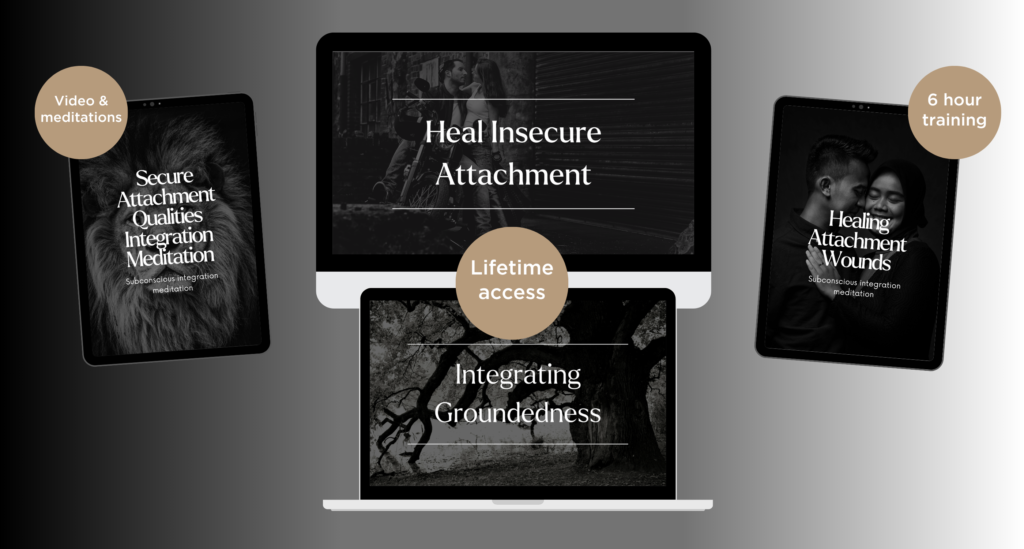
    Heal Insecure Attachment

    My course Heal Insecure Attachment is designed to help you understand and transform the patterns that keep you stuck in unhealthy relationships. By looking inward, you’ll gain a deep understanding of where your attachment patterns stem from—whether from past childhood wounds, emotional trauma, or previous relationship experiences. We’ll dive into healing attachment wounds and how they affect your ability to connect with others in healthy ways. As you work through this process, you’ll begin to cultivate secure attachment characteristics like emotional regulation, self-confidence, and boundary-setting, which are essential for building strong, supportive relationships.

    This is a transformational journey, where through meditative exercises and a nervous system approach, you’ll heal and rewire your nervous system. The goal is to shift from reactive patterns of attachment to a grounded, calm, and centered state of being, so that you can make healthy relationship choices from a place of security and self-awareness. By doing this inner work, you’ll not only improve your relationship with yourself but also create healthier, more fulfilling connections with others. This process of healing allows you to approach relationships from a secure, empowered place—one that supports your emotional well-being and fosters mutual respect and trust in your interactions.

    Curious to Go Deeper?

    If you’re curious to go deeper to heal from narcissistic friendships, narcissistic parents and heal from narcissistic abuse, I can help with IFS therapy. Often those been through abuse struggle with their mental health. If you’d like to work with a therapist who specialises in neurodivergence and complex trauma, get in contact for an appointment. Simply fill out the form below and I’ll be in touch.


  • 8 Signs of Avoidant Men and How to Stop Chasing

    avoidant men inner child work inner child therapy inner child therapist ic1

    8 Signs of Avoidant Men and How to Stop Chasing

    Do you feel a wave of panic, fear, or worry when someone you care about starts to pull away?

    If these questions resonate, you might be familiar with the challenging dynamics of anxious attachment in relationships. Often, these feelings arise when we sense a potential partner isn’t meeting our needs for consistency, communication, or commitment. But instead of trusting our instincts, we may find ourselves stuck in a cycle of overthinking—analyzing every text, every word, every action.

    When you have an anxious attachment style, you might be particularly drawn to avoidant men. Often, these men appear emotionally distant, closed off, and resistant to discussing emotions or resolving conflicts. They may avoid intimacy or commitment, leaving you feeling insecure, constantly guessing about the relationship, and exhausted from trying to bridge the emotional gap.

    In my practice, I work extensively with women with anxious attachment styles to recognize the signs of avoidant men and guide them toward relationships with partners who are consistent, emotionally available, and committed. 

    Navigating the rollercoaster of an anxious-avoidant dynamic can be draining and destabilizing. Avoidant men often sidestep accountability, find it hard to apologize, and struggle with emotional presence, which can create a pattern that keeps you feeling uncertain and undervalued.

    But here’s the truth: relationships don’t have to be this way. 

    There are secure, loving partners out there who value open communication, make you feel heard, and take accountability when they’ve made mistakes. 

    These men offer a steady foundation, attuning to your emotions and creating a sense of safety and trust. They make you feel appreciated, validated, and seen.

    In a relationship with someone who is consistent, committed, and emotionally present, you’re less likely to feel triggered by anxious thoughts or fears. When you’re with a partner who makes you feel safe and valued, the relationship can be a source of peace, rather than a cycle of anxiety and second-guessing. Moving toward healthier relationships is not only possible but also essential for your well-being and growth.

    Recognizing your anxious attachment patterns is the first step toward transforming your relationships. By identifying the triggers and cycles that arise in relationships with avoidant men, you gain the insight and empowerment to choose partners who are ready for genuine connection and emotional presence. In the following sections, we’ll explore why anxious individuals often feel drawn to avoidant partners, how to break free from attachment cycles, and practical steps to cultivate a secure attachment style.

    Remember, a fulfilling relationship that provides both love and stability is within reach—it starts with honoring your own needs and choosing relationships that nurture your growth and well-being.

    8 Signs of avoidant men

    Emotional Distance

    One of the most recognizable signs of avoidant men is a consistent sense of emotional distance. While they may be charming, warm, and engaged at first, their openness often diminishes as the relationship progresses. Avoidant men can struggle with deep conversations or discussions that require them to be vulnerable. Rather than sharing their feelings, they may keep things superficial, making it difficult to form an emotional connection. Their detachment is not necessarily intentional; it is often a coping mechanism to maintain a sense of safety and control. This emotional distance can leave their partners feeling undervalued and isolated, sensing a wall between them that never quite comes down.

    Fear of Commitment

    Avoidant men frequently exhibit a significant fear of commitment, often steering clear of discussions about the future or avoiding labels that signify exclusivity or long-term intent. They may appear interested in the relationship, but as things start to become more serious, they might retreat or create distance. This fear is rooted in a deep-seated discomfort with relying on others, and the sense of vulnerability that serious commitment often brings. Partners of avoidant men may feel that the relationship is always in a fragile state, constantly worried about pushing them away by asking for more clarity or commitment.

    Preference for Independence

    A high value on independence is another hallmark of avoidant men. They may emphasize the need for personal space, time alone, or maintaining separate activities. While independence is healthy in any relationship, avoidant men may use it as a way to avoid emotional closeness. Rather than fostering a balanced interdependence, they may guard their independence as a form of self-protection, feeling vulnerable when required to rely on others. This often creates a dynamic where they seem more comfortable when there is a degree of distance, keeping the connection from feeling truly intimate.

    Avoidance of Conflict

    Avoidant men often shy away from conflict or difficult conversations, perceiving them as threats to their emotional control. When faced with relationship issues or when a partner brings up concerns, they may respond by withdrawing, stonewalling, or changing the subject. Instead of engaging, they tend to shut down or leave the conversation unresolved. This aversion to conflict can leave their partner feeling unheard and frustrated, creating a communication barrier that prevents the relationship from evolving and deepening.

    Over-Reliance on Logic Over Emotion

    Another sign of avoidant men is an over-reliance on rationality and logic as a means to avoid emotional expression. They may prefer to address relationship issues by analyzing them logically, focusing on “solutions” rather than discussing feelings. This logical approach can be a defense mechanism to protect against vulnerability, as emotions often feel unpredictable or overwhelming to them. While a logical approach can be helpful at times, this tendency can prevent them from connecting emotionally with their partner, reinforcing an emotional gap that leaves partners feeling alone in their feelings.

    Reluctance to Open Up About the Past

    Avoidant men often resist talking about their past or personal history, particularly if it involves family dynamics or previous relationships. They may avoid conversations about childhood or past hardships, which can make it difficult for their partner to understand where their behaviors and attachment patterns stem from. By keeping these parts of themselves hidden, avoidant men create a one-sided connection where vulnerability feels uncomfortable or even unsafe. For their partners, this reluctance to open up can feel like an invisible wall that prevents true intimacy.

    Disinterest in Sharing Their Daily Lives

    A common sign of avoidant men is a disinterest in sharing daily details, including small moments that bring partners closer together. Whether it’s a reluctance to talk about their day, share personal goals, or discuss future plans, avoidant men tend to keep these aspects private, often to maintain a sense of control. While they might see this as a way to protect their independence, their partner may interpret it as a lack of interest in building a life together. This reluctance to share can create an imbalance where only one person feels truly invested in the relationship’s progress.

    Evasiveness Around Feelings and Needs

    Avoidant men are often evasive or ambiguous when it comes to discussing feelings and needs. They may find it challenging to express affection or speak openly about their needs, often out of fear that it will lead to greater expectations from their partner. When their partner seeks reassurance or tries to gauge the emotional temperature of the relationship, avoidant men may respond with vague answers or deflect the conversation altogether. This evasiveness can create an emotionally unstable foundation, where their partner feels uncertain about the relationship’s direction or the avoidant partner’s level of commitment.

    Here’s an exploration of strategies to break the cycle of attracting avoidant men, along with practical steps for fostering more secure connections.

    1. Recognizing Your Own Attachment Style

    The journey to breaking the cycle of attracting avoidant men begins with understanding your own attachment style and how it influences your relationship choices. If you have an anxious attachment style, you may find yourself drawn to partners who exhibit avoidant behaviors. This can create a push-pull dynamic where the avoidant partner withdraws just as the anxious partner seeks closeness. By recognizing the ways your attachment style impacts your patterns, you can start to make conscious, informed choices about the qualities you seek in a partner. Becoming aware of your own needs and attachment triggers helps to shift your focus toward relationships that provide stability and mutual respect.

    2. Setting Clear Boundaries from the Start

    Establishing healthy boundaries is a key factor in breaking the cycle of being drawn to avoidant men. Many avoidant men tend to feel uncomfortable when there are expectations or defined boundaries, but setting these parameters from the start helps clarify what you want from a relationship. For example, if you value consistent communication and emotional availability, express this clearly early on. Boundaries allow you to honor your needs, helping to weed out partners who are not ready to commit emotionally. This practice not only protects your sense of self but also attracts partners who respect and can meet those boundaries.

    3. Cultivating Self-Worth and Inner Security

    A powerful step in moving away from avoidant men is nurturing a sense of inner security. When you feel grounded in your self-worth, you’re less likely to seek validation from unavailable partners. Working on self-acceptance, self-compassion, and self-care shifts your mindset and attracts healthier, more fulfilling relationships. When you prioritize your own emotional well-being, you send a message to potential partners that you value consistency and respect, making it easier to recognize when someone may not meet these standards. Inner security builds the resilience needed to walk away from avoidant patterns and fosters openness to secure, emotionally present partners.

    4. Learning to Identify Red Flags Early

    One of the most practical ways to avoid getting involved with avoidant men is to recognize red flags early on. Signs of emotional unavailability often present themselves in subtle ways, such as hesitance to discuss the future, reluctance to open up, or consistent avoidance of emotional topics. Instead of interpreting these behaviors as challenges to overcome, take them as signs of potential incompatibility. Learning to notice and trust these signals can prevent the emotional investment that often leads to attachment-related anxiety. By acknowledging red flags and acting on them promptly, you protect yourself from cycles of disappointment.

    5. Shifting Focus to Secure Attachment Qualities

    Attracting a secure, available partner begins with understanding the qualities you value most in a relationship. Avoidant men often bring excitement and mystery, which can be appealing initially, but may not offer long-term emotional stability. Instead, focus on qualities such as emotional intelligence, empathy, and consistency. By looking for these traits, you cultivate a different dynamic that prioritizes safety, communication, and mutual growth. Choosing partners who demonstrate secure attachment qualities helps reinforce your own sense of security, creating a foundation of trust rather than fear or anxiety.

    6. Practicing Self-Compassion During Setbacks

    Breaking the cycle of attracting avoidant men can be challenging, and there may be times when old patterns resurface. Practicing self-compassion helps you stay motivated on this journey, even during setbacks. Acknowledge that attachment patterns often take time to reshape and that progress is not always linear. Self-compassion reduces the guilt and self-blame that can arise when encountering familiar challenges, and it keeps you focused on growth rather than perfection. This mindset fosters resilience, making it easier to remain patient as you work toward healthier relationship patterns.

    7. Exploring Healthy Relationship Models

    To reframe your understanding of partnership, it can be beneficial to explore examples of healthy relationships, whether through friendships, family, or counseling. Seeing how secure attachment operates in real life can shift your perception of love and connection, providing a roadmap for what a balanced, fulfilling relationship looks like. This exposure reinforces the belief that relationships don’t have to be tumultuous or anxiety-inducing and that emotional security is not only achievable but desirable. Having role models of secure connections can inspire you to seek relationships based on mutual respect, stability, and open communication.

    8. Embracing Growth and Long-Term Change

    Breaking the cycle of being drawn to avoidant men is an ongoing journey that requires patience and commitment. Understand that each step forward builds toward a healthier, more secure attachment style. As you begin to embrace growth, you’ll likely notice shifts in the types of relationships and individuals you’re drawn to. Over time, your awareness and efforts will help you align with partners who are capable of offering emotional availability, creating a relationship dynamic rooted in trust and authenticity. Embracing this long-term change provides a sense of empowerment and opens doors to connections that truly nourish your emotional well-being.

    Breaking the cycle of attracting avoidant men is a transformative journey toward self-empowerment and emotional fulfillment. By cultivating awareness, self-respect, and a clear understanding of your needs, you pave the way for healthier, more supportive relationships.

    Cultivating Inner Security to Transform Attachment Patterns

    One of the most effective ways to break the cycle of attraction to avoidant men is to cultivate a secure attachment within yourself. When we possess an internal sense of security, we are far less likely to seek out or settle for partners who are emotionally unavailable. Instead, we develop a clear understanding of our own worth, which enables us to recognize when someone may be inconsistent, distant, or unable to meet our emotional needs. With a secure inner foundation, you naturally move away from relationships that leave you feeling neglected or anxious and instead gravitate toward partners who bring stability, openness, and genuine commitment.

    Exploring Core Patterns and Healing Old Wounds

    In my course, Heal Insecure Attachment, we dive deep into the attachment wounds and subconscious beliefs that drive our attraction to avoidant men. Through guided inner journeys and techniques to engage with the subconscious mind, we explore the origins of these attachment dynamics and address unresolved fears of rejection, abandonment, or unworthiness. This course guides you through the often-complex layers of attachment issues, helping you reframe and release patterns that no longer serve you. By addressing these core wounds, you build a strong, internal foundation that allows for healthier relationships and helps you identify red flags that once might have been overlooked.

    Building Skills for Assertiveness and Boundaries

    Setting healthy boundaries is crucial in breaking patterns of attraction to avoidant men. In the Heal Insecure Attachment course, we emphasize skills like assertiveness to help you feel empowered in your interactions. When you are able to set clear boundaries, you communicate your needs and limits without fear, which can help you identify whether a potential partner respects those boundaries or avoids them. This is especially critical when it comes to avoidant partners, who may struggle with intimacy or closeness. Through boundary-setting exercises, you learn to prioritize your own emotional well-being, creating space for partners who are both available and attuned.

    Developing Conflict Resolution and Communication Skills

    Avoidant men often avoid difficult conversations, which can leave you feeling frustrated and unheard. Heal Insecure Attachment includes modules on conflict resolution and effective communication to support you in handling relationship challenges constructively. By developing these skills, you become equipped to handle tough conversations calmly and confidently, allowing you to navigate conflicts without resorting to patterns of anxiety or avoidance. The course provides techniques for approaching these conversations, helping you discern whether a partner is willing to meet you halfway or retreating into avoidance.

    Practicing Discernment to Choose Emotionally Available Partners

    A secure internal attachment allows you to approach dating with discernment, which is critical in identifying partners who are capable of reciprocating your emotional investment. Within the course, you will learn tools to assess a partner’s emotional availability, consistency, and commitment levels. Instead of falling into the familiar pull of attraction to avoidant men, you become more skilled at recognizing the qualities of securely attached partners, those who prioritize emotional openness, vulnerability, and mutual support. By reinforcing your discernment skills, you’re better equipped to build relationships that foster genuine connection and emotional safety.

    Harnessing the Power of Inner Journeys and Meditative Techniques

    Healing attachment wounds often requires a deep, mindful approach, which is why Heal Insecure Attachment includes meditative techniques designed to cultivate inner calm and emotional resilience. Through guided inner journeys, you gain insight into your attachment triggers and learn to process difficult emotions without becoming overwhelmed by them. These practices are designed to support emotional regulation, helping you respond rather than react in moments of vulnerability or conflict. As you strengthen this inner resilience, your need for validation from avoidant men diminishes, freeing you to seek relationships that reflect your newfound security.

    Creating Lasting Change for Secure Connections

    The goal of Heal Insecure Attachment is to empower you to create lasting change in your relational patterns. With over six hours of video content, you’ll receive a structured, supportive environment in which to practice these new skills and behaviors. Each module is tailored to address the unique challenges that come with insecure attachment styles, and by the end of the course, you’ll be equipped with a toolkit to help you embody emotional stability and confidence in relationships. This lasting transformation allows you to foster connections that are healthy, mutually supportive, and secure.

    Embracing Secure Relationships as the New Standard

    When you cultivate secure attachment traits within yourself, you attract partners who respect, appreciate, and truly see you. The cycle of being drawn to avoidant men weakens as you embody the security and self-worth that allows you to walk away from inconsistent relationships. Heal Insecure Attachment serves as a bridge to this level of relational fulfillment, guiding you through the process of letting go of patterns that once felt inevitable and creating space for connections rooted in love, trust, and emotional presence. By healing from within, you set a new standard for the relationships you choose, leading to a healthier, happier, and more stable love life.

    With these foundational skills and insights, Heal Insecure Attachment offers a transformative path to breaking free from patterns with avoidant men, enabling you to cultivate meaningful, emotionally supportive relationships that truly honor your well-being.

    Curious to Go Deeper?

    If you’re curious to go deeper with IFS therapy and ease anxiety, depression and heal from complex trauma, childhood emotional neglect and create a secure internal attachment and choose relationships that meet your emotional needs, I can help. Simply fill out the form below and I’ll be in touch.

  • The Anxiously Attached Journey: Overcoming Insecurity in Love and Connection

    anxiously attached journey inner child work inner child therapy inner child therapist icw2

    The Anxiously Attached Journey: Overcoming Insecurity in Love and Connection

    It was during my long-distance relationship that I first became aware of my anxiously attached journey.

    I remember the sinking feeling in the pit of my stomach every time my boyfriend would signal the end of our phone call. As soon as we hung up, a wave of anxiety would creep in, leaving me feeling unsettled and on edge. Looking back, this was a defining moment in my anxiously attached journey, where my fear of disconnection felt overwhelming.

    Despite his reassurances, I couldn’t calm the anxiety inside me. I found myself clinging to him, needing constant reassurance just to feel okay. This pattern became a central part of my anxiously attached journey, where no amount of external validation ever truly felt like enough.

    What made it even more difficult was that he struggled with conflict. We were rarely able to resolve issues because every time I tried to express how I felt, he would say I was arguing. Over time, I stopped speaking openly and started writing letters, hoping he would finally understand my needs, but he never did. It wasn’t until years later, when we spoke again, that he admitted he never felt good enough and struggled deeply with his emotions. That moment gave me a new layer of understanding within my anxiously attached journey.

    This dynamic is incredibly common. In an anxious-avoidant relationship, one person craves closeness while the other avoids vulnerability. The more the avoidant partner withdraws, the more the anxious partner reaches out. This push-pull dynamic became a painful but important chapter in my anxiously attached journey.

    Instead of recognizing that the relationship wasn’t meeting my emotional needs or making me feel safe, I tried harder. I over-explained, over-gave, and overextended myself. This is something many people experience in their own anxiously attached journey, where effort replaces self-awareness.

    From the outside, this can look like blaming, nagging, or criticizing. But underneath it is a deep fear of abandonment. The avoidant partner, already sensitive to conflict, may feel attacked and withdraw further, while the anxious partner feels even more insecure. This cycle reinforces itself, becoming a core pattern in the anxiously attached journey.

    For me, this dynamic left me feeling unheard, misunderstood, and emotionally exhausted. I was constantly questioning the stability of the relationship, never feeling fully secure. It was one of the most challenging phases of my anxiously attached journey, but also one of the most revealing.

    Everything began to shift when I discovered attachment theory. For the first time, I had language for what I was experiencing. I could see that I wasn’t “too much”—I was anxiously attached. That realization became a turning point in my anxiously attached journey, allowing me to take responsibility for my healing instead of seeking constant reassurance from others.

    I began learning how to meet my own emotional needs, regulate my feelings, and build a sense of safety within myself. Slowly, I started moving toward more secure ways of relating. This is the essence of the anxiously attached journey not staying stuck in patterns, but becoming aware of them and choosing to grow.

    The journey toward healing and developing secure relationships begins with awareness. When we understand the signs of anxious attachment, we can start to make sense of our thoughts, emotions, and behaviors. This awareness is the foundation of the anxiously attached journey, opening the door to deeper self-understanding, healthier relationships, and lasting transformation.

    Blaming and criticising 

    People who are on an anxiously attached journey often find themselves caught in a cycle of blame and criticism. When feeling insecure or anxious, they may focus on perceived flaws in themselves or their partners, leading to a pattern of self-doubt and mistrust. This tendency can erode the foundation of a healthy relationship, creating a negative and judgmental environment.

    The first step in addressing this behavior is to recognise its roots in attachment-related anxiety. By understanding that blame and criticism stem from a place of insecurity, we can begin to develop self-compassion and shift their focus to constructive communication and understanding.

    Seeking constant reassurance

    People who are on an anxiously attached journey often seek constant reassurance from their partners, leading to a pattern of overanalyzing every interaction. This intense scrutiny can strain the relationship, causing emotional exhaustion for both parties. Recognising the link between anxious attachment and the need for validation is crucial in breaking this cycle.

    To address this pattern, people on their anxiously attached journey can work on developing self-soothing techniques, such as mindfulness or meditation, to manage their emotions and reduce anxiety. Improving communication with their partners by expressing their needs and concerns constructively can also help to alleviate the constant need for reassurance.

    Overanalysing

    anxiously attached journey inner child work inner child therapy inner child therapist icw4

    People who are on their anxiously attached journey often engage in overanalysing, a pattern of examining and dissecting every aspect of their relationships. Driven by the need for reassurance and security, they may spend countless hours examining every word, action, or gesture from their partners, looking for hidden meanings or signs of rejection.

    Overanalysing can create an endless cycle of worry and doubt, leading to stress and exhaustion for both the anxiously attached individual and their partner. This pattern stems from a deep-seated fear of abandonment and a lack of trust in the relationship’s stability, causing individuals to seek constant validation and confirmation of their worthiness.

    While overcoming the tendency to overanalyze can be challenging, it is possible with self-awareness and consistent effort. Anxiously attached people can benefit from developing mindfulness techniques that help them stay present in the moment and disengage from the endless loop of anxious thoughts.

    Fixing others

    anxiously attached journey anxious attachment therapy inner child therapy inner child work 1

    People on their anxiously attached journey often find themselves drawn to emotionally unavailable partners, believing they can “fix” them and create the secure, loving relationship they crave. This pattern is rooted in a subconscious desire to prove their worthiness of love and a belief that by healing their partner’s emotional wounds, they can create the stability and intimacy they long for.

    This can lead to over-functioning in relationships where they try and fix their partner, which leads to emotional burnout and anxiety.

    However, this tendency to fix others often results in frustration and disappointment, as the anxiously attached people invest their emotional energy into someone who is unwilling or unable to reciprocate. This dynamic can perpetuate feelings of insecurity and anxiety, reinforcing the anxiously attached person’s belief that they are not worthy of love and support.

    Struggling to set boundaries

    4 attachment styles attachment therapy inner child therapy inner child work ic4

    People on their anxiously attached journey often have difficulty setting and maintaining boundaries in their relationships. Driven by their fear of abandonment and desperate need for reassurance, they may tolerate behaviors and dynamics that are detrimental to their emotional well-being. 

    This lack of boundaries allows their anxieties to perpetuate, creating an unhealthy and imbalanced relationship.

    To establish healthier connections, it is crucial for anxiously attached individuals to learn to set and enforce boundaries. 

    This can involve recognizing their own needs and limits, communicating these boundaries to their partners, and consistently upholding them. By establishing clear boundaries, they can create a sense of safety and self-respect, ultimately fostering more secure and fulfilling relationships.

    Emotional instability

    People on their anxiously attached journey often struggle with emotional instability, often manifesting as intense mood swings, heightened sensitivity to rejection, and difficulty regulating emotions. This volatility stems from a deep-seated fear of abandonment, causing anxiously attached individuals to react strongly to perceived threats to their relationships.

    The emotional instability can create tension and conflict within relationships, as partners may find it challenging to predict and manage these intense reactions. This unpredictability can reinforce the anxiously attached individual’s fear of abandonment, perpetuating a cycle of emotional volatility and insecurity.

    To break this cycle, anxiously attached people need to address the root causes of their emotional instability. This can involve exploring past experiences, understanding their attachment style, and developing self-soothing techniques to manage their emotions.

    By cultivating emotional resilience, anxiously attached individuals can learn to recognize and respond to their emotions in more adaptive ways. This may involve engaging in mindfulness practices, therapy, or other forms of self-care that promote emotional regulation and stability.

    How to change your attachment style 

    While it may seem daunting, it is possible to change your attachment style and develop healthier relationship patterns. By addressing the underlying emotional energy and transforming your relationship dynamics, you can create secure connections and experience the love, intimacy, and security you crave.

    Heal your inner child

    An essential aspect of transforming your anxiously attached attachment style on your anxiously attached journey is healing your inner child. This involves addressing the emotional wounds and unmet needs that may have contributed to your anxious attachment. By healing your inner child and cultivating a secure attachment to yourself, you can create a foundation of inner safety that will positively impact your relationships and overall well-being.

    Learn secure attachment 

    For those with anxious attachment and on their anxiously attached journey, learning secure relating is crucial for fostering healthy relationships and breaking the cycle of emotional volatility. By understanding and adopting secure relationship behaviours, you can create an environment of safety, trust, and mutual respect in your connections.

    Start by reflecting on past relationship patterns and identifying areas where you can implement secure behaviors. Practice emotional regulation to manage your emotions effectively and avoid relying on your partner for constant reassurance. Develop open, honest, and respectful communication, ensuring both parties feel heard and understood. 

    Strive for a balance between independence and connection, respecting each other’s autonomy while maintaining intimacy. Actively work on building trust by being consistent and reliable. Lastly, develop healthy conflict resolution skills by focusing on solutions and avoiding blame or defensiveness. By incorporating these strategies, you’ll create a secure foundation for resilient and fulfilling relationships.

    Qualify for partners 

    
anxiously attached journey anxious attachment therapy anxious attachment inner child work inner child therapy

    An essential aspect of developing secure relationships is learning to qualify potential partners. By assessing their emotional availability, communication skills, and compatibility, you can ensure that you are entering into relationships that support your growth and emotional well-being.

    To qualify for secure partners, be observant of their behaviors and emotional responses during the early stages of dating. Notice how they handle conflict, express their emotions, and communicate their needs. Look for signs of emotional maturity, such as accountability, empathy, and a willingness to work through challenges. Prioritize compatibility in values and relationship goals, ensuring that you share a similar vision for the connection you want to build. By thoughtfully assessing potential partners, you can lay the groundwork for secure, fulfilling relationships that nurture your emotional growth.

    Heal your anxiously attached attachment style for good

    Having an anxiously attached attachment style can be a source of great emotional distress, particularly when faced with a partner pulling away or changes in communication. 

    It’s common for individuals who are anxiously attached to experience fear, panic, and worry while struggling to create secure relationships, often settling for less than they deserve.

    From my experience, traditional talk therapy may not be enough to heal an anxious attachment style since the underlying trauma is largely subconscious. 

    To become more secure, it’s essential approach healing anxious attachment holistically that focuses on on three key components: cultivating inner safety, learning secure ways of relating, and choosing secure and compatible partners.

    To support your journey towards secure attachment, my upcoming Ideal Relationship Pathway course offers guidance on creating your ideal relationship blueprint and looking for indicators of relationship compatibility in the early stages of dating.

    My other course Heal Insecure Attachment helps you to heal your subconscious mind and cultivate inner safety, so you have a stable foundation to build upon and learn secure ways of relating. 

    This course provides you with comprehensive video content and healing meditations to break subconscious patterns, heal emotional wounds and learn secure ways of relating. By prioritising this holistic approach, you can create secure, supportive relationships that foster love, security, and emotional well-being.

    Curious to Go Deeper?

    If you’re curious to go deeper with IFS therapy and ease anxiety and create a secure internal attachment, I can help. Simply fill out the form below and I’ll be in touch.

    Read more

    11 Signs of an Emotionally Unavailable Partner and How to Deal With It 

    7 Signs You’re Dating an Avoidant and How to Break the Cycle

    8 Signs of Avoidant Men and How to Stop Chasing

    How to Heal Abandonment Issues With Inner Child Therapy

    From Insecure to Earned Secure Attachment: 8 Strategies

  • The 4 Attachment Styles: A Complete Guide

    The 4 Attachment Styles: A Complete Guide

    The 4 attachment styles shine light on our tendency for how we behave in relationships.

    They influence how we love, how we communicate, and how safe or unsafe we feel with others. Understanding your attachment style of the 4 attachment styles can be the missing piece that helps make sense of your relationship patterns.

    As an anxious woman, I struggled with anxious attachment for a long time. I found myself constantly overthinking, feeling anxious in relationships, and deeply affected by even small shifts in someone’s behaviour. I often felt neglected, dismissed, and like my emotional needs were never truly met. It took me a long time to realise that what I was experiencing wasn’t “too muchness” or insecurity, it was anxious attachment.

    My emotional needs things like consistency, communication, and emotional validation were scarce. I was repeatedly drawn to emotionally unavailable relationships where I felt abandoned and unseen. Looking back, I can see that much of my anxious attachment stemmed from a lack of secure attachment in childhood. I experienced emotional and physical departures from a parent, which deeply impacted my sense of safety and contributed to anxious attachment and complex PTSD. It has taken me a long time to begin building a secure attachment within myself through healing.

    Typically, when a child feels anxious or distressed, a parent or caregiver responds by soothing them holding them, comforting them, helping them regulate their emotions. Over time, the child internalizes this sense of safety and learns how to self-soothe. But when this doesn’t happen, the child is left alone in their distress. They grow up feeling anxious, struggling with separation, and carrying attachment wounds that shape how they relate to others.

    To cope with this, protective patterns often develop. This can look like overthinking, people-pleasing, caretaking, constantly seeking reassurance, or ignoring red flags in relationships. These patterns aren’t random, they are learned responses, shaped by early experiences where emotional needs were not fully met.

    The Origins of Attachment

    4 attachment styles attachment therapy inner child therapy inner child work ic8

    For example, when a young child experiences separation from a parent, they naturally feel anxious. In secure environments, the parent returns and soothes the child, restoring a sense of safety. Over time, the child learns that connection is reliable. But when that reassurance is inconsistent or absent, the child is left carrying that anxiety alone. That feeling of fear, abandonment, and emotional uncertainty can follow them into adulthood.

    As an adult, you may logically know that you are safe, but emotionally, you may still feel unsettled in relationships like something could go wrong at any moment. This can show up as constant worry, overanalysing situations, needing reassurance, or reacting strongly to perceived distance or disconnection.

    In response to this underlying anxiety, the mind often tries to stay ahead of potential pain. It scans for signs of rejection or abandonment and takes action to prevent it. This might look like rereading messages, checking for hidden meanings, becoming overly focused on a partner’s behavior, or even pushing people away out of fear of being hurt. At times, it can also show up as frustration or anger toward others who are perceived as distant.

    Now, my purpose is to help others move from anxious attachment toward secure attachment by building a safe and loving relationship with themselves. Healing isn’t about fixing who you are. It’s about understanding why you feel the way you do, meeting your own emotional needs, and creating the safety you may not have experienced before.

    When you begin to approach yourself with compassion instead of judgment, everything starts to shift. And from that place, a more secure, grounded way of relating to yourself and to others can begin to grow.

    What Are The 4 Attachment Styles?

    The realm of attachment theory is comprised of 4 attachment styles that shape our relationships: Secure, Anxious, Avoidant, and Disorganized. 

    These 4 attachment styles serve as the foundation upon which we form emotional bonds, guiding our behaviors, thoughts, and emotions within interpersonal connections. 

    Understanding the nuances of these 4 attachment styles can provide valuable insight into how we engage with others, fostering self-awareness and promoting healthier relationships. By delving into the distinct characteristics of the 4 attachment styles, we can enhance our emotional intelligence and cultivate more fulfilling connections in our personal and professional lives.

    Attachment is the emotional bond we form with our primary caregivers early in life. It sets the foundation for how we form and maintain relationships throughout our lives. 

    Have you ever wondered why you behave, feel, or think the way you do in relationships? Our attachment style, formed during our early years, holds the answers. 

    This emotional bond with our primary caregivers sets the stage for how we connect with others throughout life. By delving into our own attachment style, we can unlock valuable insights about ourselves, paving the way for self-awareness and personal growth. Understanding our past experiences and their impact on our present relationships is the first step toward building healthier connections and fostering a more fulfilling life. So let’s dive in and explore the world of attachment styles together!

    Together, let’s delve into the four attachment styles, secure, anxious, avoidant, and disorganised and explore how our past experiences influence our present connections.

    Reflecting on our own attachment style can be a powerful tool in understanding our behaviors, thoughts, and feelings in relationships. By exploring our attachment style, we can gain insight into why we behave and feel the way we do, and make positive changes to foster healthier connections with others. It’s a journey of self-awareness and growth, and it begins with taking a deeper look at our past experiences and how they’ve shaped us.

    What is Attachment?

    When we’re talking about attachment, we’re talking about our connection and capacity to emotionally connect with others.

    It’s about our capacity to form emotional bonds with others, which is essential for building strong, healthy relationships. It shapes how we communicate, show affection, and handle conflict. Our attachment style can influence everything from the way we form friendships to the way we relate to romantic partners. 

    It’s a fundamental aspect of our emotional makeup that impacts every facet of our relationships and interactions with others.

    Reflecting And Identifying The 4 Attachment Styles

    As you think about your upbringing, I invite you to reflect on the quality of your relationship with your caregivers. How loving and nurturing were they? How reliable and present were they during times of stress or fear? When you were around them, did you feel safe and secure? Seen and heard? Loved and valued? And when you expressed your needs or showed your emotions, did they meet them with empathy and support, or did they dismiss them? These factors all play a role in shaping which of the 4 attachment styles you developed and your beliefs about yourself and your relationships.

    If we grew up with mostly responsive and caring caregivers, then we will grow up feeling safe, cared for, wanted and loved. This tends to prime us for a secure attachment as we are likely to approach the world with confidence that we will be loved. 

    I like to think of a secure attachment style as the roots of a tree as it’s what grounds you and helps you blossom. 

    If your caregivers were loving and supportive, you’re more likely to develop a secure attachment style, which means you approach the world with a sense of confidence and security in your relationships. 

    This confidence and trust cultivated by a positive early attachment leads to a bloom of self-expression and self-actualization. It’s like a flower that has been nurtured and cared for, bursting forth with vibrant color and growth. 

    When you are fed and nurtured, you can become more confident in your abilities, more accepting of your identity, and more open to new experiences. The sense of security creates fertile ground for creativity, curiosity, and risk-taking, allowing you to blossom into your full potential.

    This self-assuredness likely flows from a positive internal narrative, built on the foundation of feeling loved and cared for as a child. This core belief helps you navigate relationships with trust and confidence, knowing that you are worthy of love and connection. 

    It fosters a sense of security that allows for risk-taking, learning, and the pursuit of passions. It’s like having a safety net that lets you take leaps of faith, knowing that you are supported and valued.

    Secure Attachment Style

    4 attachment styles attachment therapy inner child therapy inner child work ic2

    So with that, let’s talk about the key ingredients of a secure attachment style. Having a secure attachment means I can trust that there are people who genuinely care about me and my well-being. I feel a deep sense of worthiness and confidence in my own self-value, which empowers me to explore the world and all its possibilities. I can be open to new identities, relationships, and knowledge without fear or hesitation. This gives me a rock-solid foundation that allows me to take risks and dive into new adventures without hesitation. And it all stems from that initial secure attachment that nurtured my emotional availability. 

    With a secure attachment style, communication in relationships becomes easier. I am able to be open and honest with my partner, sharing my thoughts, feelings, and needs without fear of judgment or rejection. I know that my partner is there for me, and that creates a sense of safety and security in our relationship. It’s like having a space where I can be my true self, and that encourages me to communicate freely and honestly with my partner. The sense of trust and respect in the relationship makes communication a breeze.

    With a secure attachment style, conflict resolution in relationships becomes a strength. I am able to handle disagreements in a healthy and mature way, without fear of losing the relationship. I am confident that my partner and I can work through issues together and come out stronger on the other side. I am able to repair any ruptures in the relationship with empathy and compassion. That secure base of trust and respect allows for open and honest communication during times of conflict, leading to a resolution that leaves both partners feeling heard and valued.

    A secure attachment style means that I am able to enjoy independence in relationships. I am able to appreciate and accept the freedom to pursue my own interests and passions, while still being committed to the relationship. I am confident that my partner will support my independence and that our bond is strong enough to withstand time apart. I am able to trust that my partner will be there for me when I need them, and I am able to enjoy my own space without fear of abandonment or jealousy. That secure base of trust and respect allows me to embrace independence and still feel connected to my partner.

    Anxious Attachment Style

    4 attachment styles attachment therapy inner child therapy inner child work ic4

    Another one of the 4 attachment styles is an anxious attachment style. How this shows up is: When we are anxiously attached, we worry about the reliability of others, we worry about how they perceive us, I worry about whether they truly care. 

    We might find it difficult to trust them, and we feel insecure about our worth and significance. This pattern leads us to constantly seek reassurance from others, but no matter how many times they reassure us, we still struggle to fully believe them. My relationship style is one marked by worry, dread, insecurity, and anxiety, making it a constant challenge to feel stable and secure.

    One of the signs of an anxious attachment style is a fear of abandonment. It means I am uncertain that people will stick around and uncertain that they truly care. I am doubtful that they will show up for me the way I want them to, and uncertain about my own worth. This creates a need for constant reassurance from others, and no matter how much they try to provide it, it never feels like enough. My fear of abandonment drives me to cling to my relationships, but the anxiety that comes with it makes it hard to fully trust anyone. 

    So with that, it’s important that we ask ourselves: what is the root of my abandonment issues? What experiences have contributed to my fear of abandonment? Where did I learn that when I love people they will leave me?

    Another characteristic of anxious attachment is a tendency to be drawn to emotionally unavailable partners. This pattern often stems from a fear of rejection and a desire for approval. Anxious individuals may seek out partners who are aloof, distant, or inconsistent in their behavior, in the hopes that they can ‘fix’ them or make them more available. This can create a pattern of unfulfilling and tumultuous relationships, as the emotionally unavailable partner often cannot provide the security and intimacy that the anxious individual craves. The anxious individual may become even more anxious and clingy in the face of this lack of emotional connection, perpetuating the cycle.” Am I avoiding the risk of being vulnerable in a healthy, available relationship by instead choosing an emotionally distant partner? What unmet needs am I trying to fulfill by seeking out emotionally unavailable people?

    Another hallmark of anxious attachment is feeling stressed and anxious when someone doesn’t respond or is unavailable. This anxiety is fueled by a fear of abandonment and a desire for constant connection and reassurance. It can lead to a spiral of negative thoughts and behaviors, such as texting or calling excessively, or even showing up unannounced. This can create an environment of distrust and tension in the relationship, as the anxious individual’s actions may be perceived as smothering or controlling. So with that, it’s important that I ask myself: Am I projecting my own fears onto my partner? Am I clinging to this person because of my own insecurity, or because we have a strong, healthy connection? Is my behavior helping or harming our relationship in the long run?

    Those with anxious attachment may find themselves rushing into relationships and moving too fast. They may feel the need to move quickly to secure their partner’s affection and attention, afraid that if they don’t, the person will lose interest or leave. This rush can lead to overlooking important compatibility issues or missing red flags. And so with that, I invite you to self-reflect and ask yourself: Why do I feel the need to move so quickly? What am I afraid of losing if I take my time? Am I overlooking important signs that the relationship is unhealthy?”

    Another sign of anxious attachment is struggling to set boundaries and so with an anxious style setting boundaries is often difficult. My fear of rejection and abandonment makes me hesitant to set limits with others. I worry that if I assert myself, they will leave or stop caring about me. I struggle to believe that I deserve respect and consideration, so I often don’t advocate for myself. This uncertainty leaves me feeling vulnerable and unprotected, causing me to become even more anxious. And so as we reflect on our relationship to boundaries, some questions we might ask are: Where did I learn that I need to stay small to make other people feel uncomfortable? Where did I learn that I was not worthy of respect and consideration from others? Who taught me that my own desires and limits were less important than those of others?

    Avoidant Attachment Style 

    4 attachment styles attachment therapy inner child therapy inner child work ic3

    The other type of the 4 attachment styles is avoidant attachment.

    People with an avoidant attachment style find it difficult to form close, intimate bonds with others due to an underlying belief that their emotional needs won’t be met in a relationship. They often prioritize independence and distance themselves from emotional intimacy, afraid that the pain of rejection or disappointment is too great a risk. Avoidant individuals may put up walls to protect themselves, but this can also prevent them from truly connecting with others and feeling secure in relationships.

    This is what avoidant attachment sounds like:

    When I am avoidant, I am an expert at detachment and emotional shutdown. I have a tendency to cut off people when I see any hint of rejection as a reason to run. I’m going to avoid connection, and I’m going to avoid intimacy because in my mind, if I’m emotionally unavailable, then I can’t be hurt. It’s a way to protect myself, but it’s also a way to push others away. 

    People with avoidant attachment tend to prioritize independence and autonomy in their relationships. They may fear vulnerability and intimacy, and may see emotional closeness as a threat to their freedom. This can lead to an avoidance of intimacy and a tendency to keep others at a distance. They may also prioritize their own goals and desires over their partner’s needs. While independence is a positive trait, an excessive need for it can be harmful to relationships and one’s ability to form meaningful connections. 

    Individuals with avoidant attachment often have a fear of being controlled or dependent on others. They may see emotional closeness as a threat to their independence, and may be wary of asking for help or expressing their needs. Avoidant individuals may also resist efforts by their partner to influence them or exert control over their lives, even if these efforts are well-intentioned. This fear of control can manifest as a reluctance to compromise or make joint decisions, as they may see it as a loss of autonomy. Ultimately, this fear of control can make it challenging for avoidant individuals to form healthy, interdependent relationships. And so as we consider our relationship to conflict we may want to consider these self-reflective questions, Do I feel like I need to maintain control in relationships, even if it means not compromising or giving up some power? Do I struggle to trust others and rely on them, because I fear that they might try to control me?

    Avoidant attachment can also make it difficult for individuals to express their emotions. They may struggle to open up and be vulnerable with their partner, fearing that doing so will leave them feeling exposed and out of control. As a result, they may come across as cold, detached, or unemotional, even when they’re experiencing strong emotions. This can create a disconnect in the relationship, as their partner may feel that they are not truly seen or understood. Avoidant individuals may need to work on their emotional communication skills in order to improve the quality of their relationships.” And so as we consider our relationship to conflict we may want to consider these self-reflective questions, Am I comfortable sharing my feelings with others? Do I tend to bottle up my emotions or avoid expressing them? Do I struggle to understand and identify my own emotions, let alone express them to others?

    Those with an avoidant attachment style have a strong tendency to be self-sufficient. They believe they can and should handle everything on their own, and may struggle to ask for help or admit they need support. This can manifest in a preference for independence and a reluctance to depend on others, as well as an emotional distance in relationships. Avoidant individuals may believe that admitting vulnerability or needing help is a sign of weakness, and may go to great lengths to maintain a façade of self-sufficiency, even if it causes strain in their relationships.” And so as we consider our relationship to conflict we may want to consider these self-reflective questions, Do I have trouble admitting when I’m struggling or need help? Do I feel more comfortable when I can handle things by myself, even if it would be easier to have support? Am I afraid of being seen as weak or incompetent if I rely on others?

    Individuals with an avoidant attachment style often struggle to handle conflict in a healthy way. They may avoid conflict altogether, shutting down or withdrawing in an attempt to avoid confrontation. When they do engage in conflict, they may resort to stonewalling or becoming defensive. This can make resolving disagreements challenging, as it’s difficult to communicate effectively when one person is shutting down or deflecting. Additionally, avoidant individuals may internalize conflict and feel as though they are solely to blame, which can lead to feelings of shame and low self-esteem. And so as we consider our relationship to conflict we may want to consider these self-reflective questions: Do I tend to withdraw or shut down during conflict, rather than engaging in a constructive conversation? Do I feel like I need to be self-sufficient and handle everything on my own, even if it causes stress or strain? Do I have difficulty expressing my emotions or asking for help when I need it?

    People with an avoidant attachment style often minimise the importance of relationships and downplay their needs for connection and intimacy. This can manifest in behaviors such as dismissing or minimizing the feelings of others and avoiding commitment or long-term relationships. At its core, dismissing others is a way of maintaining distance and protecting oneself from vulnerability and potential rejection. It can be a deeply ingrained pattern of behavior that takes time and effort to overcome. And so when you reflect on the avoidant attachment style, what do you notice about yourself? Ask yourself, Do I often brush off others’ concerns or problems?

    Do I minimize or invalidate the emotions of others in an attempt to keep things light or avoid conflict? Do I find it difficult to empathize with the perspectives of others and truly understand where they’re coming from? These questions can help shed light on patterns of behavior that may contribute to dismissive attitudes towards others. It’s important to remember that everyone has feelings that are valid and deserve to be heard. Being dismissive can harm relationships and make others feel unheard or disregarded. 

    Fearful Avoidant Attachment

    4 attachment styles attachment therapy inner child therapy inner child work ic16

    The fourth of the 4 attachment styles is the fearful avoidant, which means that I find it difficult to let others in. 

    This is what it sounds like:

    When I am anxious, avoidant, I have this constant inner battle going on inside me. On one hand, I have this intense desire for connection and closeness. I want to find my soulmate and experience the joys of true intimacy. But on the other hand, there’s a nagging fear that stops me from fully committing. It’s like I’m a hot and cold faucet – one moment I’m all in, and the next I’m gone without a trace. It’s frustrating, both for me and for the people I care about.

    When I am anxious-avoidant, I am always on guard, and I often feel like I’m waiting for the other shoe to drop. I am constantly worried that my relationships will not work out, and I am afraid of being abandoned. And so as I get into relationships, I tend to keep my distance. I avoid being vulnerable and opening up, because I don’t want to get hurt. 

    A sign of a fearful-avoidant is having difficulty regulating emotions. To cope with their emotions, people with fearful avoidant attachment may use various coping mechanisms, such as numbing themselves with substances or distracting themselves with work or other activities. But these strategies can backfire, making it harder to regulate emotions in the long run. 

    And so with that it’s important to use self-reflection as a tool for self-awareness, with self-awareness brings self-acceptance, and change. So consider to yourself, “Am I prone to outbursts of anger or sadness, even when the situation doesn’t warrant it?” “Do I have trouble calming myself down when I’m upset or anxious?” “Do I find it hard to manage my emotions in stressful or overwhelming situations, even if they’re not particularly severe?”

    Another sign of a fearful avoidant style is craving closeness But this desire for closeness is often juxtaposed with a fear of vulnerability and a need for independence. People with this attachment style may sabotage potential relationships by constantly looking for reasons to doubt their partner or nitpicking small issues. This pattern can make it difficult to achieve the closeness they desire, leading to frustration and disappointment. They may also struggle to communicate openly and honestly, preferring to keep their true feelings to themselves. The end result is often a sense of loneliness and dissatisfaction, even when in a relationship. 

    And so as you’re learning about this, notice “Am I afraid of being alone or do I constantly need to be in a relationship, even if it’s not healthy?” “Do I find myself clinging to others or seeking constant validation and reassurance?” “Am I afraid of being abandoned or do I constantly worry that my partner will leave me?”

    Another sign of a fearful avoidant style is trust issues and the tendency to be hypervigilant. People with a fearful avoidant attachment style may have a hard time trusting others due to past experiences of abandonment or rejection. They may constantly analyze their partner’s words and actions, looking for signs that they’re being let down or taken advantage of. This constant monitoring can create a sense of anxiety and insecurity, making it difficult to relax and enjoy the relationship. In some cases, this hypervigilance can lead to controlling or possessive behavior, as the person tries to maintain a sense of control in the relationship. And so,it’s important to be self reflective and ask ourselves  “Do I struggle to trust others even when there’s no evidence to support my doubts?”

    “Am I constantly testing my partner to see if they’re loyal or reliable, even when they haven’t given me a reason not to trust them?” “Do I find it hard to let go of past experiences of betrayal or disappointment, even if it’s preventing me from moving forward in the present?”

    And finally, another sign of fa is push pull dynamics. This is when a person seeks out closeness and intimacy, but then suddenly pushes their partner away when things get too close or too real. This pattern can be frustrating and confusing for their partner, who may feel like they’re always being pushed and pulled in different directions. People with this attachment style may feel the need to test others and push them away to see if they’ll stay, even if they really want them to. 

    This can create a cycle of push-pull behavior that can be confusing and hurtful for others. The person with the fearful avoidant attachment style may also struggle with their own feelings of confusion and guilt, as they may not understand why they’re behaving this way. The underlying fear of getting hurt or being rejected drives this pattern, but it can create instability and uncertainty in the relationship.

    And so, it’s important to be self reflective and ask ourselves “Am I afraid of getting too close to someone, even if I want the relationship to work?” “Do I feel overwhelmed or suffocated when things get too intimate, even if I was the one who initiated it?” “Do I feel like I’m constantly on the lookout for signs of rejection or betrayal, even if there’s no evidence to support it?”

    Recap

    The world of attachment styles encompasses 4 attachment styles that shape our relationships in unique ways. The secure style embodies a harmonious balance of trust and intimacy, allowing individuals to form strong, stable bonds. In contrast, the anxious style is marked by a longing for closeness that’s often overshadowed by insecurities and fear. On the other end of the spectrum, the avoidant style values independence and emotional distance, shying away from deep connections. Lastly, the disorganized style paints a picture of inner turmoil, where individuals struggle to reconcile their conflicting needs for both intimacy and autonomy.

    Change you change your attachment style?

    If you resonate with one of the 4 attachment styles and lean towards an insecure attachment style, the good news is that you can change your attachment style and become more secure.

    Do you feel fear, panic and worry when someone pulls away? Maybe you get triggered by the smallest change in communication and take things personally? Are you tired of emotionally unavailable people and settling for breadcrumbs and want to call in safe and supportive relationships?

    Don’t worry – you’re not alone! I used to get relationship anxiety in relationships and although my anxious attachment is style a part of me, I have managed to drastically reduce my anxiety and become more secure and protect myself.

    Many courses on healing anxious attachment focus on conscious techniques, such as journaling and affirmations. But there is a problem with this. 

    The manifestations of attachment trauma are primarily subconscious, which means that healing anxious attachment requires healing the subconscious.

    That’s why our course on Heal Insecure Attachment helps you to befriend your anxiety and heal the inner child so you can somatically release the stored emotional energy of anxiety from your nervous system and find inner security.

    Our course equips you with the tools you need to delve into your subconscious patterns and integrate them, fostering a deep sense of inner security and ultimately releasing the energy of anxiety. 

    The guided Heal Insecure Attachment course arms you with techniques to befriend the nervous system, heal the inner child and integrate anxious attachment patterns, so you can become secure and create secure relationships. It’s packed with over 6 hours of enlightening video content, along with healing meditations. 

    By focusing on the subconscious roots of your anxious attachment patterns, my course provides you with a somatic and emotion-focused approach to healing and personal growth.

    You can enroll in the course here. 

    Curious to Go Deeper?

    If you’re curious to go deeper with IFS therapy and ease anxiety and create a secure internal attachment, I can help. Simply fill out the form below and I’ll be in touch.

  • 6 Fearful Avoidant Triggers and How to Heal

    fearful avoidant triggers inner child work v1

    6 Fearful Avoidant Triggers and How to Heal

    Have you ever found yourself caught between craving emotional intimacy and simultaneously fearing vulnerability in your relationships? Do you struggle with trusting others, often keeping your guard up to protect yourself from potential hurt? Do you experience internal conflicts, both desiring closeness and fearing rejection or abandonment? If these experiences resonate with you, you may be dealing with fearful-avoidant attachment triggers—profound fears and insecurities that can create turmoil in your relationships.

    Recognize that these fearful-avoidant attachment triggers and fears often originate from past experiences, such as unreliable emotional support or distressing relationships, which have shaped your attachment style.

    Fearful-avoidant attachment is characterized by a simultaneous desire for connection and fear of vulnerability, resulting in a push-pull dynamic within relationships. This internal conflict can lead to heightened sensitivity to specific triggers, causing intense emotional reactions that may seem disproportionate to the situation at hand.

    Remember that these reactions are not personal failings but rather natural responses based on your past experiences. By practicing self-compassion and understanding, you can begin to identify your fearful-avoidant triggers, challenge any underlying negative beliefs, and develop coping strategies to better manage the challenges of this attachment style. By acknowledging these triggers and taking proactive steps to address them, you can foster greater self-awareness, improve communication with your partner, and create more fulfilling and secure relationships.

    Recognizing and understanding your fearful-avoidant attachment triggers is the first step toward growth and healing. While this journey may be challenging, remember that change is possible with patience, support, and a willingness to work through your fears. In the following blog post, we will explore various triggers of fearful-avoidant attachment and offer practical tools to help you navigate these emotional challenges. By embracing the opportunity for self-discovery and growth, you can move towards a more balanced and fulfilling relationship experience.

    Attachment theory

    But before we explore anxious attachment triggers, let’s recap on attachment theory. You’ve likely come across the concept of attachment theory—a groundbreaking idea developed by psychologist John Bowlby in the late 1950s. Attachment theory explains how the long-term bonds between you can form, with a specific focus on the interactions between a child and their caregiver that ultimately shape one’s attachment style.

    While attachment styles originate in childhood, they continue to play a significant role in adulthood, particularly within romantic partnerships. Partners serve as attachment figures, and the way we connect with them can reveal a great deal about our own attachment patterns.

    There are four attachment styles

    Anxious attachment style (also known as ambivalent or preoccupied): you can with an anxious attachment style tend to be emotionally expressive, highly sensitive to rejection, and may require constant reassurance from their partner.

    Avoidant attachment style (also known as dismissive or fearful-avoidant): Those with an avoidant attachment style often struggle with emotional intimacy and may distance themselves from their partners when feeling vulnerable.

    Fearful avoidant attachment style (also known as disorganised): This attachment style is characterized by a combination of anxious and avoidant behaviors, leading to a confusing push-and-pull dynamic in relationships.

    Secure attachment style: Securely attached you can feel comfortable with intimacy and rely on their partners while maintaining their own independence. They can effectively communicate their needs and are empathetic to their partner’s emotions.

    Understanding your attachment style will help you identify areas for personal growth and development as you work towards secure attachment. 

    Take our attachment style quiz or reflect on your past relationships to gain insight into your current patterns.

    1. Inconsistency

    Inconsistency in a partner’s behavior or communication can act as a significant fearful-avoidant trigger for individuals with this attachment style. Experiencing unpredictable actions or mixed messages can lead to heightened anxiety and uncertainty, amplifying fears of abandonment or rejection. Identifying inconsistency as a fearful-avoidant trigger enables individuals to recognize its impact on their emotional well-being and develop coping strategies to navigate these situations more effectively.

    Understanding that inconsistency is a fearful-avoidant trigger allows individuals to develop a more secure attachment style by addressing their underlying fears and insecurities. By establishing clear boundaries and open communication, they can create a more stable and predictable relationship dynamic. Learning to self-soothe and manage their emotional reactions to inconsistency can also foster resilience and promote a healthier relationship, enabling them to build stronger connections with their partners.

    2. Intimacy 

    Intimacy serves as one of the major fearful-avoidant triggers for individuals with this attachment style. They often desire emotional closeness but fear vulnerability due to past experiences or a lack of emotional security in early relationships. As a relationship progresses and deepens, this internal conflict can result in emotional overwhelm, causing fearful-avoidant individuals to resort to self-protective behaviors like withdrawing or pushing their partner away. Identifying intimacy as a fearful-avoidant trigger can help individuals comprehend their emotional reactions and devise strategies to navigate intimacy in a healthier and more secure manner.

    Understanding intimacy as a fearful-avoidant trigger allows individuals to strike a balance between their need for closeness and personal space. Engaging in self-reflection and open communication with their partner can help mitigate the effects of this trigger, fostering stronger and more fulfilling relationships. Additionally, seeking guidance from a mental health professional can provide valuable support and insight as they work through these challenges.

    3. Fear of rejection or criticism 

    Fear of rejection or criticism is a prominent fearful-avoidant trigger for individuals with this attachment style. They often interpret rejection or criticism as validation of their deep-seated belief that they are unworthy of love and connection. Even minor instances of perceived rejection can provoke intense emotional reactions, reinforcing their fears and leading to self-protective behaviors. Recognizing that this sensitivity to rejection or criticism is a fearful-avoidant trigger empowers individuals to cultivate self-compassion and work towards reframing their beliefs around rejection, ultimately reducing its emotional impact on their relationships.

    By identifying this trigger as a fearful-avoidant response, individuals can develop resilience and challenge negative thought patterns. Practicing mindfulness and self-reflection can help them build a more balanced perspective on criticism or rejection, acknowledging that it is not a reflection of their worthiness but an opportunity for growth. This heightened self-awareness can foster a healthier relationship dynamic, allowing them to communicate more effectively and build stronger connections with their partners.

    4. Emotional unavailability

    Fear of emotional unavailability is a common fearful-avoidant trigger for individuals with this attachment style. When a partner is unable to provide consistent emotional support or connect on a deeper level, it can exacerbate feelings of insecurity and fear. This can lead to increased anxiety and self-protective behaviors, creating distance in the relationship. Recognizing fear of emotional unavailability as a fearful-avoidant trigger helps individuals understand their emotional reactions and work towards building healthier relationships by seeking partners who can provide the emotional support they need.

    Identifying this trigger allows individuals to develop self-awareness and address their fears of emotional unavailability. By communicating their needs and concerns to their partner, they can work together to create a more emotionally supportive and secure relationship. Seeking support from a mental health professional can also provide valuable guidance in understanding and navigating these fears, ultimately fostering more fulfilling connections with their partners.

    5. Intimacy

    Intimacy can serve as a major fearful-avoidant trigger for individuals with this attachment style. They often desire emotional closeness but fear vulnerability due to past experiences or a lack of emotional security in early relationships. As a relationship progresses and deepens, this internal conflict can result in emotional overwhelm, causing fearful-avoidant individuals to engage in self-protective behaviors such as withdrawing or pushing their partner away. Recognizing intimacy as a fearful-avoidant trigger can help individuals comprehend their emotional reactions and devise strategies to navigate intimacy in a healthier and more secure manner.

    By understanding intimacy as a fearful-avoidant trigger, individuals can learn to balance their desire for closeness with their need for personal space and boundaries. Engaging in self-reflection and open communication with their partner can help mitigate the effects of this trigger, fostering stronger and more fulfilling relationships. Additionally, seeking guidance from a mental health professional can provide valuable support and insight as they work through these challenges.

    6. Secrecy

    Secrecy is one of the fearful avoidant triggers for individuals with fearful avoidant attachment. Those who exhibit this attachment style often have a strong fear of vulnerability, which can lead them to conceal their thoughts, feelings, and personal experiences from others. This fear can be triggered by various factors, such as a perceived lack of trust in their relationships, a need to maintain emotional distance, or an effort to avoid potential rejection or abandonment.

    When faced with the prospect of sharing personal information, individuals with fearful avoidant attachment may experience intense anxiety or fear. This emotional response can cause them to retreat further into secrecy, withholding even more information as a means of self-protection. As a result, they may struggle to establish genuine intimacy or trust in their relationships, perpetuating the cycle of fear and avoidance that characterizes their attachment style.

    Understanding the role secrecy plays as a fearful avoidant trigger can help individuals identify the underlying fears and emotions that drive their behavior. By becoming more aware of these triggers, they can work towards developing healthier coping mechanisms and building more secure, trusting relationships with others.

    Ease fearful avoidant triggers

    Our transformative Heal Insecure Attachment course is designed to help ease the emotional distress caused by fearful avoidant triggers through deep healing and subconscious reprogramming. Going beyond traditional self-help methods, this course tackles the root causes of attachment trauma at the subconscious level, enabling you to develop a strong sense of security within yourself.

    By identifying and addressing the core issues underlying fearful avoidant triggers attachment, our course equips you with practical tools to release emotional energy, cultivate a secure attachment style, and establish healthier relationships. With over 6 hours of video content and therapeutic meditations, you will learn to manage anxiety, nurture your inner child, and explore subconscious patterns triggered by fear and avoidance.

    Our somatic and emotion-focused approach empowers you to overcome fearful-avoidant attachment and embody secure attachment in your relationships. As you embark on this journey of self-discovery, inner healing, and personal growth, you will reduce the emotional distress associated with fearful-avoidant triggers and pave the way for secure relationships and overall well-being.

    Visit our Heal Insecure Attachment Course to begin your transformative journey towards emotional healing and overcoming the emotional distress caused by fearful avoidant triggers. By targeting these triggers at their source, you can develop an earned secure attachment style, establishing a foundation for healthier relationships and a more balanced, fulfilling life.

    Healing Fearful-Avoidant Triggers With Internal Family Systems (IFS) Therapy

    If you’d like deeper support with healing emotional triggers, therapy may be a good option. Fearful-avoidant triggers often create intense emotional reactions such as anxiety, withdrawal, or mistrust. These responses can feel automatic and overwhelming, leaving you stuck in cycles of fear and avoidance. Internal Family Systems (IFS) therapy provides a gentle, evidence-based approach to work with these triggers at their root.

    IFS understands that your mind is made up of different “parts,” each carrying thoughts, emotions, and protective strategies. For example, one part may feel anxious and fearful of rejection, while another part tries to push people away to stay safe. Often, these parts are reacting to early experiences where your emotional needs weren’t met, creating patterns that are now triggered in adult relationships.

    In IFS therapy, you learn to recognize and connect with these parts without judgment. By offering understanding and care to your inner parts, you can:

    • Calm the parts that react with fear or withdrawal
    • Understand the origins of your triggers
    • Reduce emotional reactivity in relationships
    • Build internal resilience and a sense of safety

    This approach doesn’t try to “fix” you or suppress your reactions. Instead, it empowers you to work with your inner system, helping fearful-avoidant patterns to soften and giving you more choice in how you respond to emotional triggers.

    Therapy for Managing Fearful-Avoidant Triggers: A Gentle 3-Step Process

    Working with fearful-avoidant attachment triggers can feel overwhelming, but therapy provides a safe space to explore these patterns, strengthen your emotional resilience, and develop healthier relationships. In Newcastle, UK, and online, you can begin this work at a pace that feels manageable.

    Step 1: Start With a Free 15-Minute Consultation

    Begin with a short, informal consultation. This is your opportunity to share your experiences, ask questions about therapy, and see if this approach feels right for you. There is no pressure or obligation, just a supportive first step. Book your free 15-minute consultation here.

    Step 2: Explore Your Fearful-Avoidant Patterns

    In therapy, we look at how your inner parts react to triggers such as intimacy, inconsistency, or perceived rejection. You’ll gain insight into why these patterns developed and how they serve a protective role. This awareness is the first step toward choosing new, healthier responses.

    Step 3: Heal and Build Emotional Safety With IFS Therapy

    Using IFS therapy, we connect with the parts of you that hold fear, mistrust, or avoidance. By listening, validating, and caring for these parts, you can reduce emotional reactivity, strengthen self-trust, and create internal safety. Over time, this allows you to engage in relationships from a place of calm, choice, and emotional security.

    If you’re ready to ease the distress caused by fearful-avoidant triggers and cultivate healthier, more fulfilling relationships, you can book your first session today.